


The biosynthetic gene cluster for the active compound of a widely used medicinal plant, ashwagandha
Plant Science Research WeeklyWithania somnifera (ashwagandha) is popularly known for its most prominent bioactive compound called withanolide. This natural product has enormous medicinal potential and has traditionally been used in the Indian Ayurvedic system for more than 3000 years to treat various illnesses. However, the industrial…
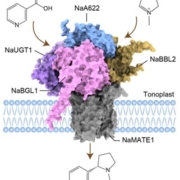
The last piece of the nicotine puzzle
Plant Science Research WeeklyNo other alkaloid has received as much scientific attention as nicotine. For better or for worse, tobacco has been used by humans for at least 12,000 years, yet the final steps of nicotine biosynthesis have remained stubbornly unresolved until now. A new paper in Cell by Chang et al. (2026) reveals that…
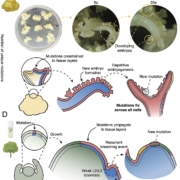
Elevated mutation rates in tissue-culture derived plant tissues
Plant Science Research WeeklyThe totipotency of plant tissues makes them very amenable to propagation through somatic tissues. Tissue culture propagation is used to regenerate gene edited plants from single cells and to cultivate plants that are difficult to propagate sexually. In a recent paper, Davis et al. investigated the genomic…
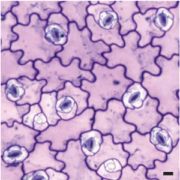
Arabidopsis is not always enough: What a succulent taught us about stomatal development
Plant Science Research WeeklySome species are more studied than others, and it is common to assume that what happens in a model plant like Arabidopsis applies to all other plant species. This is far from true. Recently, Cheng et al. explored stomatal development in the CAM succulent Kalanchoë laxiflora. Stomata are epidermal pores…
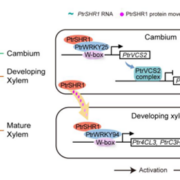
A mobile transcription factor regulates wood abundance and quality in Populus trichocarpa
Plant Science Research Weekly
Wood is a major source of biomass on Earth and is valuable feedstock for multiple industries. Wood formation includes vascular cambium cell division and the maturation of the resulting stem-differentiating xylem (SDX) cells into mature xylem. Zhao et al. furthers our understanding of these processes…
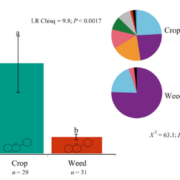
Win-win underground relationship of crops and arbuscular mycorrhizal fungi
Plant Science Research WeeklyCommunity and ecosystem ecology are the main pillars of agroecology. Plants exude various chemicals from their roots to communicate with belowground microorganisms to boost productivity. This article by Urcelay et al. offers a new perspective to understand the interaction between plants and arbuscular…
Plant Science Research Weekly: May 1, 2026
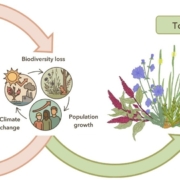
WWR Full PostReview. Beyond elite crops: Designing resilient agriculture from wild plant diversity
When looking at the foods that fill our supermarkets, it can be hard to imagine we are relying on just a handful of domesticated plant species. Thousands of wild plants, each with its own unique strengths, remain…
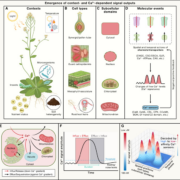
Review: Plants calcium signaling is both conserved and plant-specific
Plant Science Research WeeklyAlthough calcium ions are universal second messengers, plants employ both conserved and unique strategies to decode Ca²⁺ signals. In a new review in Cell, Sheng Luan reviews the molecular tools used to study calcium signaling in plants and the mechanisms that govern this process. Like other cells,…
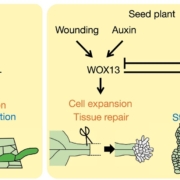
Review: How WOXs regulate regeneration in land plants
Plant Science Research WeeklyPlants cannot escape a bite from herbivore or being cut by a lawn mower, but they can regrow new leaves or even entire stems after damage. From simple mosses to giant sequoia trees, the process of building a new organ after wounding may be more similar than we previously thought. Key players in this…