Review: Revisiting endophyte-mediated plant protection across diverse host systems
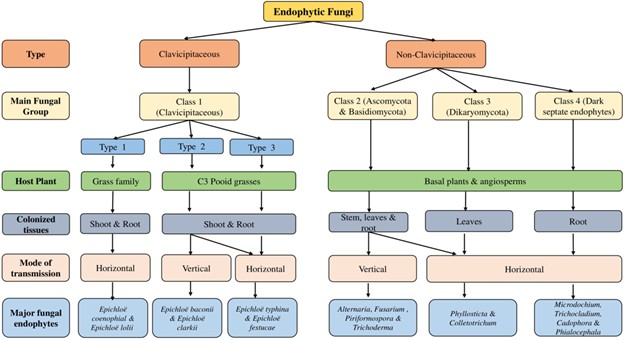 Endophytic bacteria and fungi, the invisible allies within plant tissues, are emerging as powerful contributors to sustainable agriculture. They can enhance plant defense through multiple mechanisms, including antibiosis, niche competition, and the induction of systemic resistance, thereby reducing reliance on chemical pesticides. Noor and colleagues highlight the remarkable diversity of plant endophytes, classifying them by life-history traits and host plant families, and comparing defense outcomes across diverse crop systems. Yet, despite promising applications in endophyte-based biocontrol, field performance often remains inconsistent due to environmental variability, unstable colonization, formulation and delivery challenges, and strong host-genotype specificity. Methodological limitations further complicate interpretation and generalization. Culture-based isolation captures only a small fraction of naturally occurring endophytes. In contrast, culture-independent approaches such as metagenomics and amplicon sequencing introduce biases linked to primer design and incomplete reference databases. Moreover, strain-level variation within the same species can also alter metabolite production and host responses. Moving forward, integrating improved strain selection, advanced formulation technologies, and rigorous field validation will be essential for translating endophyte research into reliable agricultural solutions. (Summary by Ching Chan @ntnuchanlab @ntnuchanlab.bsky.social) Plant Cell Environ. 10.1111/pce.70572