
Extracellular vesicle-mediated small RNAs: Emerging effectors in fungal pathogenesis
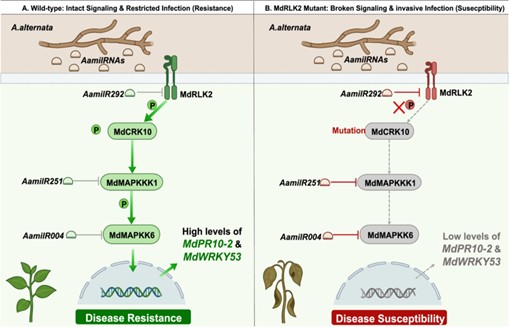 Plant pathogens are skilled manipulators, using specialized molecular weapons to weaken plant defenses and establish infection. Traditionally, scientists have focused on secreted proteins, known as effectors, that help pathogens suppress plant immune responses. But recent discoveries show that fungal pathogens have another trick: they produce small RNAs (sRNAs) that can cross from the fungus into the plant and reprogram plant genes. A key aspect of this process involves extracellular vesicles (EVs), tiny, evolutionarily conserved vesicles that shuttle important molecules between cells. These EVs are now recognized as important vehicles for delivering sRNAs during infection. In a recent study, Tang and colleagues explored how EV-associated sRNAs behave in apples infected by the fungus Alternaria. By isolating EVs and sequencing their sRNA content, they pinpointed 28 microRNA-like RNAs (milRNAs) that might play a role in disease. The authors predicted and confirmed that several of these milRNAs target critical components of the plant immune system, such as MAP kinases and receptor-like kinases. Functional analyses further demonstrated that knockout mutants of these milRNAs exhibited reduced virulence, whereas overexpression of their target genes enhanced host resistance. Together, this work highlights EV-mediated sRNA trafficking as a sophisticated pathogenic strategy and opens new opportunities for developing RNA-based disease resistance in crops. (Summary by Ching Chan @ntnuchanlab @ntnuchanlab.bsky.social) Plant Cell Environ. 10.1111/pce.70573