

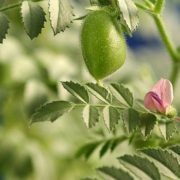
Root traits confer grain yield advantages under terminal drought in chickpea (Cicer arietinum L.)
Plant Science Research Weekly, Research0 Comments
/
This study by Ramamoorthy et al. showed that survival of plants under drought conditions is not a sufficient goal for breeding. Rather, yield for biomass and food production under water deficit is a better target. Chickpea genotypes having better root growth and higher root density showed better grain…
For drought tolerance, is water use efficiency (WUE) no longer a recommended selection criteria for energy crops?
Plant Science Research Weekly, ResearchPodlaski et al. conducted experiments with energy crops like miscanthus, prairie cordgrass, willow, etc, and report that water use efficiency (WUE) is no longer a valid trait for selecting energy crops for drought tolerance. They could not find any significant relationship between WUE and biomass …
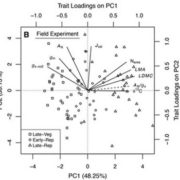
Variable mesophyll conductance among soybean cultivars sets a tradeoff between photosynthesis and water-use-efficiency
Plant Science Research Weekly, ResearchAn experimental study by Tomeo and Rosenthal with soybean cultivars demonstrated that there exists genotypic differences in mesophyll conductance (gm), and that the potential exploitation of this trait may increase crop productivity. It was found that there exists a proper coordination mechanism…
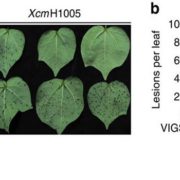
TAL effector driven induction of a SWEET gene confers susceptibility to bacterial blight of cotton
Plant Science Research Weekly, ResearchPlants undergo photosynthesis in leaves to produce carbohydrates sucrose and starch. The sucrose is transported to other parts of the plants via sugar transporters called SWEET proteins. In addition, certain plant pathogens activate SWEET genes to invade their host. As shown in this paper, during bacterial…

Elevated temperature drives a shift from selfing to outcrossing in the insect-pollinated legume, faba bean (Vicia faba)
Plant Science Research Weekly, ResearchThe effects of climate change on agriculture to human health have been well discussed in both scientific and public domains. In plants, changes in climate might affect interactions between the plants and their insect pollinators due to variable availability of pollinators in severe weather conditions,…
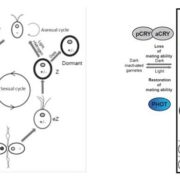
A plant cryptochrome controls key features of the Chlamydomonas circadian clock and its life cycle
Plant Science Research Weekly, ResearchAnimals and plants have divergent sets of blue light receptors, called Cryptochromes. However, green alga Chlamydomonas has both animal-like and plant cryptochrome (pCRY). The presence of multiple cryptochrome suggests specific roles in different pathways in respective organisms. In this paper, Müller…
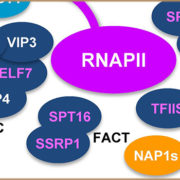
The composition of the Arabidopsis RNA Polymerase II Transcript Elongation Complex reveals the interplay between elongation and mRNA processing factors
Plant Science Research Weekly, ResearchGene expression is regulated at multiple levels such as genome, transcription, RNA processing and nuclear export, translation, and post-translation. Functional mRNA levels are regulated at transcription stage where RNA polymerase II (RNAPII) controls initiation and elongation of mRNA. In particular,…
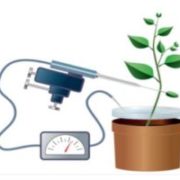
Review: Zooming in on plant hormone analysis: Tissue- and cell-specific approaches ($)
Plant Science Research Weekly, ResearchThroughout plant life cycle, from germination till reproduction, every event is regulated by a highly complex network of hormones. Unlike animals where hormones are synthesized in specific glands, each plant cell is able to produce hormones. However, hormones are synthesized in specific organs in plants.…

Recognizing featured Plant Cell first authors, May 2017
Blog, The Plant Cell, The Plant Cell: Author ProfilesJennifer Wisecaver, featured first author of A Global Co-expression Network Approach for Connecting Genes to Specialized Metabolic Pathways in Plants
Current Position: Postdoctoral Fellow, Department of Biological Sciences, Vanderbilt University.
Education: PhD (2012) Ecology and Evolutionary Biology,…