


Ivan wants to know! Your thoughts on new ideas for Plant Direct
Blog, Research, Research Blog0 Comments
/
Plant Direct Editor-in-Chief Ivan Baxter wants your input on new ideas for Plant Direct. This is your opportunity to help shape the editorial policies of the newest plant science journal. Read more and share your thoughts! Is Ivan on the right track? Why or why not? What other ideas would help to make…

What We're Reading: June 23rd
Blog, Research, Research BlogThis week's What We're Reading is guest edited by Gaby Auge, a Senior Research Associate at Fundación Instituto Leloir, IIBBA-CONICET (www.leloir.org.ar), in Buenos Aires, Argentina.
Gaby's research interests focus on how environmental changes shape plant responses (plasticity), and the ecological…
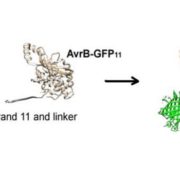
Direct and indirect visualization of bacterial effector delivery into diverse plant cell types during infection
Plant Science Research Weekly, ResearchBacterial effectors are proteins produced by bacteria and introduced into their hosts, where the effectors support successful infection by the pathogen. Effectors can function in diverse cells and cell compartments, but many studies of effector localization have relied on overexpression systems which…

Root tip shape governs root elongation rate under increased soil strength
Plant Science Research Weekly, ResearchWe live at a time of unprecedented insights into root anatomy, diversity, plasticity, and the genetic underpinnings of these traits. Colombi et al. examined how wheat root tip shape contributes to soil penetration and the root’s response to increasing soil density. Not surprisingly, pointier roots…
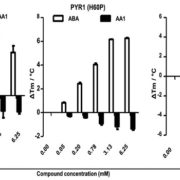
Abscisic acid Antagonist 1 (AA1): A ray of hope for extending shelf life of leafy vegetables ($)
Plant Science Research Weekly, ResearchAbscisic acid (ABA) is one of the phytohormones that plays a pivotal role in a plant's life from germination to senescence, and it drew additional attention of researchers owing to its involvement in abiotic stress. Leaf senescence is a natural phenomenon but if this process can be delayed by non-toxic…

Highly cited classic papers from 2006
Plant Science Research Weekly, ResearchWhile this series highlights the latest research, a well-read scholar also needs to to know the classics. Google Scholar has a new initiative to feature highly-cited, ten-year old articles. The most-highly cited papers published in 2006 are listed by category. Plant scientists will find particular relevance…
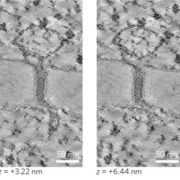
Architecture and permeability of post-cytokinesis plasmodesmata lacking cytoplasmic sleeves ($)
Plant Science Research Weekly, ResearchPlasmodesmata are pores between cells through which viruses, proteins, small RNAs and other molecules can pass. The pores are usually described as being lined with a layer of plasma membrane with a tube of endoplasmic-reticulum membrane through the center. These membranes and associated proteins are…
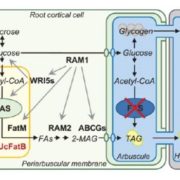
Fatty acids in arbuscular mycorrhizal fungi are synthesized by the host plant ($)
Plant Science Research Weekly, ResearchIn the symbiotic relationship between arbuscular mycorrhizal fungi and plants, the fungal partner greatly enhances the uptake of mineral nutrients (particularly phosphate), while in return it is supplied with organic carbon from the photosynthetic partner. Luginbuehl et al. investigated whether this…

The sequences of 1,504 mutants in the model rice variety Kitaake facilitate rapid functional genomic studies
Plant Science Research Weekly, ResearchLi et al. describe an important new genetic resource, a huge database of Kitaake rice mutants. Kitaake is a short-generation variety of Oryza sativa L. ssp. japonica well suited for genetic studies. The authors sequenced more than 1500 fast-neutron-induced mutants and identified more than 91,000 mutations…