

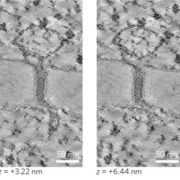
Architecture and permeability of post-cytokinesis plasmodesmata lacking cytoplasmic sleeves ($)
Plant Science Research Weekly, Research0 Comments
/
Plasmodesmata are pores between cells through which viruses, proteins, small RNAs and other molecules can pass. The pores are usually described as being lined with a layer of plasma membrane with a tube of endoplasmic-reticulum membrane through the center. These membranes and associated proteins are…
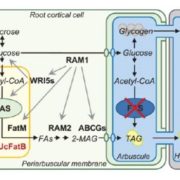
Fatty acids in arbuscular mycorrhizal fungi are synthesized by the host plant ($)
Plant Science Research Weekly, ResearchIn the symbiotic relationship between arbuscular mycorrhizal fungi and plants, the fungal partner greatly enhances the uptake of mineral nutrients (particularly phosphate), while in return it is supplied with organic carbon from the photosynthetic partner. Luginbuehl et al. investigated whether this…

The sequences of 1,504 mutants in the model rice variety Kitaake facilitate rapid functional genomic studies
Plant Science Research Weekly, ResearchLi et al. describe an important new genetic resource, a huge database of Kitaake rice mutants. Kitaake is a short-generation variety of Oryza sativa L. ssp. japonica well suited for genetic studies. The authors sequenced more than 1500 fast-neutron-induced mutants and identified more than 91,000 mutations…
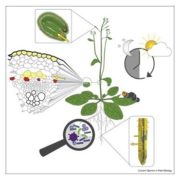
Review: How does a plant orchestrate defense in time and space? Using glucosinolates in Arabidopsis as case study
Plant Science Research Weekly, ResearchPlants, like human societies, must live with the inherent conflict between investing in defense and investing in growth and infrastructure. Burrow and Halkier provide an interesting and highly readable overview of the strategies by which Arabidopsis optimizes the production and distribution of glucosinolates,…
What We're Reading: June 16th
Research, Research BlogReview: How does a plant orchestrate defense in time and space? Using glucosinolates in Arabidopsis as case study
Plants, like human societies, must live with the inherent conflict between investing in defense and investing in growth and infrastructure. Burrow and Halkier provide an interesting and…

Update: Leaf hydraulic architecture and stomatal conductance: a functional perspective
Plant Physiology: Updates, Research, Research BlogBy Fulton E. Rockwell, and N. Michele Holbrook
The structure of leaf vasculature viewed over a broad phylogenetic scale from lycophytes to eudicots correlates with stomatal conductance (gs), providing the basis for the hypothesis that increasing vein density drove the evolution of high fluxes in angiosperms.…

Be a featured Plantae community member: Present yourself and discuss your science
Blog, Research BlogPresent yourself and discuss your science with the Plantae Community in a live online chat event
Get live practice presenting yourself and your science in a short, compelling, and concise way
Benefit from quality time with a focused audience of like-minded peers
Guarantee of dedicated subject…

Live online chat discussion with featured community member Anne Sternberger
Blog, Careers, Research, Research BlogMark your calendars for the first Plantae.org live online chat discussion with featured community member Anne Sternberger!
Support your peers | Discuss plant science topics | Learn about how others work
Tuesday, June 27th at 5pm EST / 11am HST | Join: www.plantae.org/annes
Anne is…
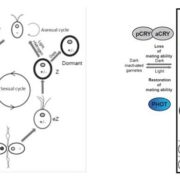
The Role of an Animal-Like Cryptochrome in a Green Alga
Plant Physiology, Plant Physiology: On The Inside, Research, Research BlogLight is an essential environmental factor for photosynthetic organisms, serving as a source of energy and signal information. To precisely perceive and respond to different wavelengths of the light spectrum, eukaryotic photosynthetic microorganisms and higher plants have developed different classes…