

What We're Reading: April 27th
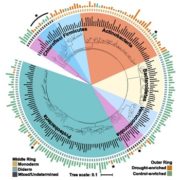
WWR Full PostReview: Venus Flytrap: How an excitable, carnivorous plant works
The one sure-fire way to get children excited about plants is to show them how a Venus flytrap works. But how does it work? We’ve all heard that the trap “counts” the number times it is triggered, and that it requires two or…
Open Access Shy Girl Gives Kiwifruit Male Flowers
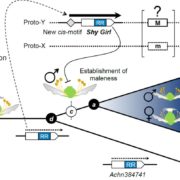
Blog, Research, The Plant Cell, The Plant Cell: In BriefFrom the human perspective, separate sexes are the norm while hermaphroditism is an exotic concept. For plants, hermaphroditism is the norm. Dioecy, separate male and female individuals, is rare and dispersed in the angiosperm phylogeny (Käfer et al 2017, Renner 2014). In fact, dioecy is rare enough…

Press Release: Could eating moss be good for your gut?
Blog, Research, The Plant Cell, The Plant Cell: NewsNew work published in The Plant Cell is featured in this press release from the University of Adelaide.
An international team of scientists including the University of Adelaide has discovered a new complex carbohydrate in moss that could possibly be exploited for health or other uses.
The scientists,…

DNA methylation dynamics during early plant life
Plant Science Research WeeklyDNA methylation is extensively reprogrammed in the early embryo and germlines of mammals, whereas flowering plants do not show such extensive resetting except in the endosperm. Active DNA demethylation in the central cell and reduced activity of DNA methyltransferases leads to global hypomethylation…

Extensive transcriptomic and epigenomic remodelling occurs during Arabidopsis thaliana germination
Plant Science Research WeeklyUnderstanding the complex regulatory mechanisms that contribute to germination and seedling establishment requires integration of gene-expression, transcription factors (TFs), DNA methylation, smallRNA data, and their interactions. Narsai et al. describe the first dynamic transcription factor network…
Comparison of the relative potential for epigenetic and genetic variation to contribute to trait stability
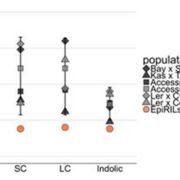
Plant Science Research WeeklyEpigenetic variation, both natural and induced, can influence heritable phenotypic variation of complex traits. Understanding the effect of epigenetic changes on trait variation is complicated by the confounding effects of DNA sequence polymorphisms. To overcome this complication, epigenetic recombinant…
Similarity between soybean and Arabidopsis seed methylomes and loss of non-CG methylation does not affect seed development
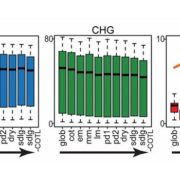
Plant Science Research WeeklyDifferent parts of the seed have distinct genetic origins and functions. The seed coat is maternally derived from ovule integuments, whereas the embryo descends from the fertilized egg and the endosperm from the central cell. Lin et al. profiled the methylome landscape during seed development and germination…
TET-mediated epimutagenesis of the Arabidopsis thaliana methylome
Plant Science Research WeeklyNatural and induced DNA methylation variations are known to alter gene expression changes that may ultimately be important for agronomically important traits. Epigenetically manipulating plant methylomes to create heritable changes can be invaluable in crop improvement programs. Ji et al. describe the…
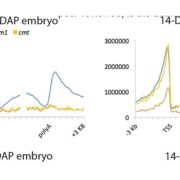
Loss of mCHH islands in maize chromomethylase and DDM1-type nucleosome remodeler mutants
Plant Science Research WeeklyPlant DNA methylation in different sequence contexts is catalyzed by distinct types of methyltransferases. METHYLTRANSFERASE 1 (MET1) is responsible for CG methylation, CHROMOMETHYLASE (CMT1, 2, and 3) methylates CHG and CHH, while DOMAINS REARRANGED METHYLTRANSFERASE (DRM1 and 2) methylates in all three…