


Leaf senescence in Arabidopsis thaliana is regulated by a histone H3K4 demethylase (Plant Cell)
Plant Science Research WeeklyLeaf senescence is the final stage of leaf development where the organ turns yellow and programmed cell death occurs. While it is generally understood that the regulation of senescence associated genes (SAGs) is dependent on the trimethylation of histone H3 at lysine 4 (H3K4me3), the exact mechanism…
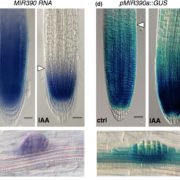
ARF5/MONOPTEROS directly regulates miR390 expression in the Arabidopsis thaliana primary root meristem (Plant Direct)
Plant Science Research WeeklyPrevious studies have indicated that auxin controls gene expression via regulatory transcriptional networks, mediated by a family of DNA-binding auxin response factors (ARFs) that bind to auxin response DNA elements (AuxREs) in the promoters of genes. In this study, Dastidar et al. investigated the…

Transposable elements contribute to dynamic genome content in maize (bioRxiv)
Plant Science Research WeeklyTransposable elements (TE) constitute a large percentage of the maize genome. However, traditional studies based on reference genome alignment can result in large fragments that cannot be aligned, which could be due to TE insertions. The de novo assembly of four representative maize inbreds, B73, W22,…
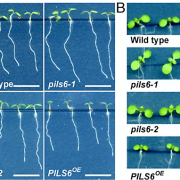
PILS6 is a temperature-sensitive regulator of nuclear auxin input and organ growth (PNAS)
Plant Science Research WeeklyAuxin, a plant hormone and major growth regulator, is fundamental for adaptations to climatic variation in shoots but its role in roots under elevated temperatures is more controversial. PIN-LIKES (PILS) 2, 3 and 5 proteins have previously been identified to restrict nuclear auxin signalling but the…

(Auxin) Don't stop me now. Auxin export from proximal fruits drives arrest in competent inflorescence meristems (bioRxiv)
Plant Science Research WeeklyThe control of the beginning and the ending of the reproductive phase in plants are important factors related to seed and fruit production. Almost one century ago, it was noticed that fruit removal delays the floral arrest, and a model was proposed in 1994 by Hensel et al., highlighting the role of fruits…

Evolution of phytolith deposition in modern bryophytes (New Phytol) ($)
Plant Science Research WeeklyWhen monosilicic acid is present in the soil, many plants absorb it through their roots and precipitate rigid silica aggregates known as phytoliths. Phytolith deposition has been observed in all major groups of vascular plants, however the patterns of deposition in bryophytes are comparatively under…
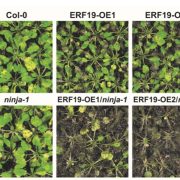
ERF19 buffers Arabidopsis pattern-triggered immunity (J Exp Bot)
Plant Science Research WeeklyTo fight off invading pathogens, higher plants such as Arabidopsis are intrinsically programmed with a subset of defense responses known as pattern-triggered immunity (PTI). However, excessive defense responses may hamper plant’s normal growth, so fine-tuning PTI is important for plant survival. Recently,…

Plant Science Research Weekly: February 22
WWR Full PostReview: Cytokinin – A developing story ($)
With its diverse chemical structures, the phytohormone cytokinin is significant from embryogenesis to the maturation of plants. In this review, Wybouw and De Rybel highlight in detail cytokinin signaling in multiple plant developmental process including…

Recognizing Plant Physiology first author: Armand Anoman
Plant Physiology, Plant Physiology: Author ProfilesArmand D. Anoman, first author of The Phosphorylated Pathway of Serine Biosynthesis perturbs sulfur assimilation
Current Position: Postdoctoral researcher at ERI BIOTECMED, University of Valencia, Spain
Education: PhD in biotechnology, plant biology department, University of Valencia, Spain
Non-scientific…