

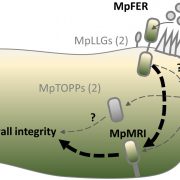
A conserved signaling module controls tip growth in liverwort and Arabidopsis (Curr. Biol).
Plant Science Research WeeklyPlants have evolved with rooting cells to anchor them to the land and uptake nutrients efficiently. Growth of root hairs in seed plants or rhizoids in early diverging plants both rely on tip growth, which requires a coordination of wall loosening and deposition of wall materials with cell expansion in…
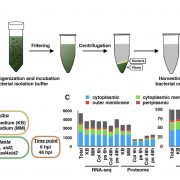
Understanding pathogenic bacterial gene expression in planta is essential to understand plant pathology (bioRxiv)
Plant Science Research WeeklyHow exactly does the plant defense system target pathogens? Nobori et al. have analyzed interactions inside the plant between the foliar bacterial pathogen Pseudomonas syringae and Arabidopsis thaliana at transcriptomic and proteomic levels by using RNAseq and liquid chromatography mass spectrometry…

Overexpression of zmm28 increases maize grain yield in the field (PNAS)
Plant Science Research WeeklyThis study, from scientists at Corteva Agriscience, demonstrates a yield boost in transgenic maize overexpressing a gene encoding a transcription factor. Expression of zmm28, a maize MADS-box transcription factor gene, is elevated through fusion to a maize GOS2 promoter, which provides moderate, constitutive…

A large transposon insertion in the stiff1 promoter increases stalk strength in maize (Plant Cell)
Plant Science Research WeeklyWe all know the importance of staying upright, especially for our grass crops. Here, Zhang et al. identified a gene underlying a large-effect quantitative trait locus that confers stiff stalks, so prevents lodging. They show that the stiff-stock allele carries a large transposon that strongly represses…

Oxylipins other than jasmonic acid regulate systemic resistance (Plant Cell)
Plant Science Research WeeklyPlant roots communicate with microbes in a sophisticated manner through chemical communication within the rhizosphere, thereby leading to biofilm formation of beneficial microbes and resulting in priming of defence, or induced resistance in the plant host to a wide range of pathogens (induced systemic…
Plant Science Research Weekly: November 15
Blog, WWR Full PostReview: Genetic strategies for improving crop yields
Simply put, as food demand increases due to population growth and increased affluence, crop yields are likely to decrease due to the changing climate. Plant scientists will be familiar with many research avenues that aim to address this disconnect,…
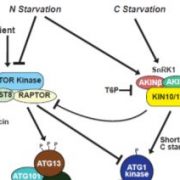
You Are What You Eat: An ATG1-Independent Path to Autophagy
Research, The Plant Cell, The Plant Cell: In BriefFixed carbon derived from photosynthates serves critical roles as both a chemical energy reservoir and a building block for anabolic processes. Environmental constraints that place limitations on a plant’s fixed-carbon economy, such as prolonged darkness and photosynthetic stress, can therefore be…

The first structure of plant actin filaments
Research, The Plant Cell, The Plant Cell: In a NutshellRen et al. examine the structure of maize pollen actin.
Plant Cell https://doi.org/10.1105/tpc.18.00973
Zhanhong Ren (Ph.D. candidate), Key Laboratory of Cell Proliferation and Regulation Biology of Ministry of Education, Center for Biological Science and Technology, College of Life Sciences, Beijing…

Recognizing Plant Direct authors: Jane Fudyma
Plant Direct, Plant Direct: Author ProfilesJane Fudyma, first author of Untargeted metabolomic profiling of Sphagnum fallax reveals novel antimicrobial metabolites
Current Position: Research Specialist & Laboratory Manager, University of Arizona, Tucson, AZ
Education: BS (Hons) General Science, Biology/Chemistry Concentrations, 2013
Non-Scientific…