


Recognizing Plant Physiology authors: Hiroaki Adachi
Plant Physiology, Plant Physiology: Author ProfilesHiroaki Adachi, co-first author of NRC4 gene cluster is not essential for bacterial flagellin-triggered immunity
Current Position: Postdoctoral Scientist, The Sainsbury Laboratory, University of East Anglia, Norwich Research Park, UK
Education: BSc, MSc and PhD, Graduate School of Agricultural Science,…

Recognizing Plant Physiology authors: Juan Carlos De la Concepcion
Plant Physiology, Plant Physiology: Author ProfilesJuan Carlos De la Concepcion, co-first author of NRC4 gene cluster is not essential for bacterial flagellin-triggered immunity
Current Position: Post-doc, Department of Biological Chemistry, John Innes Centre, Norwich, UK
Education: BSc in Biology, BSc Biochemistry and MSc in Molecular Genetics and…

New Teaching Tool, "Computational Microscopy: Revealing Molecular Mechanisms in Plants Using Molecular Dynamics Simulations"
Blog, Pubs Pages, The Plant Cell, The Plant Cell: NewsWe’re excited to annouce the publication of The Plant Cell‘s latest Teaching Tool, “Computational Microscopy: Revealing Molecular Mechanisms in Plants Using Molecular Dynamics Simulations,” by Jiangyan Feng, Jiming Chen, Balaji Selvam, and Diwakar Shukla. Available without subscription at The…

Essay: Reconstructing trait evolution in plant evo–devo studies (Curr. Biol.)
Plant Science Research WeeklyPlant evo-devo studies are thriving thanks to new genetic engineering tools and the emergence of model systems such as the moss Physcomitrella patens, the liverwort Marchantia polymorpha, and the fern Ceratopteris richardii. In the past few years many debates have taken place among the community, in…
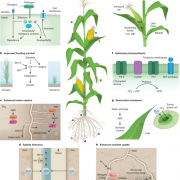
Review: Genetic strategies for improving crop yields (Nature)
Plant Science Research WeeklySimply put, as food demand increases due to population growth and increased affluence, crop yields are likely to decrease due to the changing climate. Plant scientists will be familiar with many research avenues that aim to address this disconnect, ranging from increasing crop resilience to abiotic stresses,…
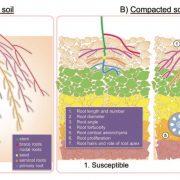
Review: Soil compaction and the architectural plasticity of root systems (J Exp Bot)
Plant Science Research WeeklyRoot system architecture (RSA) describes the spatial arrangement of root components within the soil. RSA is useful to understand the exploration of the plant to get nutrients and water through the soil space. In a new review, Correa et al. discuss RSA plasticity in response to soil compaction, which…
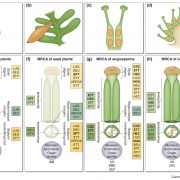
Review: An evolutionary history of genes controlling carpel development (COPB)
Plant Science Research WeeklyCarpels, the female reproductive structures in angiosperms, are the most complex organs in plants. Most of the current knowledge about the molecular mechanism underlying carpel development derives from Arabidopsis. In a new review, Becker summarizes recent studies about the reconstruction of ancestral…
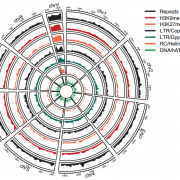
New insights into Marchantia polymorpha genome
Plant Science Research WeeklySince the publication of the Marchantia polymorpha genome in 2017, a big update was necessary. In the past week, two groups published on improving Marchantia chromosome assembly following different experimental approaches. Diop et al. made a high-density linkage map using genetic markers obtained by…
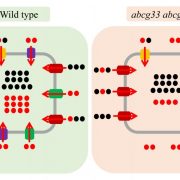
ATP binding cassette proteins ABCG37 and ABCG33 are required for potassium-independent cesium uptake in Arabidopsis roots (bioRxiv)
Plant Science Research WeeklyPotassium is one of the major nutrients for plant growth and development. Plants have a well-studied potassium uptake system mediated by transporters and ion channels. Unfortunately, due to the chemical similarity of potassium and cesium, which is toxic for plant growth, cesium is able to to get into…