


Recognizing Plant Cell authors: Mengna Zhuo
The Plant Cell, The Plant Cell: Author ProfilesMengna Zhuo, first author of A Jasmonate-activated MYC2-Dof2.1-MYC2 Transcriptional Loop Promotes Leaf Senescence in Arabidopsis
Current Position: PhD student, Biotechnology Research Center, The University of Tokyo, Japan
Education: M.Sc. in Agriculture, The University of Tokyo, Japan; B.Sc. in Veterinary…

Recognizing Plant Physiology authors: Mayumi Nakano
Plant Physiology, Plant Physiology: Author ProfilesMayumi Nakano, first author of Next-Generation Sequence Databases: RNA and Genomic Informatics Resources for Plants
Current Position: Scientific Manager, Meyers Lab, Donald Danforth Plant Science Center
Education: M.A. in Japanese Literature from University of Wisconsin-Madison, M.A. in Comparative…

Phytochrome-Interacting Factors and Tomato Qualities
Plant Physiology, Plant Physiology: On The InsidePhytochromes (PHYs) are red/far-red light photoreceptors that are activated by light and deactivated by dark and high temperature. Upon light exposure, PHYs are translocated into the nucleus, where they interact with PHY-INTERACTING FACTORS (PIFs) and induce the degradation of these transcription factors.…

Insights into Esca Grape Vine Disease
Plant Physiology, Plant Physiology: On The InsideEsca is a fungal vascular disease of grapevine (Vitis vinifera) that negatively impacts grape yield and the wine industry. Esca is characterized by three main symptoms: leaf scorch, trunk necrosis, and a colored stripe along the vasculature. The fungi most strongly associated with esca wood necrosis…

Circadian Clock Gene Affects Aphid Feeding
Plant Physiology, Plant Physiology: On The InsidePhloem sap-feeding aphids inflict plant damage by direct feeding and by acting as a vector for plant disease transmission. Their highly specialized stylets reach the phloem sieve elements, allowing aphids to extract plant photoassimilates without consuming structural tissues. Probing and feeding by aphids…

Improving Grain Filling Rate in Rice
Plant Physiology, Plant Physiology: On The InsidePoor grain filling by hybrid japonica rice (Oryza sativa) is a major agricultural problem. It has previously been reported that the rice accession Ludao, a wild-type japonica rice grown naturally in the Liangyungang region of China, exhibited a high grain-filling rate and could be selected as a parent…
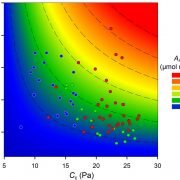
CO2 and O2 as Drivers of Plant Macroevolution
Plant Physiology, Plant Physiology: On The InsideThe evolution of photosynthesis and, at a later point, the emergence of land plants resulted in substantial changes in the composition of Earth’s atmosphere. Plant colonization of the land in the early Paleozoic (more than 450 million years ago [mya]) was followed by a rapid drop in atmospheric [CO2],…
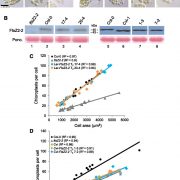
A Gene Affecting Chloroplast Size
Plant Physiology, Plant Physiology: On The InsideDuring leaf growth and development, chloroplast numbers increase to maximize photosynthetic capacity. In mesophyll cells, chloroplast division takes place primarily during cell expansion and increases plastid numbers from; 10 to 20 in leaf primordia to; 100 or more in mature mesophyll cells. Chloroplasts…

Acylsugar Metabolic Gene Network
Research, The Plant Cell, The Plant Cell: In a NutshellBy Sabyasachi Mandal
Department of Biology, Texas A&M University, College Station, USA
Background: Acylsugars are specialized metabolites secreted through the trichomes (plant hairs) of many plants in the nightshade family (Solanaceae). These compounds provide protection against herbivores…