

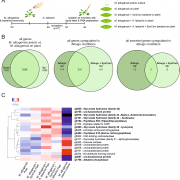
Fungal antagonism of Arabidopsis oomycete infection requires a previously uncharacterized secreted hydrolase (bioRxiv)
Plant Science Research WeeklyAntagonist interactions between microbes of the phyllosphere stabilize the microbiome and some “hub” organisms can exert strong effects on community structure. The yeast family Ustilaginales contains several apathogenic species that are microbial antagonists that can inhibit infection from diverse…
Plant Science Research Weekly: May 22nd
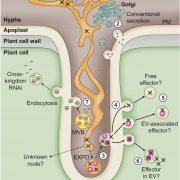
Blog, WWR Full PostReview: Devastating intimacy: the cell biology of plant–Phytophthora interactions
Phytophthora are plant-destroying oomycetes. Within this genus are several infamous disease-causing agents: P. infestans of the potato late-blight fame, P. sojae of soybean root rot, P. ramorum of sudden oak death,…

Silencing Immunity: miR159 Suppresses Pathogen Responses in Tobacco
Plant Physiology, Plant Physiology: News and Views, ResearchMichael J. Skelly
[email protected]
To ensure optimal growth and development, plants must precisely control gene expression networks in a tissue-specific manner. MicroRNAs (miRNAs) are a class of small non-coding RNA molecules that post-transcriptionally silence genes by binding to complementary…

Twist of Fate: Ribosomal Stress Reprograms Root Hair Pattering
Research, The Plant Cell, The Plant Cell: In BriefThe root epidermis presents an elegant model to study cell differentiation. Based on positional cues, Arabidopsis distinguishes two epidermal cell types. Cells in the H position, adjacent to the junction of two cortex cells, have the capacity of developing root hair identity, whereas the non-hair cells…

Photosynthesis in the womb: does embryonic photosynthesis give seedlings a head start?
Plant Physiology, Plant Physiology: News and Views, ResearchIt might be a little known fact, even among plant biologists, that in embryos of many species of the Fabaceae, most oilseed plants and Arabidopsis thaliana embryos can photosynthesize within the seed (Tejos et al., 2010). We do not know why plant embryos have this capacity, since embryos are surrounded…
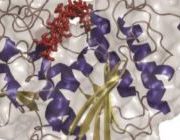
Shaping the Plant Cell Wall: Molecular Characteristics of XOAT1 in Polysaccharide Acetylation
Research, The Plant Cell, The Plant Cell: In BriefPlant cell walls provide mechanical support to plant cells, determine their size and shape, and influence plant development and stress responses. The plant cell wall is composed mainly of polysaccharides, including cellulose, hemicellulose and pectins, with smaller amounts of phenolic polymers and proteins…

Recognizing Plant Physiology authors: Yu Zhang
Plant Physiology, Plant Physiology: Author ProfilesYu Zhang, first author of Astaxanthin is ketolated from zeaxanthin independent of fatty acid synthesis in Chromochloris zofingiensis
Current Position: PhD candidate, Laboratory for Algae Biotechnology & Innovation, Peking University
Education: PhD candidate in Bioengineering (Peking University);…

Recognizing Plant Cell authors: Yan Yan
The Plant Cell, The Plant Cell: Author ProfilesYan Yan, first author of MYB30 Is a Key Negative Regulator of Arabidopsis Photomorphogenic Development that Promotes PIF4 and PIF5 Protein Accumulation in the Light
Current Position: Post-doc, Institute of Genetics and Developmental Biology, Chinese Academy of Sciences, Beijing, China
Education:…

Control of Arabidopsis Hypocotyl Growth by Strigolactone and Karrikin Signaling
Research, The Plant Cell, The Plant Cell: In a NutshellDescriptive paragraph. Plant Cell https://doi.org/10.1105/tpc.20.00140
By Bing Wang and Qian Xu, Institute of Genetics and Developmental Biology, Chinese Academy of Sciences.
Background: Strigolactones (SLs) are carotenoid-derived plant hormones that control many aspects of plant development, such…