


Glyphosate Resistance Decoded: the reference sequence of the extrachromosomal DNA Replicon in Amaranth
Research, The Plant Cell, The Plant Cell: In BriefDecades of research in evolutionary genetics has shown that genomic plasticity, in particular variation in gene copy number, is a favored mechanism to provide rapid adaptation to adverse environmental conditions through increase in gene dosage. Gene amplification has been observed across kingdoms and…

XOAT1- At the heart of plant polysaccharide acetylation
Research, The Plant Cell, The Plant Cell: In a NutshellLunin et al. describe a structural and biochemical analysis of the enzyme XOAT1, responsible for the acetylation of the cell wall component xylan, with potential applications in cell wall modification for better biomass valorization. The Plant Cell (2020) https://doi.org/10.1105/tpc.20.00028
By Vivek…
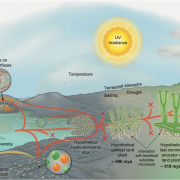
Review: Evo-physio: on stress responses and the earliest land plants (J. Exp. Bot.)
Plant Science Research WeeklyStreptophytes are a grade of mostly freshwater algae that transitioned into land, a singularity that in turn gave rise to all present terrestrial flora. This passage along the hydrological gradient that culminated in land habitation required key adaptations to overcome previously unencountered terrestrial…
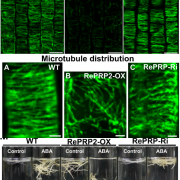
“Order by disorder”- intrinsically disordered proteins (Plant Physiol.)
Plant Science Research WeeklyIntrinsically disordered proteins (IDP) have repetitive protein sequences but lack a defined 3D structure and are deployed to do some challenging functions that a protein with a defined 3D structure cannot perform. One such IDP, Oryza sativa REPETITIVE PROLINE-RICH PROTEIN (OsRePRP) is involved in inhibiting…
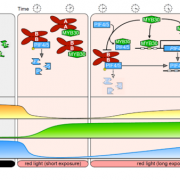
MYB30 negatively regulates photomorphogenesis by interacting with PIFs and phytochromes in Arabidopsis (Plant Cell)
Plant Science Research WeeklyPhotomorphogenesis is the growth and development of plants in response to light. The phytochrome family of photoreceptors absorbs red and far-red light, and in Arabidopsis the most abundant phytochromes are phyA and phyB. PHYTOCHROME-INTERACTING FACTORS (PIFs) repress photomorphogenesis, and under red…
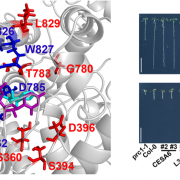
Endosidin20 targets the cellulose synthase catalytic domain to inhibit cellulose biosynthesis (Plant Cell)
Plant Science Research WeeklyCellulose is an indispensable component of plant cell wall formation. Cellulose is synthesized at the plasma membrane by a cellulose synthase complex (CSC) made up of at least 18 monomeric cellulose synthases (CESAs). In this study, Huang et al. used a chemical genetic approach to explore the structure…

Mutations PETALOSA cause a dominant double-flower phenotype (J. Exp. Bot.)
Plant Science Research WeeklyFlower development has always been a fascinating field of research in plant biology. While molecular studies in the past focused on regulatory genes involved in the formation of floral organs in model species, current investigations are addressing the genetic determinants underlying the huge variety…
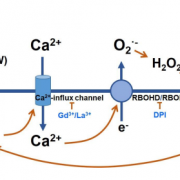
Hydrogen mediates tolerance to cadmium-induced root toxicity (Plant Physiol.)
Plant Science Research WeeklyHeavy metals are a potential threat to human health, especially in areas with high industrial activity where the metals leach in the soil to contaminate underground water. These metals are a threat to plants too, resulting in stunted growth and their eventual death. Wu et al. carried out a mechanistic…
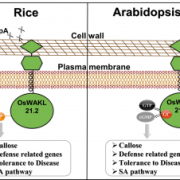
A moonlighting kinase induces immune responses in rice and Arabidopsis ($) (Plant Physiol.)
Plant Science Research WeeklyBacterial infections are a serious issue for crop plants and it is thus imperative to understand the mechanisms employed by plants to develop resistance against pathogens. Malukani et al. have identified a receptor kinase in rice, WALL-ASSOCIATED KINASE-LIKE 21 (OsWAKL21.2) that perceives pathogen-induced…