

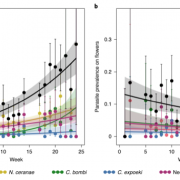
Driving factors of disease spread in natural plant-pollinator communities (Nature Ecol. Evol.)
Plant Science Research WeeklyDisease spread within species-rich communities is hard to predict and prevent due to the dynamic transmission of parasites between multiple hosts that change in abundance and composition over time. To better understand the temporal dynamics of bee parasites in communities of plants and pollinators, Graystock…
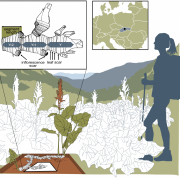
Alpine plant growth and reproduction dynamics in a warmer world (New Phytol.)
Plant Science Research WeeklyClimate warming affects plant performance in warm and dry regions. In cold regions, warming stimulates growth and reproduction, but its effects can vary depending on location and species. Whether herbaceous plants can adapt to increasing temperatures is unclear and a matter of concern. In this study…
Plant Science Research Weekly: August 7, 2020
WWR Full PostReview: Potential applications of plant biotechnology against SARS-CoV-2
For those of you about to start teaching again, here’s a great article to share with your plant science students, showcasing the ways that plant biologists are contributing to the international efforts to develop diagnostic…
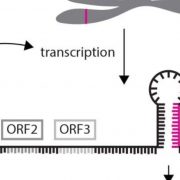
Small but powerful: miRNA-derived peptides promote grape adventitious root formation
Blog, Plant Physiology, Plant Physiology: News and Views, ResearchMagdalena Julkowska, King Abdullah University of Science and Technology
[email protected]
ORCID: 0000-0002-4259-8296
Although plant genomes typically contain hundreds of miRNA encoding genes, we know little about how miRNA expression is regulated (Wang et al., 2019). The expression…
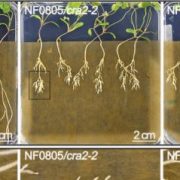
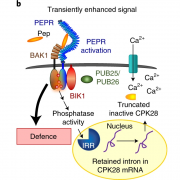
Peptide-Receptor Signaling Pumps the Brakes on Auxin Biosynthesis and Ethylene Signaling to Harmonize Root Growth and Nodulation
Blog, Research, The Plant Cell, The Plant Cell: In BriefNitrogen (N) is the most abundant element in Earth’s atmosphere. However, plants must capture this essential element from soil through their roots. To do this, legume roots forge symbioses with rhizobia to initiate nodule development. Root nodules provide rhizobia an environment suitable for converting…

Extreme Engineering: How Antarctic Algae Adapt to Hypersalinity
Blog, Plant Physiology, Plant Physiology: News and Views, ResearchMagdalena Julkowska, King Abdullah University of Science and Technology
[email protected]
ORCID: 0000-0002-4259-8296
Photosynthetic organisms can be found across most environments on Earth, including the most extreme ones. The McMurdo Valleys in Antarctica are among the driest…
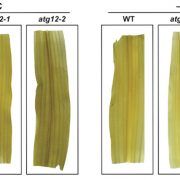
The Multifaceted Roles of Autophagy in Fixed-carbon Starvation
Blog, Research, The Plant Cell, The Plant Cell: In a NutshellMcLoughlin et al. uncover the critical roles of autophagy in recycling amino acids and nitrogen-rich nucleotides, adjusting respiratory substrates, and the retention of assimilated nitrogen in maize during fixed-carbon starvation. The Plant Cell (2020) https://doi.org/10.1105/tpc.20.00226
Background:…
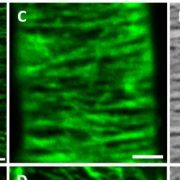
A new order through disorder: intrinsically disordered proteins reshape the cytoskeleton under drought stress
Blog, Plant Physiology, Plant Physiology: News and Views, ResearchMany proteins have a clearly defined structure-function relationship – specific three-dimensional folds can be linked to specific protein functions. We do however know that many proteins – referred to as intrinsically disordered proteins (IDPs) – lack rigid three-dimensional organisation. In recent…

Recognizing Plant Physiology authors: Maitree Pradhan
Plant Physiology, Plant Physiology: Author ProfilesMaitree Pradhan, first author of Argonaute 4 modulates resistance to Fusarium brachygibbosum infection by regulating jasmonic acid signaling
Current Position: Post-doctoral fellow at Department of Molecular Ecology, Max Planck Institute for Chemical Ecology, Jena, Germany
Education: PhD (Natural…