

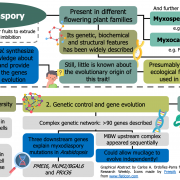
Review: Seed Mucilage Evolution: Diverse Molecular Mechanisms Generate Versatile Ecological Functions for Particular Environments ($) (Plant Cell Environ.)
Plant Science Research WeeklyPlants with myxodiaspory release mucilage upon imbibition of seeds (myxospermy, e.g., Arabidopsis thaliana) or fruits (myxocarpy, e.g., Linum usitatissimum). This ability appears in several angiosperm families, but its evolutionary origin has seldom been studied. In this review, Viudes et al. synthesize our…
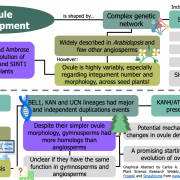
Phylogenetic analyses of key developmental genes provide insight into the complex evolution of seeds ($) (Mol. Phylogenet. Evol.)
Plant Science Research WeeklyThe complex genetic network behind the development of the ovule –the cell that will give place to seeds after fertilization– has been widely described in some model plants. However, ovules hold a high variability in integument number and morphology across seed plants. To understand the genetic mechanism…
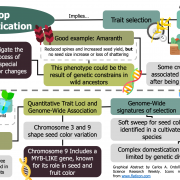
Parallel Seed Color Adaptation during Multiple Domestication Attempts of an Ancient New World Grain ($) (Mol. Biol. Evol.)
Plant Science Research WeeklyAmaranth has been cultivated in Central and South America since Pre-Columbian times. Still, it exhibits features that are unexpected in domesticated plants, such as seed shattering and reduced seed size. Here, Setter et al. dissected the genetic signature of this crop’s domestication process, with…

Plant Science Research Weekly: July 31
WWR Full PostSeed Evolution Special Issue
This week "Plant Science Research Weekly," focuses on the evolution of seeds and includes a selection of recent papers that use varying approaches to increase our understanding of the origin and changes of different seed features. Since seeds are transversal to multiple…
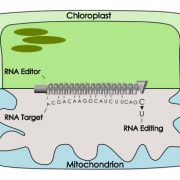
Correcting organellar spelling with RNA editors
Research, The Plant Cell, The Plant Cell: In a NutshellOldenkott et al. use evolution to their advantage by testing whether independently evolved RNA editors can reciprocally correct the errors of organellar transcripts. The Plant Cell (2020) https://doi.org/10.1105/tpc.20.00311.
By Bastian Oldenkott and Mareike Schallenberg-Rüdinger, IZMB, University…

Easy PDF submission at The Plant Cell
The Plant Cell, The Plant Cell: NewsYES, you can submit a single PDF of your manuscript with your figures (and supplemental data) to The Plant Cell at first submission! We’ve realized that authors may not be aware of this, although it has been possible for some years.
During submission you will notice that there are only two files…

Pollen tubes use matrix rigidity to direct growth
Plant Physiology, Plant Physiology: News and Views, ResearchEmily R Larson
[email protected]
School of Biological Science, University of Bristol, Bristol, UK
ORCID: 0000-0002-5498-8152
Pollen tube growth through plant pistil tissues requires interactions between the male and female cells to regulate compatibility (McCormick, 1998), and hormonal…

Call for Papers: The Plant Cell Focus Issue on Cell Biology
Blog, Pubs Pages, The Plant Cell: News
Plants have been a source of fundamental discoveries on the nature, organization, and function of cells, from the first description of cells to the dissection of the secretory system, and from insights into the role of the cytoskeleton and cell wall in morphogenesis to the discovery…

Plants (RNA) Editors: Testing for Conservation in RNA Editing in moss and angiosperms
Research, The Plant Cell: In BriefWhen I was a kid, I remember keeping a bottle of wite-out with my pens for the inevitable spelling mistake. Now, in the digital age, I either let my word processor autocorrect spelling errors or wait for the red squiggly line under suspicious words.
On any given day, a single (plant) cell by far out-writes…