


Review. Roles of plant retinoblastoma protein: cell cycle and beyond (EMBO J.)
Plant Science Research WeeklyThe cell cycle is at the heart of processes such as cell division, fate acquisition and cell cycle exit towards differentiation. Decades of cell cycle research in animals and yeast have outlined the main components that control the cycle’s transitions, such as cyclins, cyclin-dependent kinases, E2F…

Letter. Planting equity: Using what we know to cultivate growth as a plant biology community (Plant Cell)
Plant Science Research WeeklyCOVID-19 has derailed everyone’s lives and plans; 2020 is truly an “annus horribilis.” Yet clearly this pandemic has hit some harder than others. Note for example the greatly disproportionate mortality in Black and Indigenous populations, which surely contributed to the outpouring of outrage following…
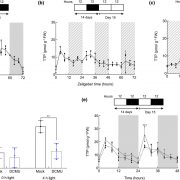
The vitamin B1 family grows: detection and roles of thiamine triphosphate in plants (Plant Direct)
Plant Science Research WeeklyThe term “vitamin B1” indicates a family of molecules that includes thiamine, thiamine monophosphate and thiamine diphosphate (TDP). The latter is the most famous family member and plays a pivotal role in carbon metabolism. Thanks to an optimized detection protocol, Hofmann and colleagues have demonstrated…
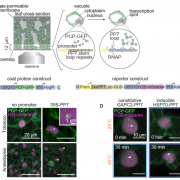
Real time quantitative imaging of transcriptional activity at the single cell level (bioRxiv)
Plant Science Research WeeklyHow plants transcriptionally operate developmental programs and responses to stress in time and space has been an important question in plant biology. Fluorescent protein reporters are commonly used to address this question, but their performance is limited at short timescales (<30 min) before the…
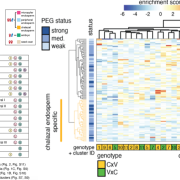
Single nucleus analysis of Arabidopsis seeds reveals new cell types and imprinting dynamics (bioRxiv)
Plant Science Research WeeklyArabidopsis seeds consist of various tissue like seed coat, embryo, and endosperm. The endosperm provides the nutrient supplies to the growing embryo and has three domains namely, micropylar (surrounding embryo), chalazal (opposite end of the seed), and peripheral (in between micropylar and chalazal)…

The transcription factor bZIP60 modulates the heat shock response in maize (Plant Cell)
Plant Science Research WeeklyDuring heat stress, heat shock transcription factors upregulate heat shock protein genes and give rise to the heat shock response (HSR) that occurs in the cytoplasm, while in the endoplasmic reticulum (ER), the unfolded protein response (UPR) is also activated during heat stress. Both HSR and UPR cause…
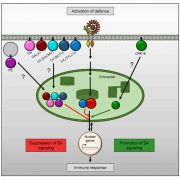
More than photosynthesis: The chloroplast’s role in plant cell defense pathways ($) (Cell)
Plant Science Research WeeklyChloroplasts are involved in various plant cell functions outside of photosynthesis including defense activation. How is the chloroplast able to do so? In this study, Medina-Puche et al. characterized the molecular function and cellular localization of the Tomato yellow leaf curl virus-derived C4 protein.…
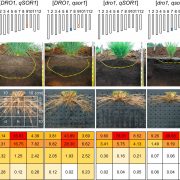
Root angle modifications by the DRO1 homolog improve rice yields in saline paddy fields (PNAS)
Plant Science Research WeeklyThe spatial configuration of roots is a complex and critical trait for productivity that is impacted by abiotic stresses such as drought, waterlogging, and salinity. Soil salinity is expected to affect 50% of agricultural land worldwide by 2050. This research describes that the loss of function of qSOR1…

Do regeneration traits vary according to vegetation structure? A case study for savannas ($) (J. Veg. Sci.)
Plant Science Research WeeklyRegeneration traits –such as germination strategies, seed dormancy, and seedling establishment– are presumably shaped by environmental variables that operate at different temporal and spatial scales. However, empirical evidence about the variation is lacking for most regeneration seed traits. Here,…