


Emission of volatile organic compounds from petunia flowers is facilitated by an ABC transporter
Plant Science Research Weekly0 Comments
/
Plants can emit up to 10% of the carbon they fix as volatile organic compounds (VOCs), which function in abiotic stress tolerance, pollinator attraction, signalling between plants, and defending against pathogens and herbivores. It has been an open question whether these small molecules pass directly…
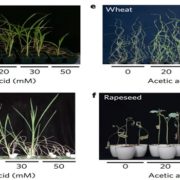
Acetate-mediated novel survival strategy against drought in plants ($)
Plant Science Research WeeklyKim et al. explored the molecular basis for the drought tolerance previously observed for mutants of histone deacetylase HDA6. They observed that genes involved in acetate production are upregulated in hda6 mutants and in drought-stressed plants. Furthermore, acetate biosynthesis mutants are more sensitive…
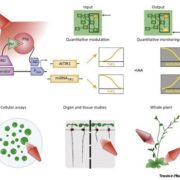
Review: Quantitative monitoring and control of plant signalling through novel theoretical–experimental approaches
Plant Science Research WeeklySamodelov and Zurbriggen describe approaches to exquisitely fine-tune protein and metabolite expression levels through a variety of synthetic and semi-synthetic biology approaches. For example, optigenetics tools enable gene expression to be activated precisely via a light beam; when combined with downstream…
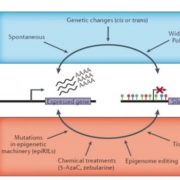
Review: Exploiting induced and natural epigenetic variation for crop improvement
Plant Science Research WeeklyVariation provides the raw material for selection and improvement. Springer and Schmitz describe how natural and induced epigenetic variation supplements genetic variation. This review starts with a description of epigenetics, epigenomics (the genome-wide distribution of epigenetic information), and…
What We're Reading: July 14
Blog, Research, Research BlogReview: Exploiting induced and natural epigenetic variation for crop improvement
Variation provides the raw material for selection and improvement. Springer and Schmitz describe how natural and induced epigenetic variation supplements genetic variation. This review starts with a description of epigenetics,…
Speed breeding: a powerful tool to accelerate crop research and breeding
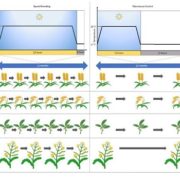
Plant Science Research WeeklyWatson and Ghosh et al. describe protocols to accelerate the lifecycle of several crop species using "speed breeding", which essentially involves extending the daylength to 22 hours with supplemental lighting. They describe methods and results from glasshouse and growth chamber speed breeding. In spite…

A lipid-anchored NAC transcription factor translocates into nucleus to activate GlyI gene expression involved in drought stress
Plant Science Research WeeklyRegulation of transcription factor (TF) localization is a common strategy for gene expression regulation. Wang et al. identified a membrane-anchored TF, MfNACsa, as contributing to drought stress responses. In unstressed plants, MfNACsa is anchored to the plasma membrane through covalent-attachment…

Profile of Plant Cell Editor Keiko Sugimoto
Blog, Careers - Blog, Profiles of Plant Scientists, The Plant Cell, The Plant Cell: Meet the Editors, The Plant Cell: NewsKeiko Sugimoto, an Editor of The Plant Cell, was recently profiled by her undergraduate institution.
Read more about The Plant Cell Editorial Board here.
"At the RIKEN Center for Sustainable Resource Science, the research team I lead as a Principal Investigator (PI) focuses on the two themes of…

What We're Reading: July 7
Blog, Research, Research BlogThis week's edition of What We're Reading is guest edited by K.K. Sabu. Sabu is educated in the field of Plant Sciences and has working experience in plant genetics and genomics since 1995. His research interests include response of plants against environmental changes, natural variations in plant genetic…