

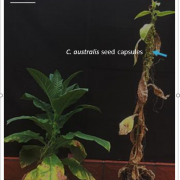
Cuscuta australis (dodder) parasite eavesdrops on the host plants’ FT signals to flower (PNAS)
Plant Science Research Weekly
Plants sense environmental cues, such as day length, to induce flowering and successfully reproduce. An important mobile regulator of flowering is FLOWERING LOCUS T (FT). Upon floral induction, FT is transported from the leaves to the shoot apical meristem where it triggers flower development. Dodders…
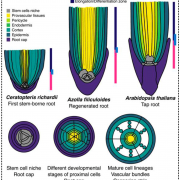
Plant Science Research Weekly: 18 September 2020
WWR Full PostGuest Edited by Michela Osnato.
I completed my studies at the University of Milan (ITALY), with a M.S. in Plant Biotechnology and a PhD in Plant Biology and crop productivity. The plasticity of plant development has always fascinated me. For this reason, I decided to investigate regulatory genes…

Peripheral? Not Really! The Extracellular Arabinogalactan Proteins Function in Calcium Signaling
Blog, Research, The Plant Cell, The Plant Cell: In BriefArabinogalactan proteins (AGPs) are a family of extracellular proteoglycans that existed in land plants and algae (Johnson et al., 2017). AGPs are part of the hydroxyproline-rich glycoprotein (HRGP) superfamily that also includes extensins and proline-rich proteins. Based on the protein sequence, a glycosylphosphatidylinositol…
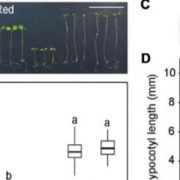
A Chloroplast-derived Signal Attenuates Growth in Red Light by Acting on the phyB-PIF Pathway
Blog, Plant Physiology, Plant Physiology: News and Views, ResearchAuthor: David S. Favero1 (ORCID: 0000-0002-6879-0323)
[email protected]
Affiliation:
1RIKEN Center for Sustainable Resource Science, Yokohama, Kanagawa, 230-0045 Japan
Plant growth and development are regulated by a complex network of signals, many of which converge at the nucleus and…

Chemical labeling of proteins in live plant cells
Blog, Research, The Plant Cell, The Plant Cell: In a NutshellIwatate et al. demonstrate that SNAP-tag technology can be used to label plant cell proteins.
Plant Cell https://doi.org/10.1105/tpc.20.00439
By Ryu J. Iwatatea,b, Akira Yoshinaria, Noriyoshi Yagia, Wolf B. Frommera,c, and Masayoshi Nakamuraa
a Institute of Transformative Bio-Molecules (WPI-ITbM),…
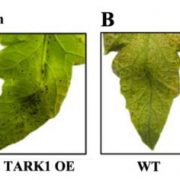
A novel regulator of stomatal immunity in tomato
Blog, Plant Physiology, Plant Physiology: News and ViewsBy Marcelo Lattarulo Campos
Integrative Plant Research Laboratory, Departamento de Botânica e Ecologia, Instituto de Biociências, Universidade Federal de Mato Grosso, Cuiabá/MT, Brazil.
ORCID ID: 0000-0001-6235-5120
[email protected]
The ability of a pathogen to successfully…
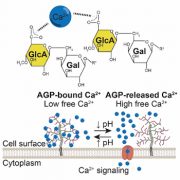
The role of arabinogalactans in plant development
Blog, Research, The Plant Cell, The Plant Cell: In a NutshellLópez-Hernández et al. reveal that arabinogalactans function in calcium signaling from outside to inside the cell.
Plant Cell https://doi.org/10.1105/tpc.20.00027
Federico López Hernández and Paul Dupree
University of Cambridge, Department of Biochemistry, Tennis Court Road, Cambridge,…

Recognizing Plant Direct authors: Iny Elizebeth Mathew
Plant Direct, Plant Direct: Author ProfilesIny Elizebeth Mathew, first author of SUPER STARCHY1/ ONAC025 participates in rice grain filling
Current Position: Research associate, Baylor College of Medicine, Houston, Texas
Education: PhD in Plant Molecular Biology, National Institute of Plant Genome Research (NIPGR), India
Non-scientific…
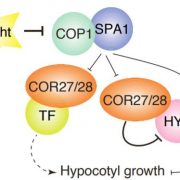
How COR27 and COR28 Promote Hypocotyl Growth: Bind to COP1 And Suppress HY5 Activity
Blog, Research, The Plant Cell, The Plant Cell: In BriefSeedling growth and development rely on the successful integration of information from external signals, such as light and temperature, and endogenous processes, such as the rhythmic ticking of the circadian clock. Together, these signaling pathways tune hypocotyl elongation to allow seedlings to escape…