

The Great Escape: How a Plant DNA Virus Hijacks an Imprinted Host Gene to Avoid Silencing
Blog, Research, The Plant Cell, The Plant Cell: In BriefPlant viruses are a major threat to global food security. The large family of geminiviruses has a broad pathogenic impact on economically important crops such as maize, tomato, and cassava and causes millions of tons of losses per year worldwide (Rojas et al., 2005). Geminiviruses possess a circular…

Recognizing Plant Physiology authors: Amith R. Devireddy
Plant Physiology, Plant Physiology: Author ProfilesAmith R. Devireddy, first author of Phytochrome B is required for systemic stomatal responses and ROS signaling during light stress
Current Position: Postdoctoral Fellow, Bond Life Science Center, University of Missouri, Columbia, Missouri, USA
Education: Ph.D. Plant, Insect and Microbial Sciences,…
Stem diameter fluctuations provide a new window into plant water status and function
Blog, Plant Physiology, Plant Physiology: News and Views, ResearchAuthor: Robert Skelton
[email protected]
Affiliation: South African Environmental Observation Network, Private Bag X7, Claremont, 7735, South Africa
Knowledge of the spatio-temporal dynamics of water storage in plant stems is fundamental to understanding plant physiological function under…
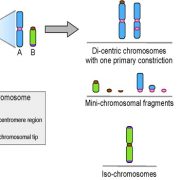
How do Chromosomes Evolve via Unstable Intermediates?
Blog, Research, The Plant Cell, The Plant Cell: In a NutshellYalin Liu, Handong Su, Jing Zhang, et al. explore centromere birth and death by inducing rearrangements via pollen irradiation in maize. Plant Cell https://doi.org/10.1105/tpc.20.00389
Background: The centromere is one of the most important components of chromosomes. Every normal chromosome has one…

More Than Just a FAD(5): Unsaturated Fatty Acids in Chloroplasts Elicit Protective Autoimmunity
Blog, Research, The Plant Cell, The Plant Cell: In BriefArabidopsis (Arabidopsis thaliana) chloroplast-division mutants that have abnormally large chloroplasts have been around for quite some time, not only because they can be identified relatively easily through screening (Pyke & Leech 1991) and because their spectacular morphology sparks intrigue, but…
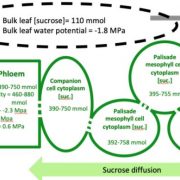
Gaining sugars while sweating, how do leaves regulate their osmolarity?
Blog, Plant Physiology, Plant Physiology: News and Views, ResearchGuillaume Charrier
Université Clermont Auvergne, INRAE, PIAF, F-63000 Clermont-Ferrand, France.
[email protected]
Leaves are specialized for the photosynthetic assimilation of atmospheric carbon, but they also are responsible for the transpiration of water into the atmosphere, as…

Plant Metabolic Redox Dynamics–Live!
Blog, Research, The Plant Cell, The Plant Cell: In a NutshellSteinbeck et al. investigate in vivo NAD redox dynamics in Arabidopsis. Plant Cell https://doi.org/10.1105/tpc.20.00241
By Janina Steinbeck and Markus Schwarzländer
Background: All organisms rely on their cellular metabolism to live, develop, grow, and procreate. Metabolism provides the energy,…

Recognizing Plant Direct authors: Marco Bürger
Plant Direct, Plant Direct: Author ProfilesMarco Bürger, first author of In-silico analysis of the strigolactone ligand-receptor system
Current Position: Senior research associate
Education: PhD: Max Planck Institute of Molecular Physiology; B.S., M.Sc.: University of Osnabrück
Non-scientific Interests: reading, traveling
Brief bio:…

ASPB Is Proud to Recognize Its Reviewers During Peer Review Week 2020
Blog, Pubs PagesThe American Society of Plant Biologists is proud to celebrate Peer Review Week 2020, which recognizes peer reviewers and focuses on the theme “Trust in Peer Review.”
In 2020, our plant biology community, like the rest of the world, was impacted by the devastating effects of COVID-19. Despite…