


Plant Metabolic Redox Dynamics–Live!
Blog, Research, The Plant Cell, The Plant Cell: In a NutshellSteinbeck et al. investigate in vivo NAD redox dynamics in Arabidopsis. Plant Cell https://doi.org/10.1105/tpc.20.00241
By Janina Steinbeck and Markus Schwarzländer
Background: All organisms rely on their cellular metabolism to live, develop, grow, and procreate. Metabolism provides the energy,…

Recognizing Plant Direct authors: Marco Bürger
Plant Direct, Plant Direct: Author ProfilesMarco Bürger, first author of In-silico analysis of the strigolactone ligand-receptor system
Current Position: Senior research associate
Education: PhD: Max Planck Institute of Molecular Physiology; B.S., M.Sc.: University of Osnabrück
Non-scientific Interests: reading, traveling
Brief bio:…

ASPB Is Proud to Recognize Its Reviewers During Peer Review Week 2020
Blog, Pubs PagesThe American Society of Plant Biologists is proud to celebrate Peer Review Week 2020, which recognizes peer reviewers and focuses on the theme “Trust in Peer Review.”
In 2020, our plant biology community, like the rest of the world, was impacted by the devastating effects of COVID-19. Despite…
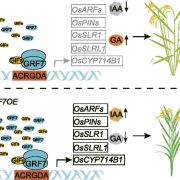
A Molecular Determinant of Rice Plant Architecture
Plant Physiology, Plant Physiology: On The InsidePlant architecture is a major determinant of rice (Oryza sativa) productivity. Rice plant architecture is mainly defined by plant height, the spatial pattern of leaves, and tiller and inflorescence branching patterns. Plant height and tiller branching determine the biomass and harvest index, while the…
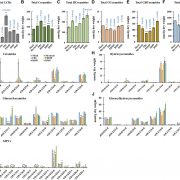
Sphingolipids and Plasmodesmata
Plant Physiology, Plant Physiology: On The InsidePlasmodesmata are cytoplasmic channels that physically connect the cytoplasm and endoplasmic reticulum (ER) of adjoining plant cells. These intercellular channels play important roles during plant development by allowing the molecular exchange of signaling molecules such as transcription factors, RNAs,…

The Regulation of Cuticle Biosynthesis
Plant Physiology, Plant Physiology: On The InsideThe outer surface of the aerial parts of land plants is covered by the cuticle, a waxy layer that provides a barrier against damage caused by environmental factors as well as protection against non-stomatal water loss. Castorina et al. (10.1104/pp.20.00322) now show that both cuticle deposition and…
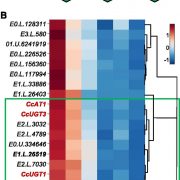
Biosynthesis of Montbretin, an Anti-Diabetes Drug
Plant Physiology, Plant Physiology: On The InsideDiabetes and obesity are major health challenges. Diabetes alone affects over 422 million people worldwide and is among the top ten leading causes of death. Type-2 diabetes (T2D) is characterized by the body’s inefficient use of insulin, which leads to elevated blood Glc levels with detrimental effects…

Villin and GLABRA2 Regulate Root Hair Growth
Plant Physiology, Plant Physiology: On The InsideThe enhanced elongation of root hairs in response to mild water deficiency permits more effective water and nutrition uptake. The growth of root hairs is regulated in part by actin dynamics. Thick actin-filament bundles (“thick bundles”) in the apical and subapical area of root hairs, for example,…
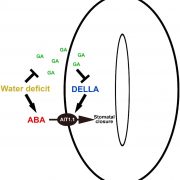
A Novel Form of Crosstalk Between Gibberellic Acid and Abscisic Acid
Plant Physiology, Plant Physiology: On The InsideThe negative interaction between gibberellic acid (GA) and the stress hormone abscisic acid (ABA) has been studied for many years in numerous plant species. These studies suggest that GA and ABA negatively affect each other’s biosynthesis and signaling. The nuclear DELLA proteins suppress almost all…