

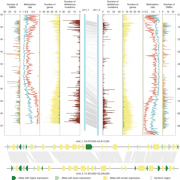
Haplotype-resolved genome analyses of a heterozygous diploid potato (Nature Genetics)
Plant Science Research WeeklyPotato (Solanum tuberosum) is the third most important food crop worldwide. It is also a clonally propagated tetraploid, making progress in breeding genetically improved cultivars extremely difficult. Therefore, there are ongoing efforts to redomesticate potato from a tetraploid, tuber-propagated crop…
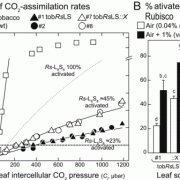
The dependency of red Rubisco on its cognate activase for enhancing plant photosynthesis and growth (Proc. Natl. Acad. Sci. USA)
Plant Science Research WeeklyThe rate of carboxylation by Rubisco versus the rate of the competing oxygenation reaction limits photosynthesis in some conditions, so many researchers are investigating ways to enhance Rubisco. Rubisco is not limited to green plants but can be found in other lineages including red algae and photosynthetic…
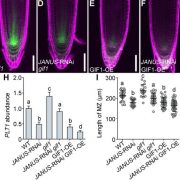
Transcriptional regulation of PLETHORA1 in the root meristem through an importin and its two antagonistic cargos (Plant Cell)
Plant Science Research Weekly
Plant root growth is sustained by stem cells in the root meristems, and the stem cell fate is maintained by the quiescent center (QC). PLETHORA (PLT) protein gradients contribute to maintaining the root meristem cell fate, although the transcriptional regulatory mechanism that establishes the PLT…
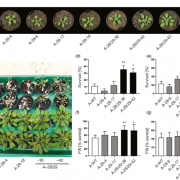
Combinatorial engineering of signaling networks for drought tolerance (Plant Biotechnol. J.)
Plant Science Research WeeklySeveral potential targets have been suggested to improve drought tolerance and water-use efficiency of crops, but many genes when upregulated can cause negative growth trade-offs. Stress recognition and signaling proteins are attractive targets as they may exert control over multiple downstream pathways…
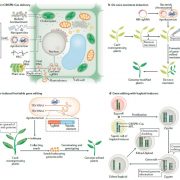
Plant Science Research Weekly: October 9, 2020
WWR Full PostReview: Less is more, natural loss-of-function mutation is a strategy for adaptation
Gene gain through duplication and gene loss through loss-of-function (LoF) mutations determine genetic variation underlying diversification and adaptive evolution. In this review, Xu and Guo highlight the importance…
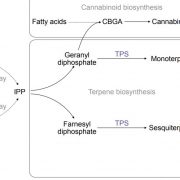
Terpenes in cannabis: Solving the puzzle of how to predict taste and smell
Blog, Plant Physiology, Plant Physiology: News and Views, ResearchMarc-Sven Roell1
ORCID ID: 0000-0003-2714-8729
1Institute of Plant Biochemistry, Heinrich-Heine University Düsseldorf, Universitätsstrasse 1, 40225 Düsseldorf, Germany
[email protected]
Cannabis sativa (cannabis) is the cornerstone of the multi-billion-dollar legal marijuana industry.…
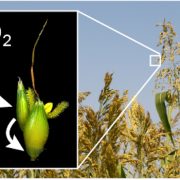
Useless no more: infertile spikelets contribute to grain yield in a major food crop and its relatives
Blog, Research, The Plant Cell, The Plant Cell: In a NutshellAuBuchon-Elder and Coneva et al. reveal an important function for apparently non-functional floral structures.
Plant Cell https://doi.org/10.1105/tpc.20.004242
By Taylor AuBuchon-Elder1,*, Viktoriya Coneva1,2*, Doug K. Allen1,3†, and Elizabeth A. Kellogg1†
1Donald Danforth Plant Science…

Recognizing Plant Cell authors: Jing Liu
The Plant Cell, The Plant Cell: Author ProfilesJing Liu, first author of SPIKE1 Activates the GTPase ROP6 to Guide the Polarized Growth of Infection Threads in Lotus japonicus
Current Position: Ph.D. candidate, CAS Center for Excellence in Molecular Plant Sciences/Institute of Plant Physiology and Ecology
Education: Ph.D. in Genetics, CAS Center…

Recognizing Plant Physiology authors: Kaitong Du
Plant Physiology, Plant Physiology: Author ProfilesKaitong Du, first author of Viral Perturbation of Alternative Splicing of a Host Transcript Benefits Infection
Current Position: PhD student in the Plant Virology Lab (2018-), Department of Plant Pathology, China Agricultural University, Beijing, China
Education: B.Sc. in Plant Protection, China…