


Maize RNA Polymerase III Subunit NRPC2: New Kid on the Kernel Development Block
Blog, Plant Physiology, Plant Physiology: News and Views, ResearchDhineshkumar Thiruppathi 1,2
ORCID ID: 0000-0002-2018-3356
Donald Danforth Plant Science Center,
Saint Louis, Missouri 63132
1Senior author
2Author for contact: [email protected]
Seed (kernel) size affects evolutionary fitness and crop yield. In angiosperms, seed size…

Recognizing Plant Physiology authors: Shiyi Xie
Plant Physiology, Plant Physiology: Author ProfilesShiyi Xie, first author of A missense mutation in a large subunit of ribonucleotide reductase confers temperature-gated tassel formation
Current Position: Unemployed
Education: China Agricultural University Crop Genetics and Breeding, Doctor of Science in Agriculture; Hunan Agricultural University …

Gains in Grain Yield: A Pair of Spikelets Makes All the Difference, Even When One is Sterile
Blog, The Plant Cell, The Plant Cell: In a NutshellMother Nature has a way of keeping seemingly useless structures around millions of years. Such structures are likely to have a use that is not obvious, although they could also be remnants of the evolutionary past without extant function, or non-functional but harmless byproducts of a different adaptive…
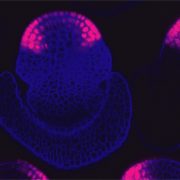
Exploring variation in a key maize regulator of floral form
Blog, Research, The Plant Cell, The Plant Cell: In a NutshellMaría Jazmín Abraham-Juárez, Amanda Schrager-Lavelle et. al. explore how variation in a key floral regulator affects floral development, downstream gene expression and protein complex assembly in maize. Plant Cell https://doi.org/10.1105/tpc.20.00300
by Jazmin Abraham-Juarez, Biology Department,…

Recognizing Plant Cell authors: Ping Wang
The Plant Cell, The Plant Cell: Author ProfilesPing Wang, first author of Cotton wall-associated kinase GhWAK7A mediates responses to fungal wilt pathogens by complexing with the chitin sensory receptors
Current Position: Postdoctoral Research Associate in the Department of Plant Pathology and Microbiology, Texas A&M University, College Station,…
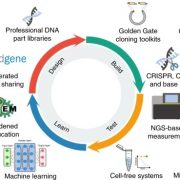
Review: The second decade of synthetic biology: 2010–2020 (Nature Comms.)
Plant Science Research Weekly
I guess if this were a normal year, we’d be spending time looking back over the past decade, but Covid-19 has made anything pre-2019 seem like a different lifetime. Still, here’s a retrospective you don’t want to miss. Meng and Ellis take us on a short walk down memory lane through the “second…
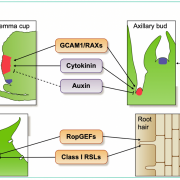
Review: Gemma cup and gemma development in Marchantia polymorpha (New Phytol.)
Plant Science Research Weekly
Plants have the astounding capacity to generate new plants derived from specialized organs (i.e., roots, leaves, and stems). This capacity, known as vegetative propagation, is used by horticulturists and farmers to propagate clonal varieties. This form of reproduction is fueled by the ability to…
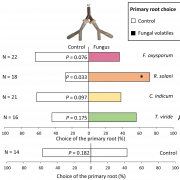
The love potion made by soil-borne fungi (Plant Cell Environ.)
Plant Science Research WeeklyThe basic requirements for plant growth are water, nutrients, and light. There are many other factors contributing to plant growth, including the interactions between plants and soil microorganisms. Soil microorganisms produce a large array of volatiles that can affect root architecture (e.g., some volatiles…
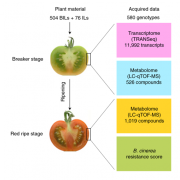
Multi-omics analyses of wild tomato introgression lines reveal a set of gene expression-metabolite-pathogen sensitivity interactions (Nat. Genet.)
Plant Science Research WeeklyDomesticated tomato has been subjected to human selection to satisfy marketing and economic desires, leading to a loss of genetic diversity and elimination of fruits traits such as flavor, aroma and pathogen resistance. Introgression lines (ILs) that capture the genome of wild desert-adapted tomato Solanum…