

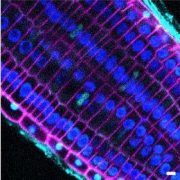
Follow that Protein: SNAP-tagging Permits High-resolution Protein Localization
Blog, Research, The Plant Cell, The Plant Cell: In BriefProtein analysis relies heavily on the production of ‘tagged’ proteins, i.e. recombinant proteins that contain both a functional peptide sequence and a peptide or chemical label (the ‘tag’). Common tags include fluorescent proteins (FPs), which make tagged proteins easier to detect, as well as…
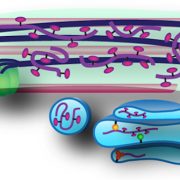
Sometimes “jammed paper” can be a good thing: functional interactions between pectins and cellulose in the plant cell wall
Blog, Research, The Plant Cell, The Plant Cell: In a NutshellDu et al. explore how pectins interact with cellulose in the plant cell wall.
Plant Cell https://doi.org/10.1105/tpc.20.00252
By Juan Du1 and Charles T. Anderson2,3
1Key Laboratory of Bio-Resource and Eco-Environment of Ministry of Education, College of Life Sciences, Sichuan University, Chengdu…

Review: Less is more, natural loss-of-function mutation is a strategy for adaptation (Plant Communications)
Plant Science Research WeeklyGene gain through duplication and gene loss through loss-of-function (LoF) mutations determine genetic variation underlying diversification and adaptive evolution. In this review, Xu and Guo highlight the importance of LoF mutations in the evolutionary success of several organisms as revealed by advancements…
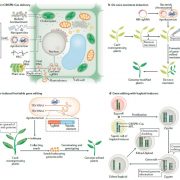
Review: Applications of CRISPR–Cas in agriculture and plant biotechnology (Nature Rev. Mol. Cell Biol.)
Plant Science Research WeeklyThis week’s announcement of the Nobel Prize in Chemistry being awarded to Emmanuelle Charpentier and Jennifer A. Doudna “for the development of a method for genome editing” comes as no surprise to many. CRISPR (clustered regularly interspaced short palindromic repeats)– Cas (CRISPR-associated…
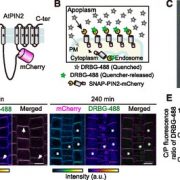
SNAP ‘n’ Track: Protein localization using fluorescent dyes (Plant Cell)
Plant Science Research WeeklyProteins’ sub-cellular localizations provide a wealth of information regarding their functional attributes. Protein localization in plant cells is usually done through genetically combining fluorescent proteins to the protein-of-interest. Now, Iwatate and colleagues report the successful localization…

PlaCCI (Plant cell cycle indicator); fluorescent sensor for spatiotemporal cell cycle analysis (Nature Plants)
Plant Science Research WeeklyThe cell cycle requires a series of transitions from G1 to S, S to G2, G2 to M and M to G1 phases. Determining the cell cycle phase is critical for understanding the molecular events specific to a given stage of cell cycle. However, markers for identifying these cell cycle transitions in plants are not…
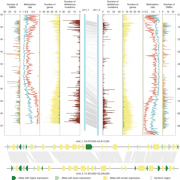
Haplotype-resolved genome analyses of a heterozygous diploid potato (Nature Genetics)
Plant Science Research WeeklyPotato (Solanum tuberosum) is the third most important food crop worldwide. It is also a clonally propagated tetraploid, making progress in breeding genetically improved cultivars extremely difficult. Therefore, there are ongoing efforts to redomesticate potato from a tetraploid, tuber-propagated crop…
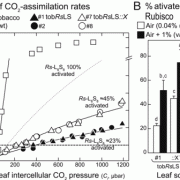
The dependency of red Rubisco on its cognate activase for enhancing plant photosynthesis and growth (Proc. Natl. Acad. Sci. USA)
Plant Science Research WeeklyThe rate of carboxylation by Rubisco versus the rate of the competing oxygenation reaction limits photosynthesis in some conditions, so many researchers are investigating ways to enhance Rubisco. Rubisco is not limited to green plants but can be found in other lineages including red algae and photosynthetic…
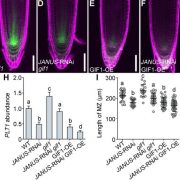
Transcriptional regulation of PLETHORA1 in the root meristem through an importin and its two antagonistic cargos (Plant Cell)
Plant Science Research Weekly
Plant root growth is sustained by stem cells in the root meristems, and the stem cell fate is maintained by the quiescent center (QC). PLETHORA (PLT) protein gradients contribute to maintaining the root meristem cell fate, although the transcriptional regulatory mechanism that establishes the PLT…