


Hailong Yang: Plant Physiology First Author
Plant Physiology: Author Profiles
Hailong Yang, first author of "Tissue-specific transcriptomics reveal functional differences in floral development"
Current Position: PhD student at Biology Department of East Carolina University
Education: M.Sc. in Crop Genetics and Breeding, Institute of Crop Sciences at Chinese Academy of Agricultural…
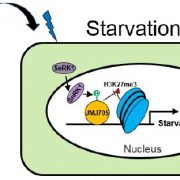
Linking low energy sensing to chromatin modification and gene activity in rice
The Plant Cell: In a NutshellWang and colleagues investigated the starvation response of rice seedlings.
By Wentao Wang and Yue Lu
Background: For survival and growth, cells of all living organisms must balance their energy consumption and supply. Although energetically autonomous (through photosynthesis), plants are continuously…

Bae Young Choi: The Plant Cell First Author
The Plant Cell: Author Profiles
Bae Young Choi, co-first author of “The Chlamydomonas bZIP transcription factor BLZ8 confers oxidative stress tolerance by inducing the carbon-concentrating mechanism”
Current position: Ph.D. student at the Laboratory of Plant Cell Biology, Pohang University of Science and Technology, Korea
Education:…
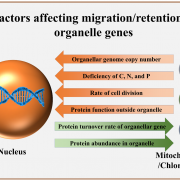
The evolutionary advantage of losing genes after endosymbiosis (Genome Biol)
Plant Science Research WeeklyThe emergence of eukaryotes is associated with endosymbiosis of mitochondria and chloroplast. In the course of evolution, most of the genes from these organelles have either migrated to the nucleus or been lost. But why have a small but significant number of genes remained in these organelle genomes?…
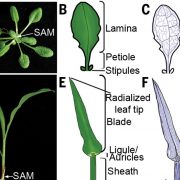
Sheathing leaf: The grass leaf conundrum!! (Science)
Plant Science Research WeeklyOne of the peculiar features of monocots is the presence of sheathing leaf base that encircles the stem, which allow grasses to grow in height, while protecting apical meristem from herbivores by keeping it lower to the ground. Despite its significance, the evolutionary origin has been a controversy…
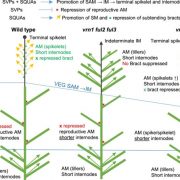
An essential role of MADS-box proteins during wheat spike development (Plant Cell)
Plant Science Research WeeklyWheat yields depend on the morphology of the inflorescence known as the spike, which harbors multiple lateral spikelets. To control and manipulate wheat productivity, it is necessary to understand the molecular and genetic mechanisms behind the development of inflorescence architecture. Wheat spike development…
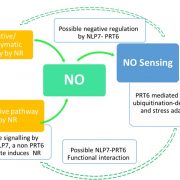
Functional interaction of nitrate signaling regulator NLP7 and N-degron “recognin” PRT6 enhances abiotic stress tolerance (Plant Physiol.)
Plant Science Research WeeklyIn addition to the vast array of metabolic and signaling roles, nitric oxide (NO) is prominently involved in low oxygen sensing in seeds and waterlogged plants. In Arabidopsis, the cytosolic nitrate reductase (NR) isoforms NIA1/NIA2 catalyze the reductive pathway of NO generation. NO sensing in plants…
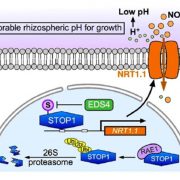
STOP1-NRT1.1: a new module to optimize nitrogen and growth in acidic media for plants (Plant Cell)
Plant Science Research WeeklyAcidic soils often negatively impact plant growth, yet the application of fertilizers containing urea or ammonia have the effect of acidifying soils. In a recent paper, Ye and colleagues investigated how nitrate uptake through the nitrate transporter NITRATE TRANSPORTER 1.1 (NRT1.1) can mitigate some…
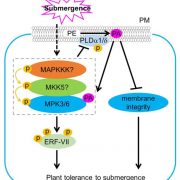
Phosphatidic acid modulates MPK3- and MPK6- mediated hypoxia signaling in Arabidopsis (Plant Cell)
Plant Science Research WeeklyPlants experience changes in gene expression and cellular metabolism to improve their survival to abiotic stresses, such as hypoxia. It has been observed that environmental signals induce phospholipase D (PLD) which generates phosphatidic acid (PA) by cleaving membrane phospholipids. Indeed, submergence…