

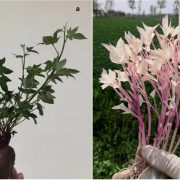
Transcriptome sequencing of a novel albino mutant of hexaploid sweetpotato (Plant Mol Biol Rep)
Plant Science Research WeeklyAlbino plants lack chlorophyll, which means that they cannot photosynthesize. These kinds of plant are unique and can offer information as to the molecular mechanism of chlorophyll degradation and photosynthesis in plants. Here, Arisha et al. explored the differences in gene expression patterns of seedling…
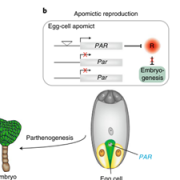
The PARTHENOGENESIS gene that contributes the clonal propagation through seeds in dicot dandelion (Nature Genetics)
Plant Science Research WeeklyIn plants with sexual reproduction, the male contribution (two sperm cells) is necessary to fertilize two female cells, the egg cell that gives rise to the embryo and the central cell that gives rise to the endosperm. In contrast, apomictic plants (0.1% of flowering plants spread over 120 genera) don´t…
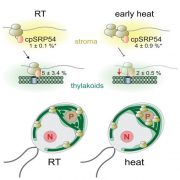
Fast and global reorganization of the chloroplast protein biogenesis network during heat acclimation (Plant Cell)
Plant Science Research WeeklyWith the rising climatological extremes, heat stress is a major concern towards sustainable crop yield and productivity as it impairs several physiological and developmental processes. Due to the sessile lifestyle of land plants, they undergo various acclimation responses to cope with fluctuating temperatures.…
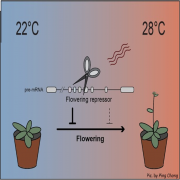
The splicing factor RNA BINDING PROTEIN 45d regulates temperature-responsive flowering (Plant Cell)
Plant Science Research WeeklyPosttranscriptional events such as splicing are part of the gene regulation toolbox. Previous studies have demonstrated a role for U-rich small nuclear ribonucleoproteins (snRNPs) such as U1 in the control of splicing. In a recent paper in The Plant Cell, Chang et al. identified a splicing factor, RNA…
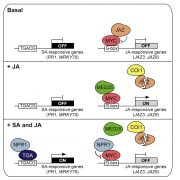
Suppression of MYC transcription activators by the immune cofactor NPR1 fine-tunes plant immune responses (Cell Reports)
Plant Science Research WeeklyIn Arabidopsis, NONEXPRESSOR OF PR GENES 1 (NPR1) plays an important role in the antagonistic crosstalk of salicylic acid (SA) and jasmonic acid (JA) signalling. It activates SA-induced genes that protect against biotrophic pathogens and suppresses JA-induced genes that protect against necrotrophic pathogens.…
Plant Science Research Weekly: January 21, 2022
Blog, WWR Full PostTT2 controls rice thermotolerance through SCT1-dependent alteration of wax biosynthesis
Global warming severely affects agricultural harvests, risking food security. To deal with heat stress, plants show different strategies. Indeed, heat increases intracellular Ca2+ levels to activate a heat shock…

GWAS and the fight against darkness-induced starvation
The Plant Cell: In a NutshellFeng Zhu and colleagues investigate the time-resolved mGWAS of dark-induced senescence. https://doi.org/10.1093/plcell/koab251
By Feng Zhu and Alisdair R. Fernie
Background: In cellular circumstances under which nutrients are scarce, plants must degrade polymers to recycle carbon (C) and nitrogen…

Lisa Désirée Westrich: The Plant Cell First Author
The Plant Cell: Author Profiles
Lisa Désirée Westrich, co-first author of “Fast and global reorganization of the chloroplast protein biogenesis network during heat acclimation”
Current Position: PhD student in the laboratory of Molecular Genetics of Eukaryotes at the Technische Universtität Kaiserslautern
Education: M.…

Raphael Trösch: The Plant Cell First Author
The Plant Cell: Author Profiles
Raphael Trösch, co-first author of “Fast and global reorganization of the chloroplast protein biogenesis network during heat acclimation”
Current Position: Post Doc in Dr. Reimo Zoschke’s research group at the Max Planck Institute of Molecular Plant Physiology in Golm.
Education: Ph.D. in…