

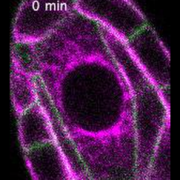
Visualizing Female Meiosis in Arabidopsis
Blog, ResearchIn plants, compared to male meiosis, female meiosis has remained largely unexplored. In our recent study published in The Plant Cell (Hu and Prusicki et al., 2026), by live cell imaging, we visualize female meiosis in the model plant Arabidopsis thaliana, advancing the knowledge of reproductive development.
Background:…

The Subtle Art of Pivot: Navigating Topic Changes in Your Research
Blog, CareersIt was a cold Tuesday afternoon in my second year when my advisor sat across from me and said, almost gently, "I think we need to reconsider the direction of your project." I had spent the last year optimizing the phenotyping protocol for drought response in a specific Arabidopsis mutant line. I had…

Plantae Presents - From Bench to Business: Building Plant Science-Based Startups
Blog, Education, Plantae WebinarsPlantae Presents - From Bench to Business: Building Plant Science-Based Startups
Featuring Kathleen Denya, Sarah Hammer, and Lucas Lieber
When: Thursday, May 28, 2026, at
8:00 AM PDT | 11:00 AM EDT | 4:00 PM BST | 11:00 PM Beijing
About this Webinar
Plant scientists are doing some of the most…

How to Negotiate Your First Lab Manager Offer?
Blog, CareersCompetition for scientific job positions is increasingly fierce nowadays. That pressure is felt even more strongly in the global south, where stable and well-funded jobs for highly trained scientists are limited, often available in a select few cities (Kent et al, 2022[1]).
Major employers include…
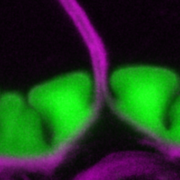
Building Cell Walls for Explosive Seed Dispersal
Blog, ResearchWe are putting our spotlight in this section on how secondary cell walls acquire the precise shape, structure, and polarity necessary for explosive seed dispersal in the small weed Cardamine hirsuta. Specifically, we wanted to understand the role of cellulose- a major structural component of plant cell…
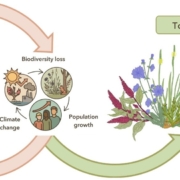
Review. Beyond elite crops: Designing resilient agriculture from wild plant diversity
Plant Science Research WeeklyWhen looking at the foods that fill our supermarkets, it can be hard to imagine we are relying on just a handful of domesticated plant species. Thousands of wild plants, each with its own unique strengths, remain overlooked and underused. For years, plant breeders have tried to borrow these unique traits…
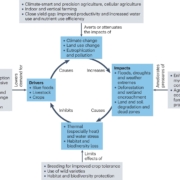
Review. How food production impacts the environment, and vice versa
Plant Science Research WeeklyThis comprehensive review by Mogollón et al. would be a great starting point to help students think about the pressing challenge of feeding growing numbers of people in the face of climate change. The article begins with the impact of food production on the environment; the release of greenhouse gasses,…
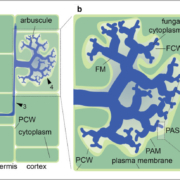
Review: Apoplastic signaling during arbuscular mycorrhizal symbiosis
Plant Science Research WeeklyPlants rely on microbes to aid their uptake of nutrients. Most plants from an intimate association with mycorrhizal fungi, in which both partners benefit through the exchange of nutrients and photosynthate. In the most common form, arbuscular mycorrhizal symbiosis, the fungus forms branched structures…
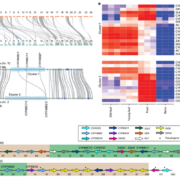
The biosynthetic gene cluster for the active compound of a widely used medicinal plant, ashwagandha
Plant Science Research WeeklyWithania somnifera (ashwagandha) is popularly known for its most prominent bioactive compound called withanolide. This natural product has enormous medicinal potential and has traditionally been used in the Indian Ayurvedic system for more than 3000 years to treat various illnesses. However, the industrial…