The biosynthetic gene cluster for the active compound of a widely used medicinal plant, ashwagandha
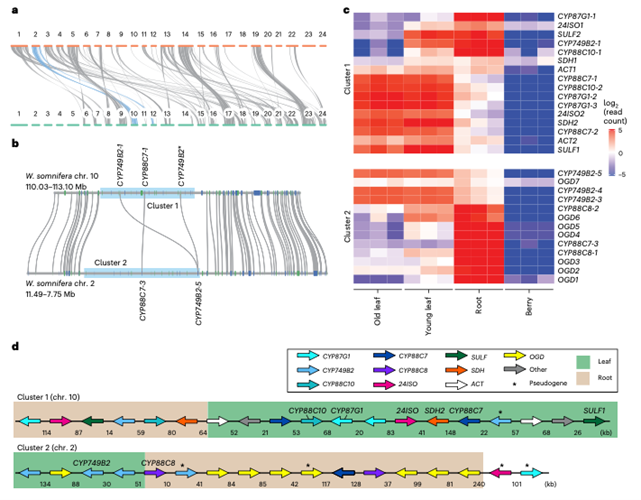
Withania somnifera (ashwagandha) is popularly known for its most prominent bioactive compound called withanolide. This natural product has enormous medicinal potential and has traditionally been used in the Indian Ayurvedic system for more than 3000 years to treat various illnesses. However, the industrial production of withanolide remains a bottleneck due to the complex pathway and expensive extraction process. To address this gap, Reynolds and co-workers have used metabolic engineering to convert yeast into a bio-factory for withanolide biosynthesis and adopted a learning-by-building strategy to reconstruct all the stepwise pathways. First, they generated the genetic blueprint of ashwagandha and identified two large Biosynthetic Gene Clusters (BGCs) responsible for withanolide synthesis. These clusters are among the largest BGCs known to date. Co-expression analysis reveals that these clusters show segmented behavior and are expressed differentially in both root and leaf tissues. Furthermore, they detected P450s, SDH2, SULF1 as the main enzymes of the withanolide core structure, which is crucial for the biosynthesis and bioactivity of withanolides. To scale up the withanolide production, the authors re-engineered yeast and further validated the system in Nicotiana benthamiana. This research provides a genetic map of withanolide biosynthesis in W. somnifera and provides a future path for its industrial production to make cost-effective medicine to treat various diseases. (summary by Kavita Joshi @JoshiKvita) Nature Plants 10.1038/s41477-026-02220-z