Review: Apoplastic signaling during arbuscular mycorrhizal symbiosis
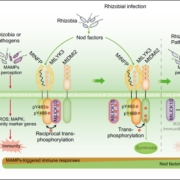
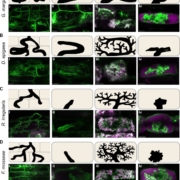
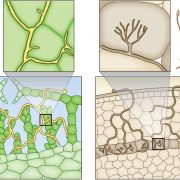
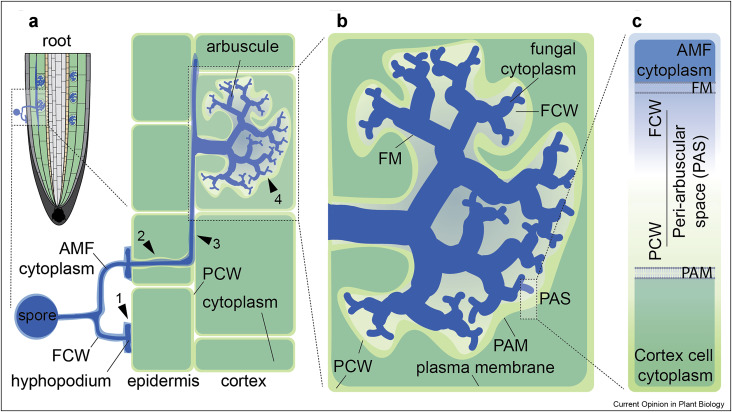 Plants rely on microbes to aid their uptake of nutrients. Most plants from an intimate association with mycorrhizal fungi, in which both partners benefit through the exchange of nutrients and photosynthate. In the most common form, arbuscular mycorrhizal symbiosis, the fungus forms branched structures within the plant cell, providing a specialized surface area for this exchange. As many fungi are pathogenic to plants, the formation of these exchange sites is tightly controlled by the plant and requires extensive communication between the partners. Recently, Rodriguez-Garcia and Müller reviewed our current understanding of the mechanisms of this communication as it takes place at the interface between the two partners, the peri-arbuscular space. As described in the review, this apoplastic space hosts a rich inter-kingdom dialogue that involves receptors, signaling peptides, and extracellular vesicles, working together to ensure that both partners benefit from the symbiosis. (Summary by Mary Williams @PlantTeaching.bsky.social) Curr. Opin. Plant Biol. 10.1016/j.pbi.2025.102849