Review. How food production impacts the environment, and vice versa
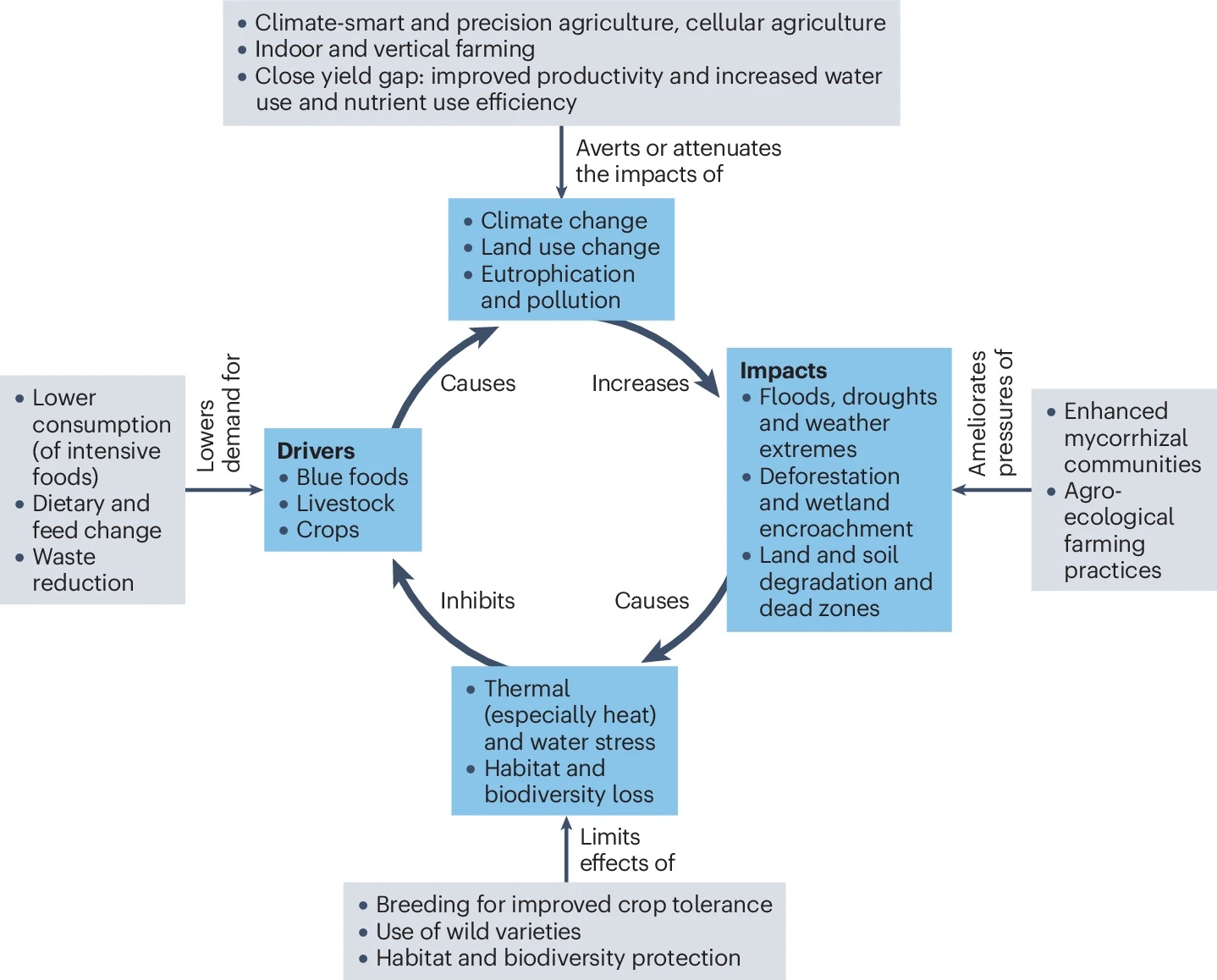 This comprehensive review by Mogollón et al. would be a great starting point to help students think about the pressing challenge of feeding growing numbers of people in the face of climate change. The article begins with the impact of food production on the environment; the release of greenhouse gasses, land use changes, soil erosion, pesticide usage, nutrient runoff and eutrophication, watershed depletion, and of course the loss of biodiversity. It then turns things around and addresses how these environmental challenges affect our ability to produce food; for example, heat, drought, flooding, and pollinator declines all affect plant productivity, with knock-on effects onto production of animal- and fish-derived foods. It concludes with some recommendations, ranging from breeding for heat tolerance, agroecology, and dietary changes. The importance of addressing the impacts of the food production system is summed up thusly: “Modern food systems now use over one-third of global land area, drive roughly a quarter to one-third of total anthropogenic GHG emissions and account for most anthropogenic demand for freshwater.” (Summary by Mary Williams @PlantTeaching.bsky.social) Nat Rev Earth Environ 10.1038/s43017-026-00778-y