Genomic analysis of a lichen photobiont alga
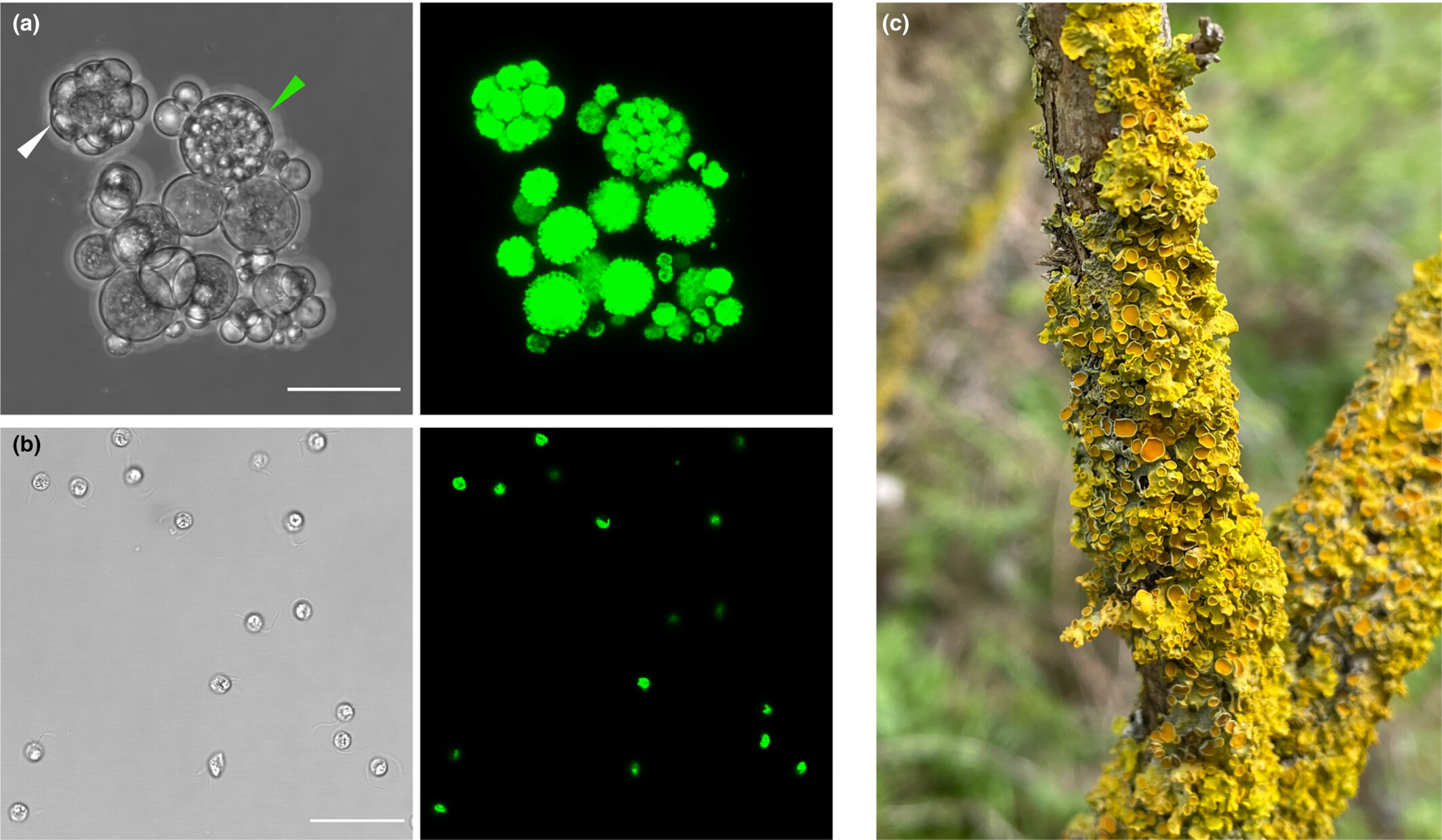 Lichens are complex assemblies that are composed of at least two organisms, a fungus (the mycobiont) and a photosynthetic partner, the photobiont. Lichen lifestyles have emerged several times, and the photobiont can be either prokaryotic cyanobacteria or eukaryotic algae. Recently, Tagirdzhanova et al. carried out a genomic analysis of the photobiont isolated from the widespread lichen Xanthoria parietina (also known as the common orange or common sunburst lichen). Unlike some lichen, this species reproduces sexually, and the photobiont is taken up again in each generation. The most common photobionts in this lichen species and across lichen types more broadly are from the Trebouxia genus. Here, the authors homogenized the lichen and cultured the resulting cells, yielding a pure culture of the algal species that was used for sequencing. The genome revealed several insights into the photobiont and lichen physiology, such as the presence of carbon-concentrating mechanisms. It also revealed some insights into the symbiosis, such as genes involved in producing ribitol, a sugar alcohol passed from the photobiont to the fungal host, as well as secreted proteins that might aid in cell adhesion. Furthermore, the authors found evidence of ancient horizontal gene transfers from fungi to the alga that might predispose them to symbiosis. Importantly, this work provides a high-quality, chromosome-level reference genome of an important lichen photobiont. (Summary by Mary Williams @PlantTeaching.bsky.social) New Phytol. 10.1111/nph.70728