


Plantae Presents: What to Keep in Mind When Starting in a New Lab
Blog, Education, Plantae WebinarsPlantae Presents: What to Keep in Mind When Starting in a New Lab
Featuring Fernando Guzmán-Chávez, Ilian Giordano Ponce-Pineda, Tatsuya Nobori, and Arsheed Sheik
When: Monday, February 23, 2026, at
7:00 AM PST | 10:00 AM EST | 3:00 PM GMT | 11:00 PM Beijing
About this Webinar
Although science…
Plant Physiology Spotlights March, April and May 2025 First Authors
Blog, Community, Plant Physiology: Author ProfilesBehind the Plant Physiology manuscripts are researchers, professors, professionals and students dedicated to advancing the field of plant science. You’ve seen our First Authors on Bluesky, Facebook, and Twitter — now, read more about why they chose to pursue plant sciences and click on the links…

AI in Scientific Writing: Uses, Limitations, and Ethical Implications
Blog, EducationIntroduction
Artificial Intelligence has long been widely used in biological research, with huge contributions in structural biology, image analysis, and genomics. Generative AI, however, has only recently become a major player in scientific writing and communication. In this blog, we discuss the…

The Global Plant Events Calendar is Celebrating 7th Anniversary
Blog, CommunityThe Global Plant Events Calendar is a joint initiative of Agrisera and Plantae/ASPB to support the plant science community with a good overview of worldwide meetings, conferences and workshops, both in person and online (often free of charge).
Read more.

Promoting Scientific Visibility of Plant Sciences
Blog, CommunityPlant science drives the future of sustainable agriculture, climate resilience, and food security. Yet, the impact of plant science research remains invisible to the public eyes, and we call this plant awareness disparity (PAD), also referred to as plant blindness (Parsley et al, 2020). This blindness…
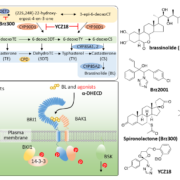
Founders review: Forty years of research into hormone mimics, inhibitors, and agrochemicals
Plant Science Research WeeklyThis review, by Tadao Asami, looks back at his career as a scientist who designs and synthesizes small, physiologically active molecules with applications in research and agriculture. It’s an impressive history documenting how the methods used for such rational design have evolved over the past five…
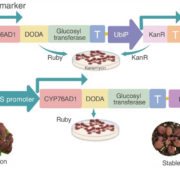
Review: RUBY: a genetically encoded visible reporter for plant biology
Plant Science Research WeeklyA major challenge in plant biology is observing molecular events. Reporter systems such as GUS and GFP have underpinned breakthroughs in gene regulation, cell signalling and development, yet each has its constraints: Fluorescent proteins demand microscopes and low background autofluorescence, and GUS…
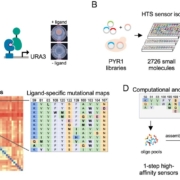
A shape-shifting plant receptor expands the landscape of small-molecule sensing
Plant Science Research WeeklyDesigning small-molecule biosensors that are both sensitive and versatile remains a central challenge in synthetic biology, yet such tools are indispensable for environmental monitoring, cellular control, and emerging biotechnologies. In this study, Tian and colleagues exploit an unexpected feature of…
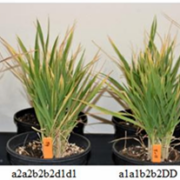
TaMYB-D7 alleles mediate leaf pigmentation in response to nutrient status in wheat
Plant Science Research WeeklyNitrogen and phosphorus are essential macronutrients for wheat (Triticum aestivum L.) growth and development, and phosphorus deficiency is often associated with purple pigmentation in leaves due to anthocyanin accumulation. For farmers and growers, this pigmentation can be read as a sign of phosphorus…