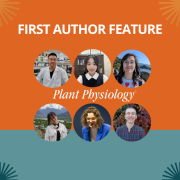

Plant Physiology Spotlights March, April and May 2025 First Authors
Behind the Plant Physiology manuscripts are researchers, professors, professionals and students dedicated to advancing the field of plant science. You’ve seen our First Authors on Bluesky, Facebook, and Twitter — now, read more about why they chose to pursue plant sciences and click on the links below to read their articles.
 Lidia Soto Pascual
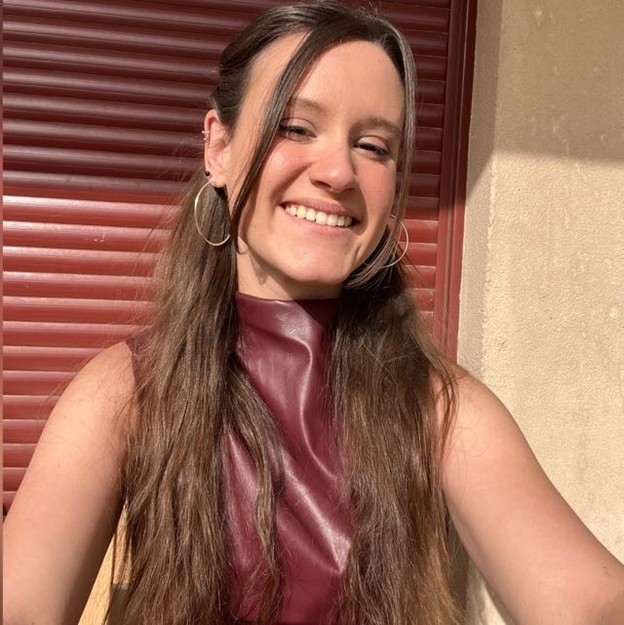
Lidia Soto Pascual is the First Author of Inoculation of tomato with a plant growth-promoting rhizobacteria enhances basal and wound-induced ROS levels published February 2025.Lidia Soto Pascual is a PhD candidate at Universitat Jaume I, Castellón de la Plana, Spain.
Education background includes:2021 MSc in Applied Chemistry: Pharmacology and medical approach 2020 BSc Biotechnology. Research interests include Abiotic stress, multifactorial stress combinations. Personal interests include Traveling, painting.
“I discovered my passion for plants through hands-on work, which deepened my appreciation for their complexity and importance. I love plant science for its ability to address critical global issues like climate resilience and food security, topics really important for our generation. My inspiration comes from dedicated mentors like Sara I Zandalinas or Ron Mittler.”
 Imran Pancha
Imran Pancha is the First Author of Target of rapamycin signaling regulates starch degradation via α-glucan water dikinase in a unicellular red alga published 21 March 2025. Pancha is a Assistant Professor at Gujarat Biotechnology University, India.
Education background includes: 2015 Ph.D AcSIR-CSMCRI. Research interests include TOR signaling in microalgae, Microalgal biotechnology, Algal stress physiology. Personal interests include Reading books.
“I have been fascinated by biology since my school time. During my JSPS postdoc tenure I am particularly interested in TOR signalling in microalgae. I think understanding the basic mechanism behind how TOR signalling regulates growth and accumulation energy reserve compounds in microalgae will help us to develop green and sustainable biofuels.”
 Yi Sun
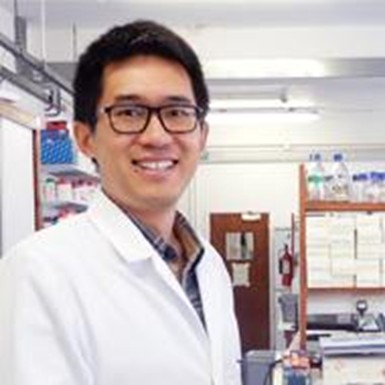
Yi Sun is the First Author of Membranous translation platforms in the chloroplast of Chlamydomonas reinhardtii published on 21 March 2025. Sun is a Researcher Co-Investigator, Professor Paul Jarvis’s Group, Department of Biology, University of Oxford, UK.
Education background includes: 2013 Ph.D., Shanghai Institute of Plant Physiology and Ecology, Chinese Academy of Sciences, China. Research interests include Proteostasis, Bioenergetics, and Chloroplast Biology. Personal interests include Cooking.
“My interest in chloroplasts began in high school when I first learned about photosynthesis. I was fascinated that such tiny organelles could have such a significant impact on our planet.”
 Vu Hoang Nguyen
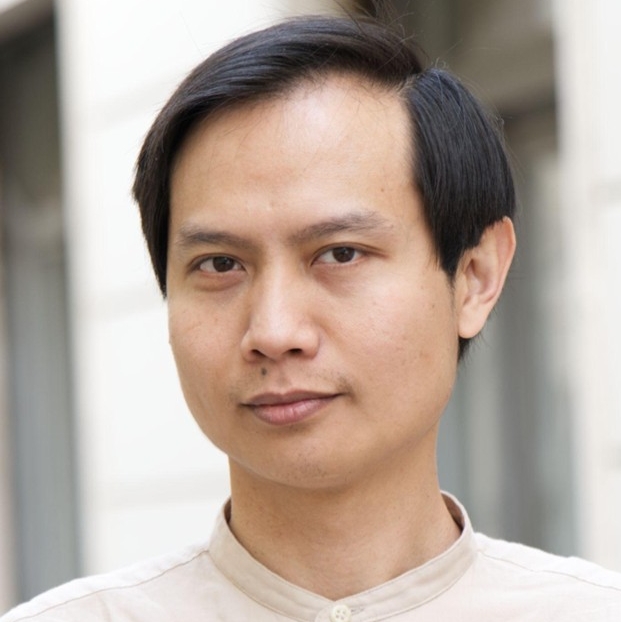
Vu Hoang Nguyen (he/him) is the First Author of Heat stress response and transposon control in plant shoot stem cells published 28 March 2025. He is a Postdoc at Institute of Science and Technology. Education background includes: 2023 PhD in Molecular Biology at Gregor Mendel Institute and University of Vienna; 2017 MSc in Plant Sciences at Tel Aviv University; 2014 BSc in Biotechnology at Can Tho University. Research interests include Epigenetics, abiotic stress.
Personal interests include Photography.
“As a child, I loved digging up edible root plants with friends, cooking, and sharing them – a joy that ignited my fascination with plants. This curiosity grew when I moved to a semi-desert region, where I became increasingly fascinated by how plants thrived in extreme heat while I struggled to last a few hours without water. Driven by this curiosity about their resilience, I decided to study plant abiotic stress at the molecular level. Now, my focus is on epigenetics – how plants ‘remember’ stress and adapt across generations.”
 Samuel Jacob
Samuel Jacob Lovat (he/him) is the First Author of Vertical farming limitations and potential demonstrated by back-of-the-envelope calculations published 02 April 2025. He is a PhD student at the Weizmann Institute of Science. Education background includes: Combined Undergraduate and Master’s degree (MBiochem) from The University of Oxford (course: Biochemistry (Molecular and Cellular). Research interests include quantifying the environmental impacts of new methods of producing food on a global scale, such as harnessing micro-organisms (like yeast and bacteria) and vertical farming. Personal interests include Hiking, bouldering, racket sports, and cooking (thinking about food in a different way from my research!).
“I am very aware of the climate crisis and other environmental challenges and want to help find solutions for these challenges. Two major drivers of these issues are the energy sector and food production. As a biochemist by training, I said no to energy and so ended up working on food production!”
 Defeng Shen
Defeng Shen is the First Author of Nodule organogenesis in Medicago truncatula requires local stage-specific auxin biosynthesis and transport published 04 April 2025. Shen is a Postdoctoral researcher at the Max Planck Institute for Plant Breeding Research. Education background includes:2019 Ph.D Wageningen University; 2013 MSc Beijing Normal University; 2010 BSc Northeast Forestry University. Research interests include Root nodule symbiosis, Endodermis, and Casparian strip. Personal interests include Reading.
Defeng earned his Master’s degree from Beijing Normal University (2013) and his PhD from Wageningen University (2019). Under the guidance of Prof. Ton Bisseling and Dr. René Geurts, his doctoral research focused on evolutionary relationships between legume-type and actinorhizal-type nodules. By studying a homeotic mutant in Medicago truncatula (Mtnoot1), he demonstrated how legume-type nodule ontogeny can be converted into the actinorhizal type. Additionally, he investigated the role of auxin in nodule formation, as presented here.
Since March 2020, Defeng has been a postdoctoral researcher in Tonni Grube Andersen’s group at MPIPZ, where his work explores the function of apoplastic barriers during nodule formation and nitrogen fixation in Lotus japonicus.
 Sophia Müller
Sophia Müller (she/her) is the First Author of Nodule organogenesis in Medicago truncatula requires local stage-specific auxin biosynthesis and transport published 04 April 2025. She is a PhD candidate at Wageningen University and Research, Netherlands. Education background includes: 2019 MSc in Biology – Molecular Life Sciences at Heinrich-Heine University Düsseldorf (Germany); 2016 BSc in Molecular Biosciences at the Universities of Salzburg and Linz (Austria). Research interests include Plant development, hormonal regulation, single-cell transcriptomics, nodulation. Personal interests include Dancing, Board Games, Cooking, Being in Nature.
“Studying to become a scientist, I wanted to have a tangible impact on society. As I am not interested in the countless ways things can go wrong but rather in how they go right, disease research was not meant for me. And what is even more important than disease research? The basis of all living beings: Food. Therefore, it became a clear path for me to go into plant research, where the foundation for food security, food quality, and improved agriculture is built.”
Sarah Wanjiru Gachie
Sarah Wanjiru Gachie (she) is the First Author of The thylakoid membrane remodeling protein VIPP1 forms bundled oligomers in tobacco chloroplasts published May 2025.She is a Doctoral student at Okayama University. Education background includes:2025 Ph.D Agriculture at Okayama University, 2019 MSc in Plant Science at Tel Aviv university, 2014 BSc in Horticulture at Jomo Kenyatta University of Agriculture and Technology. Research interests include plant molecular biology. Personal interests include travel, walking, discovering new tea flavors, and spending time with family and friends.
“My passion for plant science was ignited by my father’s work in Kenya’s Ministry of Forestry, where he focused on medicinal plants, may he rest in peace. Growing up, I witnessed firsthand how plants contribute to both human health and the environment, and it deeply resonated with me that food is not just nourishment, but also our medicine. This early exposure sparked my curiosity about plant biology and the endless potential it holds to improve lives. Driven by this passion, I pursued a BSc in Horticulture, which gave me a solid foundation in plant growth, cultivation, and management. But I wanted to dive deeper. So, I went on to complete an MSc in Plant Biology, with a focus on Molecular Plant Pathology, to understand how plants fight off diseases at the molecular level.
Now, in my PhD in Agriculture, I’m working under the guidance of Prof. Wataru Sakamoto, who’s been a huge source of inspiration for me. His expertise in plant physiology and his perspective on how plants respond to environmental stress has shaped my research. I’m combining molecular biology with plant physiology to study how plants adapt to challenging environments, and I’m diving into protein structure analysis to better understand how these processes happen on a molecular level. My goal is clear: to develop innovative strategies that can help crops thrive in a changing world. For me, this is more than research, it’s about making a real, tangible difference in food security and sustainability.”
 Cassio Flavio Fonseca de Lima
Cassio Flavio Fonseca de Lima (he/him) is the First Author of Large-scale comparative phosphoproteome profiling reveals temperature-associated molecular signatures in wheat published 24 April 2025. He is a Data Management Specialist at Rijk Zwaan.
Education background includes: 2024 PhD Plant Biotechnology and Biochemistry. Research interests include Abiotic stress, Bioinformatics, Crops.Personal interests include Gaming, Music, Art.
“While growing up, plants always fascinated me, but for most people they were not more than a beautiful background. Over time, I learned that plants were more than just greenery; they are sophisticated biochemical factories, adjusting to stress, communicating with neighbors, and fueling whole ecosystems.”
Bi Mengmeng
Bi Mengmeng is the First Author of Three transcription factors form an activation–inhibition module to regulate anthocyanin accumulation in Asiatic hybrid lilies published June 2025.Mengmeng is a Lecturer at College of Horticulture of Shenyang Agricultural University,
Education background includes:2024 Ph.D ornamental horticulture at Chinese Academy of Agricultural Sciences; 2020 MSc in Garden Botany Studies Shenyang Agricultural University;2017 BSc Agronomy Shenyang Agricultural University. Research interests include Transcription factor, Regulation mechanism, Signal transduction, growth and development, metabolism, stress. Personal interests include Cooking,Badminton.
“My passion for plant science stems from its extraordinary blend of silent poetry and cutting-edge innovation. As a child, watching a shriveled maple seed I buried erupt into a sapling taught me that plants harbor secret chronometers – they measure time not in seconds, but in leaf unfurlings and xylem whispers. Later, time-lapse videos of praying mantis-like mimosa leaves folding at dawn revealed vegetation isn’t passive: it’s a civilization communicating through hydraulic cryptography.
What truly captivates me is plants’ evolutionary genius. The prehistoric resurrection fern’s ability to resurrect from complete desiccation using specialized sugars, or the hyperaccumulator ferns that mine toxic metals with molecular “vacuum cleaners” in their cell walls – these aren’t mere adaptations, but biological masterpieces rivaling human engineering. Under microscopes, chloroplasts become solar-powered nanofactories where thylakoid membranes execute quantum-level energy tricks we’re only beginning to decode.
Plants are Earth’s original alchemists, turning sunlight into life while quietly solving challenges we face today – carbon capture, renewable energy, pollution remediation. Their root networks form living blockchains, exchanging nutrients and warnings via mycorrhizal networks. To study plants is to collaborate with organisms that perfected sustainability eons before humans existed. Each stoma is a universe; every tendril’s helical growth solves differential equations we write on chalkboards. That’s why plant science isn’t just a discipline – it’s an endless conversation with nature’s most ingenious philosophers.”

Matan Azar
Matan Azar (he/him) is the First Author of Shared abscisic acid biosynthesis pathway across 600 million years of streptophyte evolution published May 2025. Azar is a PhD student at The Hebrew University in Jerusalem.Education background includes: 2024 MSc in Plant Science Hebrew University 2021 BSc in Plant Science Hebrew University. Research interests include Plant abiotic stress, Plant metabolites. Personal interests include Music, Cinema, and playing the piano.
“My interest in plant science began in high school, where my love for biology naturally blended with my family’s background in agriculture. What fascinates me most about plant science is the sense of mystery that plants hold and the endless possibilities for exploration; whether it’s uncovering new pathways or applying genetic manipulations. I also simply enjoy working with plants every day, which makes this field both exciting and fulfilling for me.”
 Simon Ndecky
Simon Ndecky is the First Author of Rice JASMONIC ACID OXIDASES control resting jasmonate metabolism to promote growth and repress basal immune responses published May 2025. Ndecky is a IVD Technology transfer specialist at Institut Pasteur de Dakar.
Education background includes: 2022 Ph.D Molecular et Cellular aspects of biology, 2018 MSc Molecular biology and plant biotechnology, 2014 BSc earth and Life Sciences. Research interests include Plant metabolism, biomanufacturing, and phytotherapy. Personal interests include choir music and wood carpentry.
“Very early on in my undergraduate studies, I became passionate about understanding the processes behind biological events. Then I was interested in learning and being qualified in a field where I could be useful with a high impact on society. I trusted that agronomy or related plant sciences could be the right option to be usefull for my home country, Senegal, and that’s how my journey with plant sciences began, starting with a Master’s degree plant biotechnology that opened the door to a PhD in plant molecular biology.”
 Haoqin Zhao
Haoqin Zhao is the First Author of PuUBL5-mediated ZINC FINGER PROTEIN 1 stability is critical for root development under drought stress in Populus ussuriensis published May 2025. Zhao is a State Key Laboratory of Tree Genetics and Breeding, Northeast Forestry University.
Education background includes: 2024-present Northeast Forestry University Phd. 2021-2024 Northeast Forestry University Master 2017-2021 Henan University of Science and Technology Bachelor. Research interests include Abiotic stress, Phosphorylation modification, Ubiquitination modification. Personal interests include sightseeing, go for a walk, Running, Listening to music.
“I am deeply curious about the mysteries of plant life. This curiosity drove me to engage in plant science, using scientific research to explain a phenomenon.”
Romina I. Minen
Romina I. Minen is the First Author of Characterization of the cyclic dipeptide cyclo(His-Pro) in Arabidopsis published May 2025. Minen is a Postdoctoral Scientist at German Cancer Research Center (DKFZ). Education background includes: 2021 to 2023 Postdoctoral Scientist at Boyce Thompson Institute, 2021 PhD in Biological Sciences at Instituto de Agrobiotecnología del Litoral (UNL-CONICET, Argentina), 2014 BSc in Biotechnology at Universidad Nacional del Litoral (Argentina).Research interests include Plant Metabolism, Protein-Small Molecule Interaction, Enzymology, Structural Biology. Personal interests include Botanical Illustration, Cross Fit, Hiking, and Traveling.
“I have always been fascinated by how plants manage to thrive despite being rooted in place and constantly exposed to changing environments. My curiosity centers on plant proteins and the ways they are regulated and modulated by other proteins and small molecules to control metabolism and stress responses. It is particularly interesting for me how plants use a dynamic network of these interactions to precisely adjust their metabolism in response to environmental factors such as light cycles, nutrient availability, and stress. Exploring this intricate web of protein interactions and regulatory molecules continually reveals new layers of complexity and adaptability in plant systems, making plant biology both challenging and endlessly engaging for me.”
 Juan Carlos Baca Cabrera
Juan Carlos Baca Cabrera (he/him) is the First Author of Decreased root hydraulic traits in German winter wheat cultivars over 100 years of breeding published April 2025. He is a Postdoc at Forschungszentrum Juelich.Education background includes: 2022 Ph.D at Technical University of Munich; 2016 MSc Environmental Planning and Engineering Ecology Technical University of Munich. Research interests include Plant modelling, soil-plant interactions, root hydraulics, stomatal control. Personal interests include Football, music, dogs.
“My love for plant science started when I first grasped the incredible diversity of species in my mother-in-law’s garden in Ecuador—around 100 species thriving in one place. I’ve been intrigued ever since by how organisms without a central nervous system can be so finely adapted to their environment. Plants exhibit extraordinary adaptations across nearly every ecosystem on Earth, and exploring their responses across spatial and temporal scales continues to inspire and motivate me.”
Ian W. McCahil
Ian W. McCahill is the First Author of Shoring up the base: the development and regulation of cortical sclerenchyma in grass nodal roots published September 2025. McCahil is a Postdoctoral Associate. Education background includes: 2013 BA, Biology, Reed College. 2023 Ph.D, Plant Biology, University of Massachusetts, Amherst.
Research interests include Development and Plant Architecture, Transcriptional Regulation, Mechanosensing and Environmental Perception.Personal interests include Road cycling, Movies.
“I’m interested in plants because they are wet computers that make art. As sessile organisms, plant success depends on perceiving and integrating a huge array of internal and external signals, using an almost equally huge number of molecular mechanisms (hence “wet computers”). The processing of these signals then informs the development of diverse, complex and arguably beautiful structures, from cells to landscapes (thus “art”). Our research on basal cortical sclerenchyma is so exciting to me because it illustrates the chain of connections from stimulus to perception to altered development and finally to function. The best part of plant science is the opportunity to examine both the computation and the elegant solutions it produces.“