
Review: RUBY: a genetically encoded visible reporter for plant biology
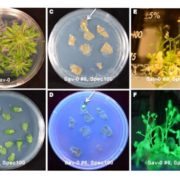
 A major challenge in plant biology is observing molecular events. Reporter systems such as GUS and GFP have underpinned breakthroughs in gene regulation, cell signalling and development, yet each has its constraints: Fluorescent proteins demand microscopes and low background autofluorescence, and GUS requires destructive staining. To overcome these limitations, researchers repurposed betalain biosynthesis (the pigment that makes beet red). The result, RUBY: a single polycistronic cassette encoding CYP76AD1, DODA and a glucosyltransferase, all driven by the same promoter, which converts endogenous tyrosine into red–purple pigments visible to the naked eye. Since its first report by He et al. (2020), RUBY has been rapidly adopted in Arabidopsis, maize, rice, soybean, citrus, cotton and many other species. Its initial impact was the replacement of antibiotic and herbicide selection, but its remit has since broadened to report hormone response, RNA silencing, splicing, protein–protein/DNA interactions, distinguish haploids, and detecting chemicals. Because pigment accumulation can be seen within days using transient expression and quantified with simple solvent extraction, methods previously confined to specialised facilities can now be explored more widely. With RUBY, invisible gene activity turns into colour, allowing us to watch live molecular biology unfold at whole-plant scale. (Summary by Charlay Wood). Trends Plant Sci. 10.1016/j.tplants.2025.05.017.