

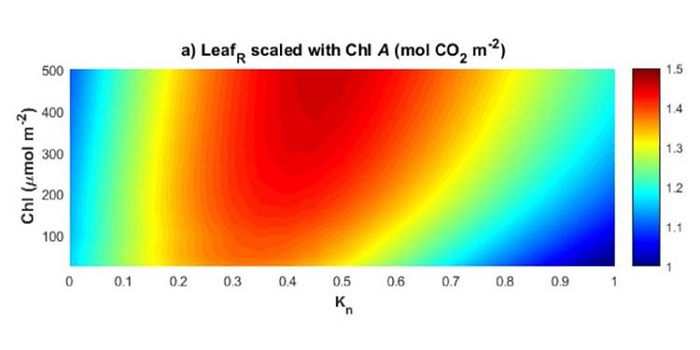
Chlorophyll can be reduced in crop canopies with little penalty to photosynthesis
Blog, Plant Science Research Weekly, Research, Research BlogThe effect of reducing leaf chlorophyll content on canopy CO2 assimilation (Acan) is somewhat contentious. Walker et al. obtained data from 67 soybean accessions to parameterise a canopy-root-soil model (MLCan) in order to simulate the effect of altering chlorophyll levels on Acan. There was no increase…

Light sheet microscopy imaging of light absorption and photosynthesis distribution in plant tissue
Blog, Plant Science Research Weekly, Research, Research BlogChlorophyll fluorescence is a common tool to investigate the behavior of the photosynthetic appratus, therefore photosynthetic capacity, at any physiological state. However, the different optical density of the samples can lead to light-dependent over- or underestimation of effective PSII quantum yields.…
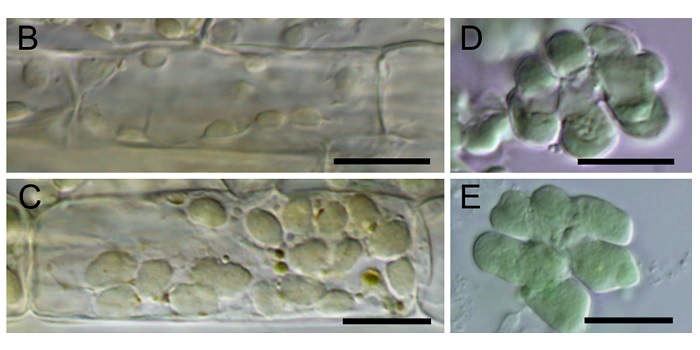
Re-creation of a key step in the evolutionary switch from C3 to C4 leaf anatomy
Blog, Plant Science Research Weekly, Research, Research BlogThe C4 Rice project aims to transition rice from a C3 crop to one that performs C4 photosynthesis, in order to realize a predicted 50% increase in yield. Here, Wang et al. expressed a positive regulator of chloroplast development, the maize GOLDEN2-LIKE transcription factor, in rice. The resulting…

Photosynthesis in Desert Plants: It’s About Time
Research, The Plant Cell, The Plant Cell: In a NutshellBoxall et al. investigate CAM photosynthesis in Kalanchoë fedtschenkoi The Plant Cell (2017). https://doi.org/10.1105/tpc.17.00301
Background: During photosynthesis, most plants use the enzyme Rubisco to capture CO2 during the day. Crassulacean acid metabolism (CAM) plants such as prickly pears,…
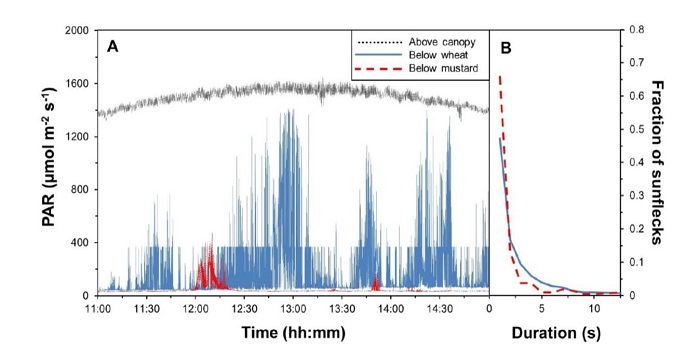
Update: Fluctuating light takes crop photosynthesis on a rollercoaster ride
Blog, Plant Physiology, Plant Physiology: Updates, Research, Research BlogBy Elias Kaiser, Alejandro Morales, Jeremy Harbinson
The environment of the natural world in which plants live, have evolved, and within which photosynthesis operates, is one characterised by change. The time scales over which change occurs can range from seconds (or less) all the way to the geological…
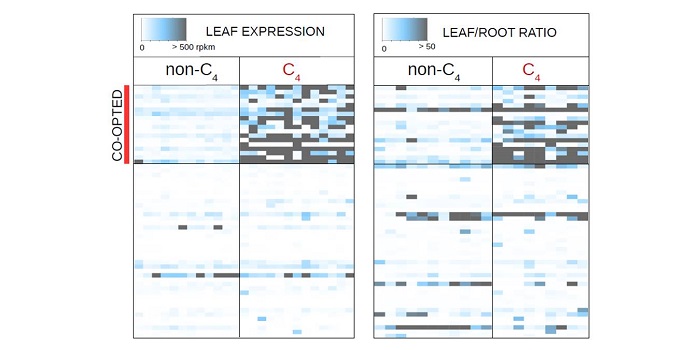
Highly expressed genes are preferentially co-opted for C4 photosynthesis
Blog, Plant Science Research Weekly, Research, Research BlogOne of the great questions of biology is how and why C4 photosynthesis pathway evolved independently more than 60 times. The advantages are obvious (increased productivity), but the underlying molecular predisposition to this transition remains poorly defined. Using a comparative transcriptomics approach…
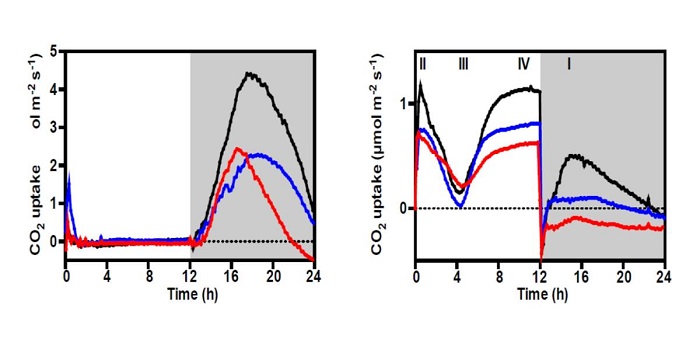
Stop the Clock: Optimized Carbon Fixation and Circadian Rhythm in a CAM Plant
Blog, Research, Research Blog, The Plant Cell, The Plant Cell: In BriefThe energetically costly tendency of the carbon fixing enzyme RuBisCO to, every now and then, fix oxygen instead of carbon dioxide has led to the evolution of various carbon concentrating mechanisms in plants and algae. One such mechanism, Crassulacean acid metabolism (CAM), involves primary CO2 fixation…
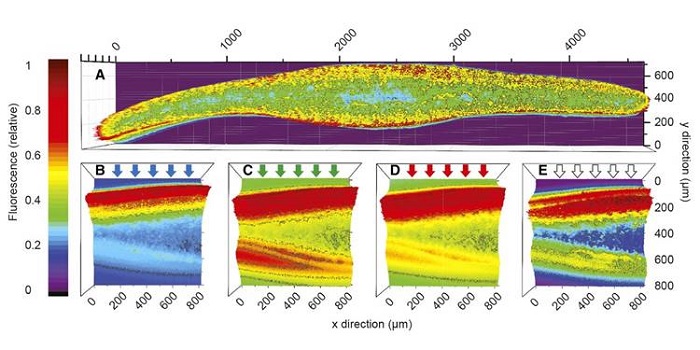
Imaging of Light Absorption and Photosynthesis
Blog, Plant Physiology: On The Inside, Research, Research BlogDue to its ease of use and noninvasive nature, variable chlorophyll fluorescence techniques have become increasingly popular for estimating photosynthetic parameters. Most measurements of variable chlorophyll fluorescence in complex plant tissues and surface-associated cell assemblages (e.g. biofilms)…

A pair of papers that redefines the pyrenoid, the eukaryotic CO2-concentrating organelle
Blog, Plant Science Research Weekly, Research, Research BlogPhotosynthesis in aquatic organisms is made difficult due to the low solubility of CO2 in water. Algae such as Chlamydomonas rheinhardtii overcome this limitation through a carbon-concentrating organelle called a pyrenoid. Two papers in Cell redefine our understanding of the pyrenoid structure. Mackinder…