


Ploidy and size at multiple scales in the Arabidopsis sepal (Plant Cell)
Plant Science Research WeeklyPloidy refers to the number of genomes contained within a nucleus. Ploidy levels can increase through whole-genome duplication, which affects every cell equally, and through endoreduplication, a cell-by-cell process in which DNA synthesis is not accompanied by cytokinesis. Robinson et al. investigated…
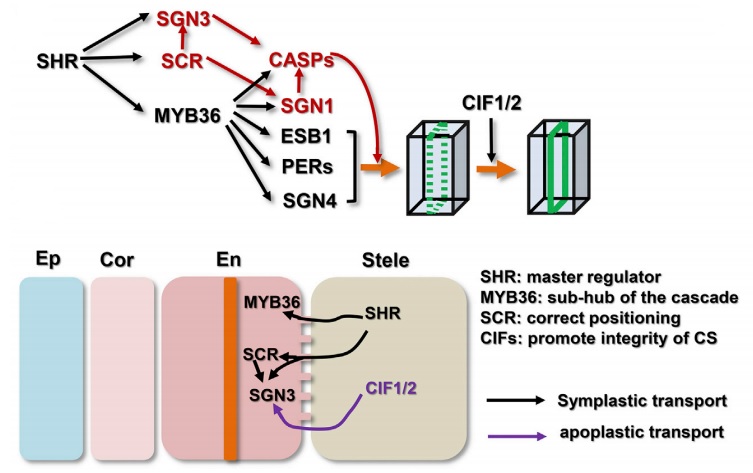
Construction of a functional Casparian strip in non-endodermal lineages is orchestrated by two parallel signaling systems ($) (Curr. Biol.)
Plant Science Research WeeklyThe Casparian strip in the endodermis acts a barrier to allow the selective absorption of water and nutrients. Because of its cell-specific presence, the Casparian strip is considered a marker for functional endodermis. The cellular identity of endodermis is controlled by two transcription factors, SHR…

The inhibitor Endosidin 4 targets SEC7 domain-type ARF GTPase exchange factors and interferes with subcellular trafficking ($) (Plant Cell)
Plant Science Research WeeklySubcellular trafficking helps determine the development of the plant through for instance the regulation of polar localization of auxin transporter PIN-FORMED (PIN) proteins. PIN trafficking or recycling is maintained by GNOM, a BFA-sensitive ARF GEF (ADP-ribosylation factor guanine nucleotide exchange…

Nonselective chemical inhibition of Sec7 domain-containing ARF-GEFs in Arabidopsis ($) (Plant Cell)
Plant Science Research WeeklyARF GEFs (ADP-ribosylation factor guanine nucleotide exchange factors) play a major role in the intracellular trafficking and eventually regulate developmental cues. As plants contain multiple ARF GEF with very similar sequences, chemical genetics approaches are more appropriate to uncover their function…

Natural Artist: How a Protein Kinase Helps Sculpt the Pollen Grain Surface From the Inside Out
Blog, The Plant Cell, The Plant Cell: In BriefFinding genes that function in plant development often requires mutant screening, but probing the wealth of natural variation can provide important insights as well. A major focus of developmental biology is uncovering the mechanism behind cell polarity, that is, how components are deposited asymmetrically…

Busted: Finding Cells Whose Division Planes Defy Prediction
Blog, The Plant Cell, The Plant Cell: In BriefEvery plant organ, from tuber to tepal, is formed by cells that divide along precisely placed cell plates. While much is known about the molecular biology behind cell plate formation (e.g., Gu et al., 2016), why cells divide where they do is much less clear. Dividing cells have much in common with soap…
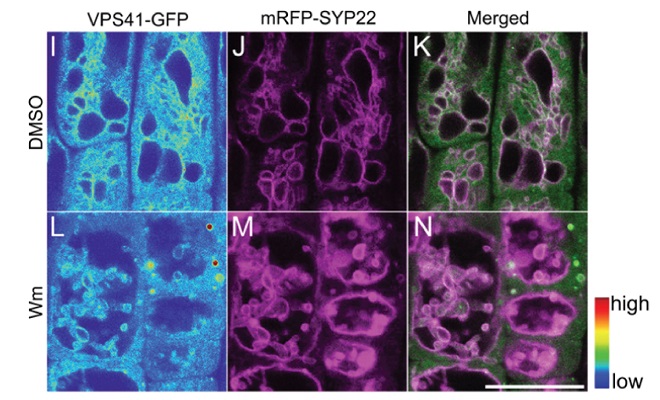
Phosphoinositides control the localization of HOPS subunits and vacuole fusion (PNAS)
Plant Science Research Weekly
The plant vacuole makes up to 90% of the cell volume and its dynamics are important for regulating growth, development and stomatal movement. Membrane fusion between the vacuole and the smaller vesicles is at the heart of central vacuole establishment. Homotypic fusion and vacuole protein sorting…
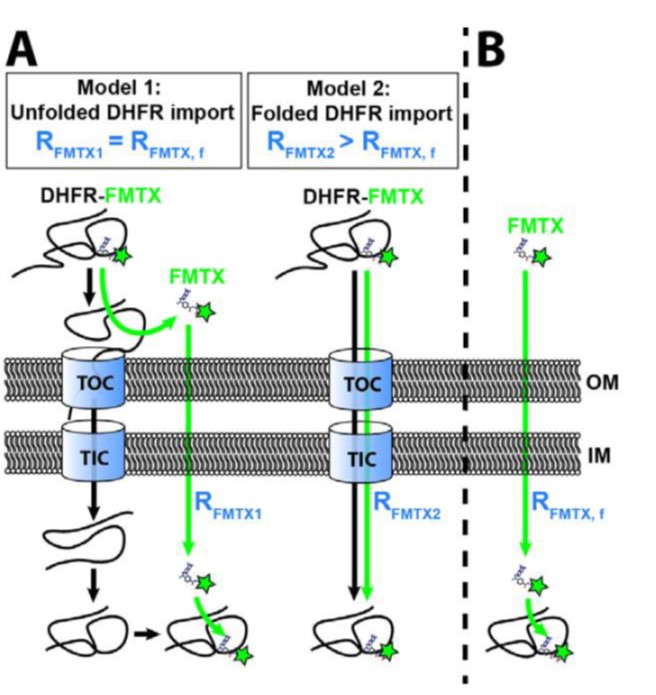
Chloroplast TOC/TIC protein translocon pore size ($) (Plant Cell)
Plant Science Research WeeklyMost of the proteins that function inside of mitochondria or chloroplasts are encoded in the nucleus, translated in the cytosol, and imported through one or two membrane-localized translocons. (In mitochondria the outer- and inner-membrane translocons are called TOM and TIM, and in chloroplasts they…

Chloroplast Biogenesis in Germinating Seeds: A Multi-Dimensional Approach
Research, The Plant Cell, The Plant Cell: In a NutshellZizhen et al. perform electron tomography and correlative gene expression analyses of thylakoid assembly in greening Arabidopsis cotyledons Plant Cell (2018) https://doi.org/10.1105/tpc.17.00972
By Byung-Ho Kang
Background: The chloroplast produces carbohydrates and molecular oxygen from water,…