


Insights into the evolution of multicellularity from the sea lettuce genome (Current Biol. - $)
Plant Science Research WeeklyThe transition from unicellular to multicellular life forms occurred across multiple kingdoms, and in plants is correlated with the expansion of gene families involved in extracellular matrix formation and cell cycle regulation. Green seaweeds acquired their plant-like body independently of other lineages…

Review - A plane choice: coordinating timing and orientation of cell division during plant development (Current Opinion in Plant Bio)
Plant Science Research WeeklyAsymmetric cell division is instrumental to development of specialized cells, while symmetric cell division underlies proliferative growth. The defects in cell division plane arise when transition between the G1 to S stage is accelerated, suggesting that the signals leading to division plane position…

SHOU4 proteins regulate trafficking of cellulose synthase complexes to the plasma membrane (Curr. Biol.)
Plant Science Research WeeklyPlant cell walls provide mechanical support and define the extent and direction of cell expansion. Regulation of cellulose synthase determines cell wall load bearing and involves the receptor like kinases FEI1/FEI2. To gain further understanding of cell wall integrity regulation Polko et al. performed…
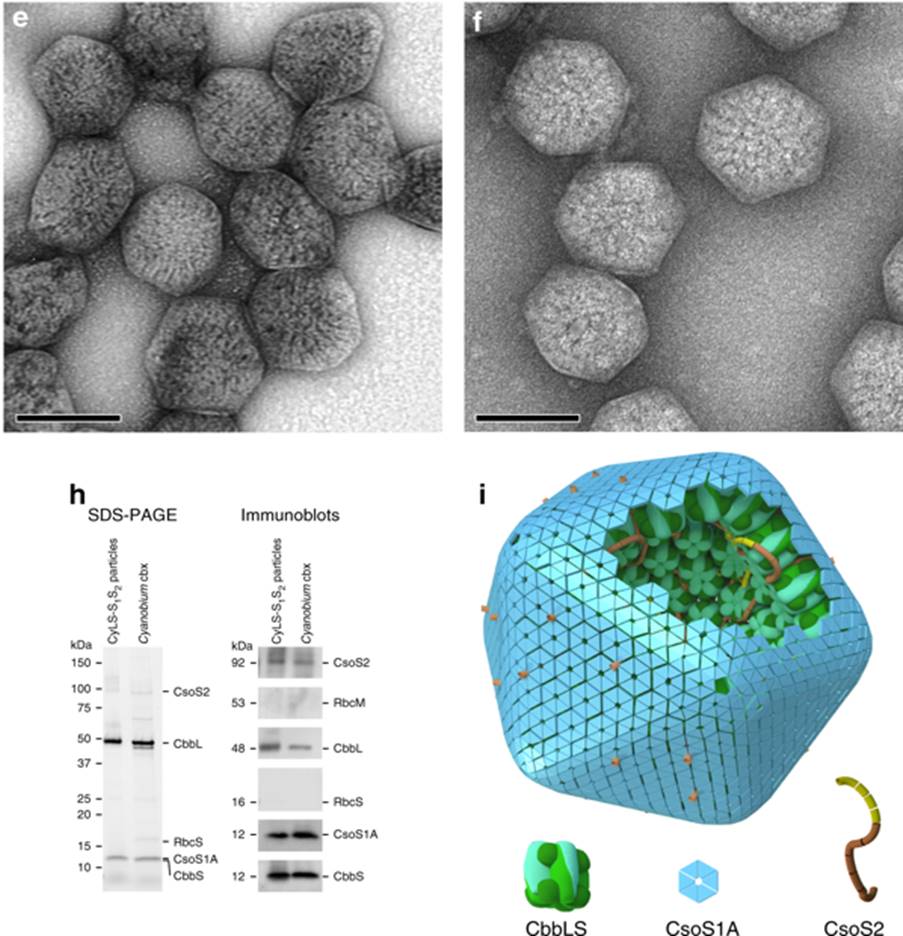
Carboxysome encapsulation of the CO2-fixing enzyme Rubisco in tobacco chloroplasts (Nature Comms.)
Plant Science Research WeeklyOne of the fundamental challenges facing terrestrial plants occurs when CO2 levels are depleted at Rubisco, causing its inefficient oxygenase activity to dominate. Some plants minimize this problem by adding a carbon-fixing step upstream of Rubisco, and various algae and cyanobacteria sequester Rubisco…
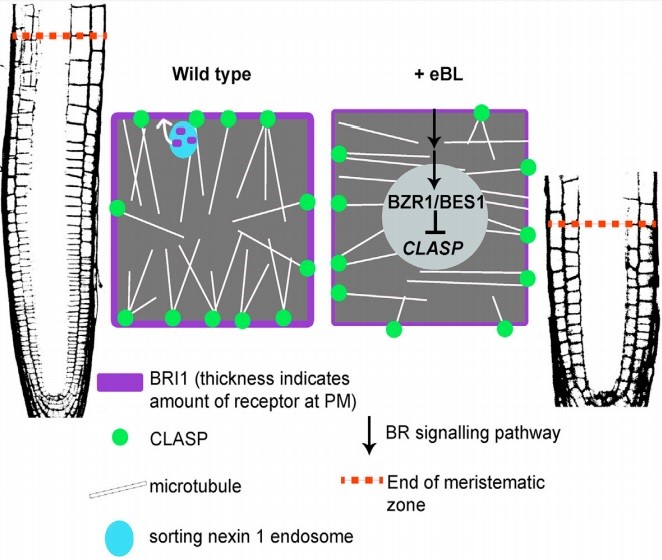
CLASP sustains cell proliferation through a brassinosteroid signaling negative feedback loop ($) (Curr. Biol.)
Plant Science Research WeeklyBrassinostreroid (BR) regulates the development of the root apical meristem. High levels of BR have inhibitory effects on cell production rates in the meristem and low levels show the opposite effect. Ruan, Halat et al. showed that BR regulates microtubule-associated CLASP (CLIP-Associated Protein) expression…

S-Sulfhydration Disrupts Actin Polymerization
Plant Physiology, Plant Physiology: On The InsideRecent evidence indicates that H2S acts as an important messenger that affects plant responses to abiotic stresses, including high salinity, drought, heat shock, heavy metals, and oxidative stress. H2S signaling has also been shown to modulate important physiological processes, such as photosynthesis,…

SNARE proteins in replication vesicle trafficking of turnip mosaic virus ($) (Plant Cell)
Plant Science Research WeeklyWhen plant cells are infected by RNA viruses, viral replication complexes are generated in organelle-like structures. These vesicles are important for the replication of viral RNA (vRNA) as well as moving vRNA-protein complexes through plasmodesmata to infect other plant cells. When turnip mosaic virus…

Arabidopsis Formin 2 regulates cell-to-cell trafficking through plasmodesmata (eLIFE)
Plant Science Research WeeklyPlasmodesmata are cell-cell junctions that form cytosolic channels between neighboring plant cells. These junctions mediate the exchange of information between cells during various stress and developmental programs by actively regulating the aperture of the channel entrance or ‘pore’. In a new study…

Predicting division planes of three-dimensional cells by soap-film minimization ($) (Plant Cell)
Plant Science Research WeeklyMartinez et al. used a modelling approach to see if it is possible to predict the location of a cell’s future division plane. In most cases the cell divides according to strict geometric rules, such that the newly formed wall will have a minimum area (described as a soap-film minimization model). However,…