
Opinion: Genomic studies hint at what makes a tree a tree
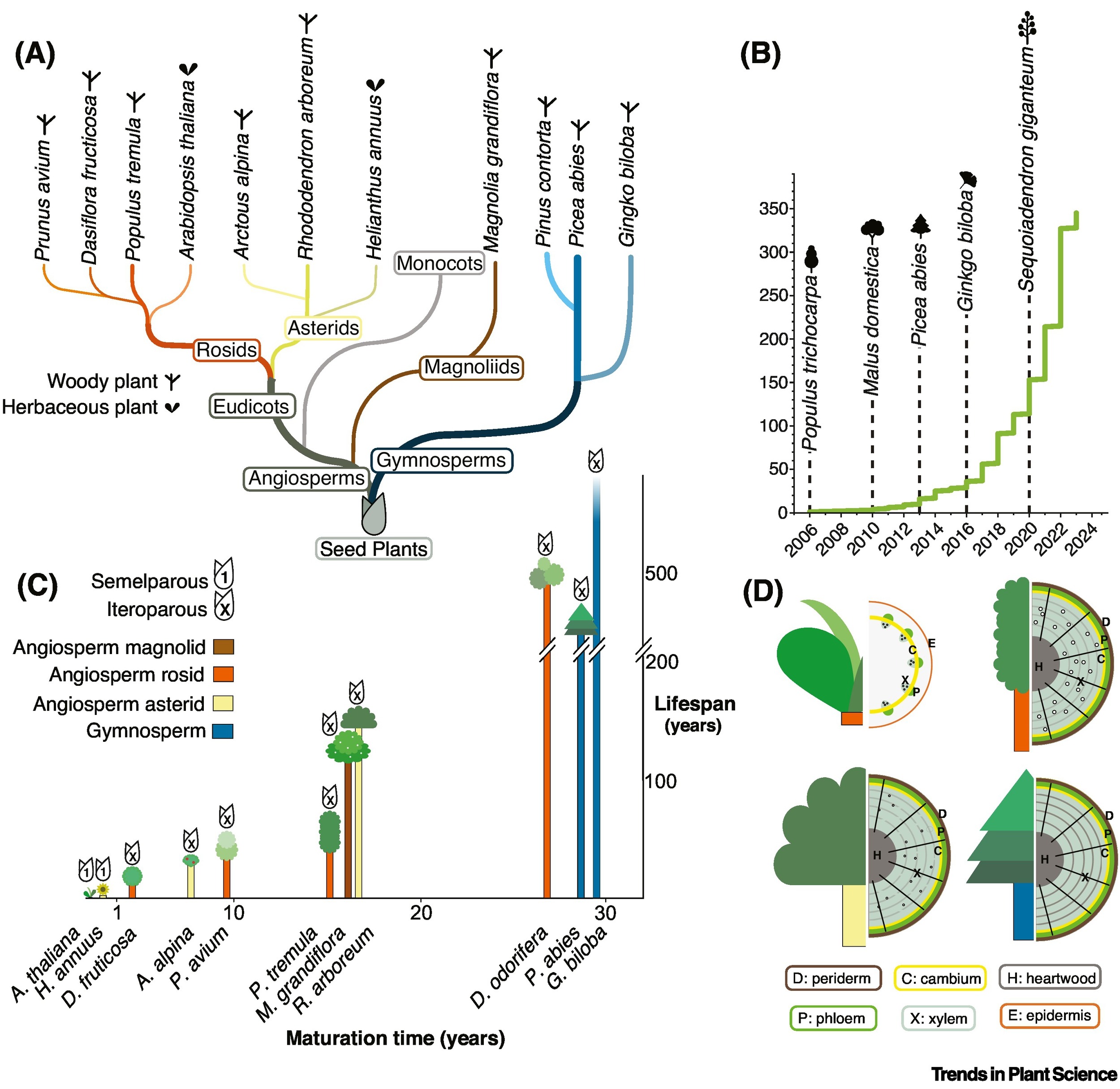 This is such an engaging and though-provoking review article. I’d love to ask a group of students to think about what makes a tree a tree, including such questions as: How do we define trees? Do woody plants share a single origin? How many angiosperms are woody? The answer to those questions and more can be found in this article by Birkeland et al., which draws on comparative studies of related herbaceous and woody species. Trees are defined by their woody secondary growth, which enables them to be longer-lived and bigger than herbaceous plants, usually accompanied by repeated cycles of reproduction. Although the potential to be woody is thought to be ancestral in angiosperms, it is clear that woodiness has been lost and regained repeatedly, suggesting that this trait is controlled by a small number of genes. Following extensive analysis of woody plant genomes and their relatives, the authors identified several genes that associated with the longer lifespans of trees include those that control the length of the juvenile phase, time of flowering, and stress resilience. The authors conclude with a set of outstanding questions, including “Why do angiosperms display such a wide variation of growth forms compared with gymnosperms, and is this variation linked to their evolutionary success?”. What a lot of fascinating things to think about! (Summary by Mary Williams @PlantTeaching.bsky.social). Trends Plant Sci 10.1016/j.tplants.2025.09.006