

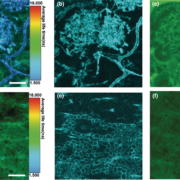
New tools to study an old mycorrhiza
Plant Science Research WeeklyI love learning about the many molecular adaptations that allowed plants to adapt to life on land, and particularly have enjoyed sharing the iconic micrograph from Remy et al (1994) that shows a 400 year old arbuscular mycorrhiza of the fungus Glomeromycotina inside a cell of Aglaophyton major. Now,…
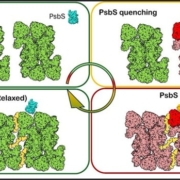
Review.When the sun becomes too hot: Non-photochemical quenching in plants
Plant Science Research WeeklyPlant photosynthetic machinery can easily be overwhelmed by strong sunlight. Therefore, plants developed a set of processes called Non-Photochemical Quenching, a safety valve that dissipates excess light energy as heat. In a recent review, van Amerongen and Croce synthesize decades of often contradictory…
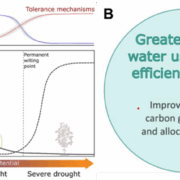
Review. When water runs short: How plant hydraulic traits function and matter most
Plant Science Research WeeklyLong-standing puzzles have perplexed scientists about the physiological tradeoff between drought resistance and crop production, and this review brings the pieces together. What, exactly, allows a crop to keep producing when water runs short? Should breeding focus on early stomatal closure and limited…
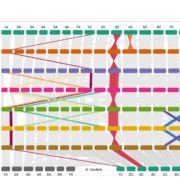
Cracking the oat code: A comprehensive pangenome and pantranscriptome resource
Plant Science Research WeeklyOat (Avena sativa) is a globally cultivated cereal for its rich dietary fiber and health-promoting benefits. Yet, despite its nutritional importance, oat genomics has long lagged behind other cereals due to its large, repeat-rich, and allohexaploid genome which does not generally recombine. In a recent…
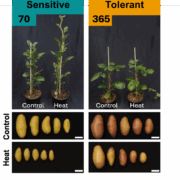
Feeling the heat: SP6A links heat tolerance and defense in potato
Plant Science Research WeeklyClimate change is a major threat to potato, as high temperatures inhibit tuberization and reduce yield. A recent study by Yeo and colleagues screened for heat-tolerance in offspring from one tolerant and one sensitive parent potato cultivar. SELF-PRUNING 6A (SP6A), encoding a phloem-mobile tuberization…
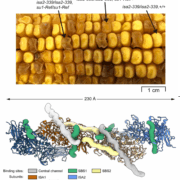
Master of non-enzymatic functions: ISOAMYLASE complex structure reveals additional metabolic roles
Plant Science Research WeeklyPlants store glucose polymers in semicrystalline starch granules. Starch debranching enzymes, including isoamylases (ISAs), are involved in maintaining starch’s crystalline organization. In maize, sugary1 (su1) mutants with impaired ISA1 enzymatic activity accumulate soluble polyglucan chains (phytoglycogen).…
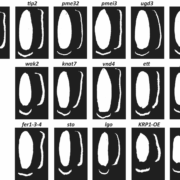
Consistency is key: Shaping a sepal
Plant Science Research WeeklyThe development of the 3D shape of an is complex, and the contributions of underlying pathways are difficult to untangle. Battu et al. decouple the organ size and organ shape by conducting a thorough quantification of organ geometry in 3D together with Principle Component Analysis (PCA), and using the…
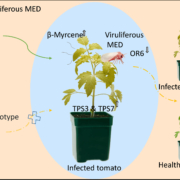
A viral master plan: TYLCV reprograms tomato scent and whitefly senses for maximum spread
Plant Science Research WeeklyViruses spreading to crops via tiny insects is one of agriculture’s biggest problems. Liang et al. uncovered the two-part strategy used by the tomato yellow leaf curl virus (TYLCV) to hijack the whitefly, Bemisia tabaci. It’s a double dose of manipulation designed to guarantee infection. The virus…
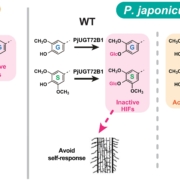
How parasitic plants avoid being parasitized
Plant Science Research WeeklyIt’s not too difficult to envision how a plant recognizes something very different from itself, like a bacterium, oomycete, or fungus. It’s a bit less obvious how a plant recognizes another plant as different from itself. This self-recognition is important when you think about parasitic plants, which…