
Feeling the heat: SP6A links heat tolerance and defense in potato
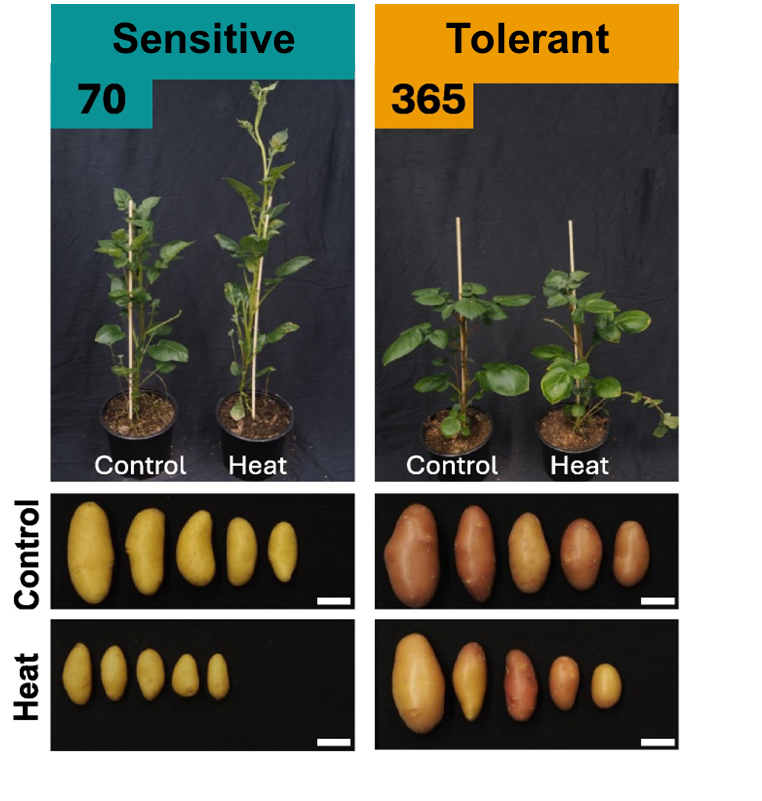 Climate change is a major threat to potato, as high temperatures inhibit tuberization and reduce yield. A recent study by Yeo and colleagues screened for heat-tolerance in offspring from one tolerant and one sensitive parent potato cultivar. SELF-PRUNING 6A (SP6A), encoding a phloem-mobile tuberization signal, was upregulated in heat-tolerant offspring, which formed tubers earlier than their heat-sensitive counterparts. Plants overexpressing SP6A (SP6A-OE), which also have accelerated tuber formation, were previously characterised as high-yielding and heat-tolerant. However, both heat-tolerant offspring and SP6A-OEs showed downregulation of defense-related genes. These plants showed reduced accumulation of a range of sesquiterpene compounds relative to their wild types or parents, while each cultivar had a notably different terpene profile. SP6A-OEs also showed a dampened response to bacterial PAMP flgII-28. Late-tuberization has been previously correlated with increased disease resistance, but this work is the first to provide a molecular cause for these observations. The pathway linking SP6A and defense is yet to be elucidated, although jasmonic acid signalling was implicated by downregulation of related genes in SP6A-OEs. Going forward, this work provides valuable insight into critical areas for breeders, and gives a cautionary example of unintended side effects from crop improvement, exemplifying growth and defense trade-offs. (Summary by Ciara O’Brien @ciara-obrien.bsky.social) J. Exp. Bot. 10.1093/jxb/eraf393