
A viral master plan: TYLCV reprograms tomato scent and whitefly senses for maximum spread
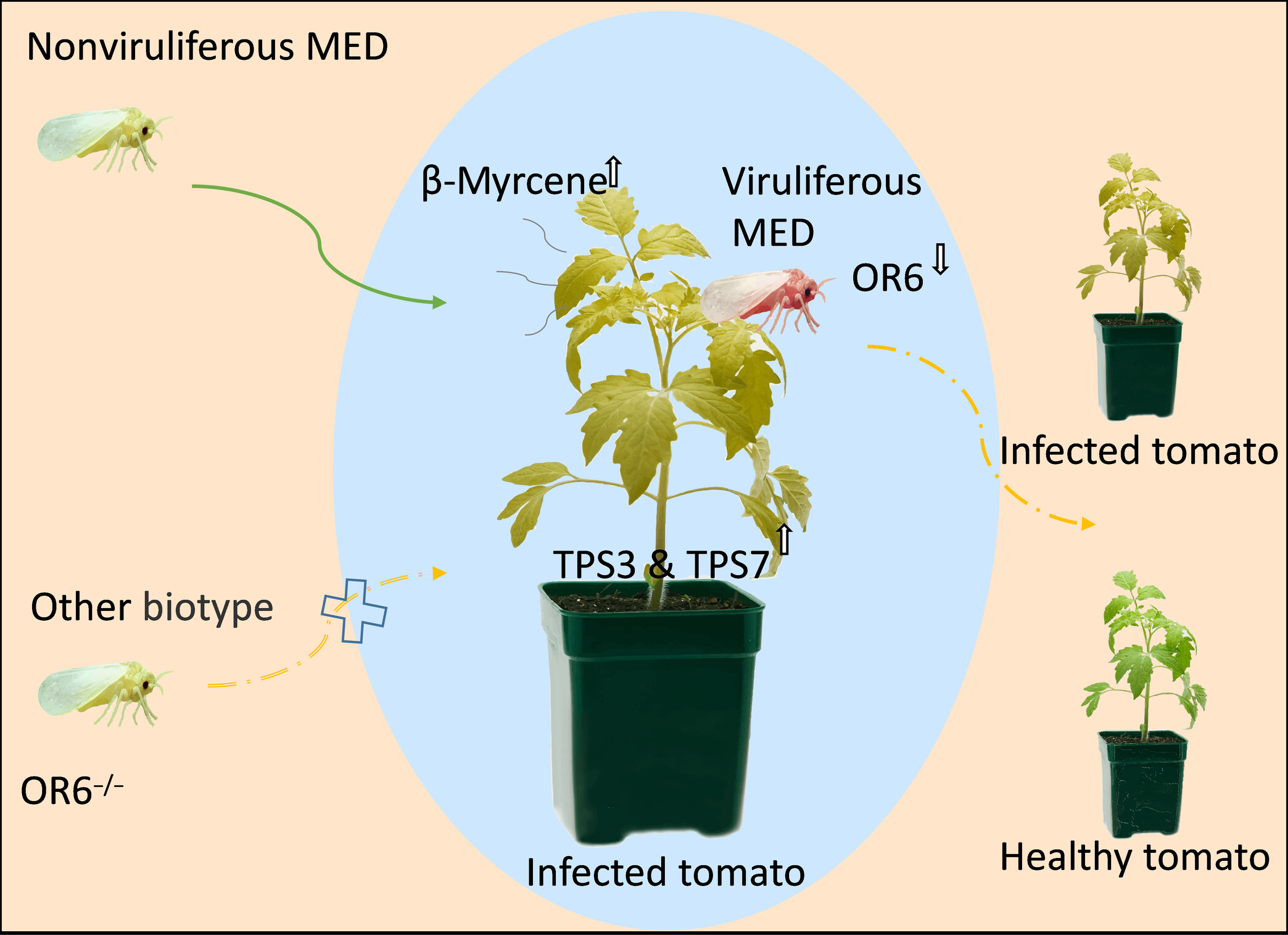 Viruses spreading to crops via tiny insects is one of agriculture’s biggest problems. Liang et al. uncovered the two-part strategy used by the tomato yellow leaf curl virus (TYLCV) to hijack the whitefly, Bemisia tabaci. It’s a double dose of manipulation designed to guarantee infection. The virus manipulates the host and vector by mastering two distinct steps. Phase 1, Acquisition: TYLCV induces the tomato plant to boost the production of β-myrcene. This strong scent is attracts non-virus carrying (nonviruliferous) whiteflies, which feed on the infected plant and acquire the virus. Phase 2, Transmission: Once a whitefly is viruliferous with TYLCV, the virus inhibits the expression of a fly olfactory receptor (BtMEDOR6) that is responsible for smelling β-myrcene. By making the infected plant suddenly seem unappealing, the virus indirectly induces the whitefly to leave the old, infected plant and fly off to a new, healthy one, making sure the virus successfully infects a new and healthy host. TYLCV essentially uses scent to attract its ride, then blinds that ride’s sense of smell to cause it to disperse. Understanding this manipulation gives scientists powerful new clues for developing better ways to block whiteflies or engineer crops with enhanced defenses. (Summary by Ved Prakash @vedjiwan) Science Advances 10.1126/sciadv.adr4563