
How parasitic plants avoid being parasitized
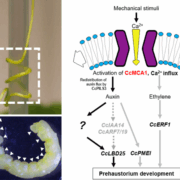
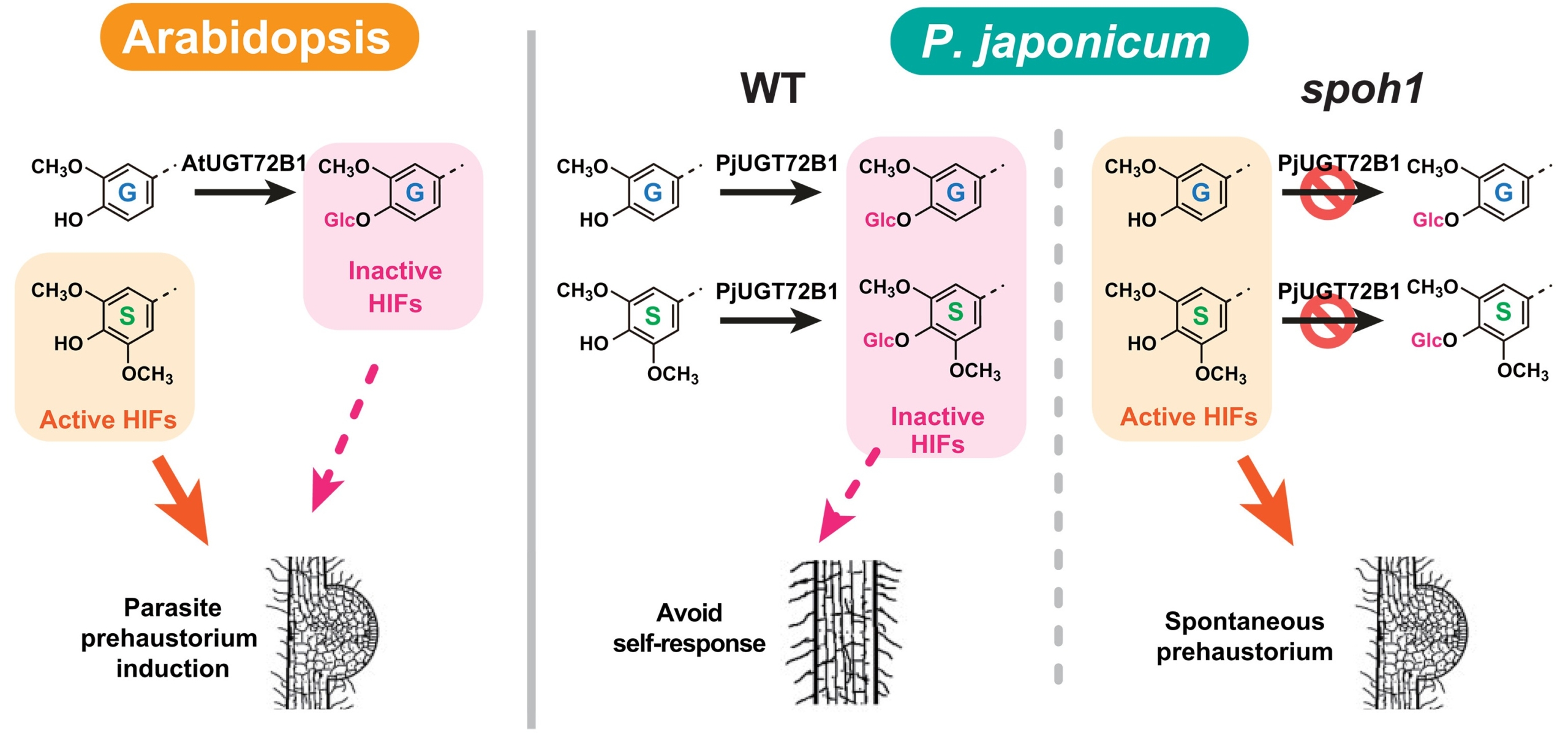 It’s not too difficult to envision how a plant recognizes something very different from itself, like a bacterium, oomycete, or fungus. It’s a bit less obvious how a plant recognizes another plant as different from itself. This self-recognition is important when you think about parasitic plants, which break into their hosts through structures called haustoria and extract nutrients from them. Previously, lignin-like factors called haustorium-inducing factors (HIFs) produced by host plants have been identified that stimulate parasitic plants to form prehaustorial structures, preparing them to invade. Interestingly, many parasitic plants seem to be insensitive to such exudates from other parasitic plants. To investigate how this recognition occurs, Xiang et al. identified a mutant of the model parasitic plant Phtheirospermum japonicum that they named spontaneous prehaustorium 1 (spoh1), that constitutively produces prehaustoria in the absence of exogenous HIFs. The authors found that exudates from spoh1 mutant but not wild-type P. japonicum plants promoted prehaustoria formation in another type of parasitic plant. The affected gene encodes a glycosyltransferase, which is able to glycosylate and therefore inactivate HIFs. Wild-type parasitic plants avoid self-parasitism by inactivating their own potential HIFs, whereas in the spoh1 mutant, loss of this gene activity means that the plants produce active HIFS that they then respond to. This study hints at the exciting possibility that introducing the P. japonicum glycosyltransferase into crops such as sorghum could shield them from their devastating parasites. (Summary by Mary Williams @PlantTeaching.bsky.social) Science 10.1126/science.adx8220