

Trehalose-mediated reprograming: metabolic crosstalk in plant-insect interactions
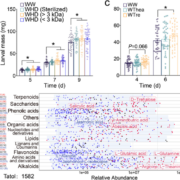
Plant Science Research WeeklyIn nature, plants often face multiple attackers simultaneously, giving rise to complex three-way interactions that can reshape defense outcomes in unexpected ways. An intriguing example comes from observations that prior aphid infestation, or even pretreatment with aphid honeydew, suppresses the jasmonic…
Special report: State of the climate, a planet on the brink
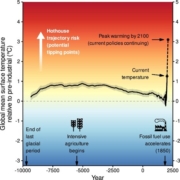
Plant Science Research WeeklyThis is the last edition of PSRW before the new year. Although we have spent the past year celebrating the breakthroughs in plant science, I am going to end on a more sober note, which is succinctly captured in this important special report from Ripple et al. The authors pull together data from across…
Review: A complete guide to metabolomics
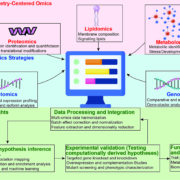
Plant Science Research WeeklyThis review by Rai et al., part of a focus collection on metabolism, comprehensively covers the role of metabolomics in plant biology: its history, its tools and techniques, and its impact. As the authors point out, metabolomics bridge the gap between genotype and phenotype by providing a direct readout…
Review: Root exudates as the architects of the rhizosphere microbiome
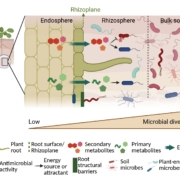
Plant Science Research WeeklyThe “Green Revolution” transformed global food production through the use of fertilizer, but at the expense of rising costs and reliance on non-renewable inputs, prompting modern agriculture to shift toward alternative strategies such as the symbiotic relationships between plants and soil microorganisms.…
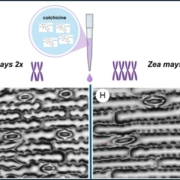
Perspective: Breeding polyploid crops, or not? Insights for yield, resilience, and bioenergy futures
Plant Science Research WeeklyFor crop breeders, the deceptively simple question “is it better?” hides a web of consequences when extra chromosome sets are added (polyploidy), and this perspective pulls those pieces together. What, exactly, do additional gene copies and larger cells buy in terms of yield, quality, and resilience?…
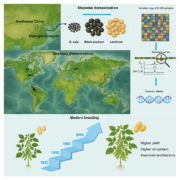
Unraveling soybean evolution: Insights from 8,105 genomes
Plant Science Research WeeklySoybean is one of the most important cash crops for global food and feed, valued for its high-quality plant oil and protein. Centuries of domestication and breeding have narrowed its genetic diversity, leaving current cultivars vulnerable to climate change. To address this, Zhu and colleagues generated…
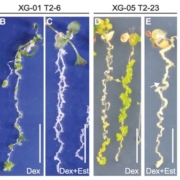
Bypassing hormones: Engineering pluripotency through a minimal transcription factor module
Plant Science Research WeeklyPlants possess the remarkable ability to regenerate lost or damaged tissues, a trait that underpins both their survival in nature and their utility in modern biotechnology. This intrinsic regenerative capacity forms the basis of tissue culture systems used for species preservation, breeding, and crop…
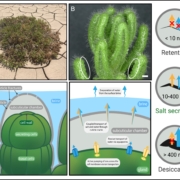
How salt-extruding halophytes avoid drying out
Plant Science Research WeeklyHalophytes are plants that have evolved ways to adapt to high-salt environments that can be toxic to non-halophytes. Some halophytes prevent salt uptake, some sequester it in disposable bladders, and some extrude it from salt glands. In a new study, Mai et al. studied Nolana mollis, a salt-tolerant plant…
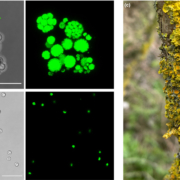
Genomic analysis of a lichen photobiont alga
Plant Science Research WeeklyLichens are complex assemblies that are composed of at least two organisms, a fungus (the mycobiont) and a photosynthetic partner, the photobiont. Lichen lifestyles have emerged several times, and the photobiont can be either prokaryotic cyanobacteria or eukaryotic algae. Recently, Tagirdzhanova et al.…