
Review: Root exudates as the architects of the rhizosphere microbiome
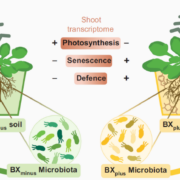
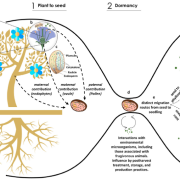
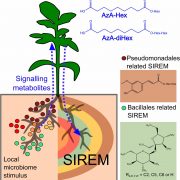
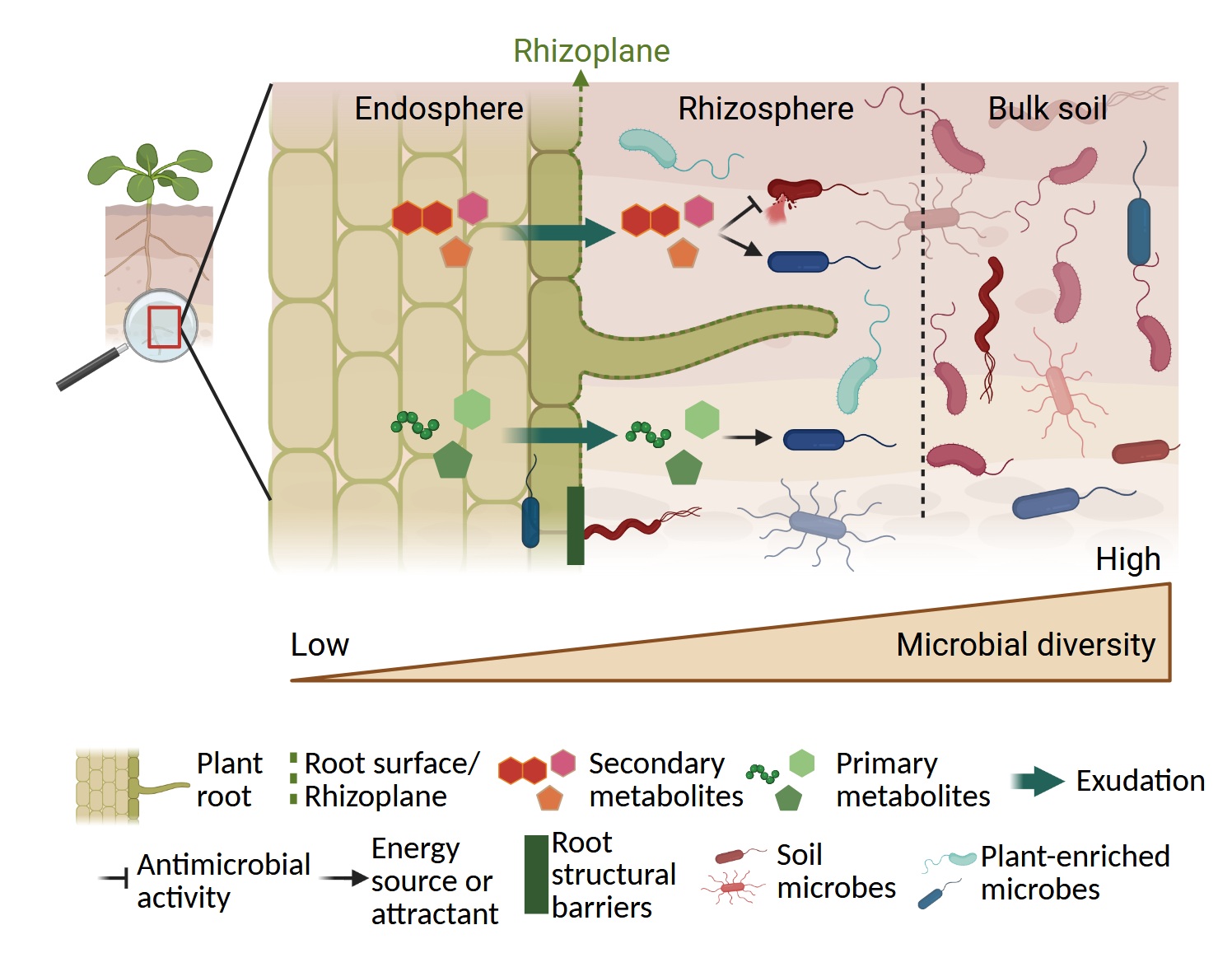 The “Green Revolution” transformed global food production through the use of fertilizer, but at the expense of rising costs and reliance on non-renewable inputs, prompting modern agriculture to shift toward alternative strategies such as the symbiotic relationships between plants and soil microorganisms. Beyond supporting nutrient acquisition, the soil microbiome enhances plant resilience to biotic and abiotic stresses, acting as a dynamic “second genome” that shapes plant health. In a recent review, Uribe-Acosta and colleagues spotlight the pivotal role of root metabolites in mediating plant–microbiome interactions. Root exudates encompass primary metabolites such as sugars, amino acids, and organic acids, which serve as carbon and nutrient sources driving microbial assembly. They also include a diverse array of secondary metabolites, such as glucosinolates, flavonoids, alkaloids, benzoxazinoids, terpenes, and more, that function in signaling and defense. Many of these compounds are lineage-specific, including glucosinolates in Brassicaceae, steroidal glycoalkaloids in Solanaceae, and isoflavones in legumes. Mutants with altered root development produce distinct exudate profiles, ultimately reshaping their microbial communities. These observations collectively indicate that genetic variation or the genotype of the plant ultimately constrains the metabolic capacity. Certain metabolites, such as phenylpropanoid-derived coumarins and carotenoid-derived strigolactones, further demonstrate dual roles in nutrient uptake and microbiome assembly, highlighting their diverse function. With plants estimated to produce 0.1 to 1 million metabolites, current knowledge represents only the tip of the iceberg. Looking forward, deeper insights into plant–microbiome–metabolite networks will be critical for designing sustainable, microbiome-informed strategies to improve crop nutrition and resilience to environmental changes. (Summary by Ching Chan @ntnuchanlab) Plant Physiology 10.1093/plphys/kiaf349