Perspective: Breeding polyploid crops, or not? Insights for yield, resilience, and bioenergy futures
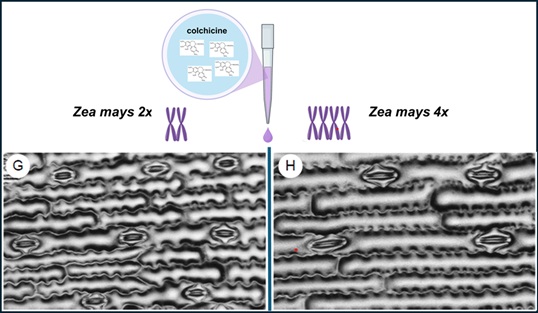 For crop breeders, the deceptively simple question “is it better?” hides a web of consequences when extra chromosome sets are added (polyploidy), and this perspective pulls those pieces together. What, exactly, do additional gene copies and larger cells buy in terms of yield, quality, and resilience? When does it make sense to push a diploid crop into higher ploidy, and when do the resulting fertility problems, inbreeding depression, and complex inheritance simply slow genetic gain? Dominguez Mendez and Studer survey polyploid crops to ask when “more chromosomes” actually translates into better crops and the short answer is, “sometimes”. For example, allo‑octoploid strawberry and autotetraploid potato show increased fruit or tuber size, cold tolerance and adaptation across environments, but at the cost of extreme heterozygosity and reliance on clonal propagation. In grain and oilseed systems, induced autotetraploid maize produces larger kernels and plants without yield gain due to poor seed set and inbreeding depression, whereas natural allopolyploids such as wheat, and rapeseed, combine productivity, stress tolerance and improved oil or fibre quality. The clearest upside of polyploidy emerges in biomass crops, where reduced fertility is less problematic: autotetraploid alfalfa shows greater forage yield, and highly polyploid sugarcane, now amenable to genome sequencing and gene editing, is being re‑engineered as “energy cane” to accumulate triacylglycerols. This perspective not only synthesizes how polyploidy has already reshaped major crops but also charts a roadmap for exploiting increased chromosome number to build the next generation of flexible, high‑yield bioenergy feedstocks. (Summary by Dr. Hao Chen @ Auburn CFWE) Annals of Botany 10.1093/aob/mcaf253)