Bypassing hormones: Engineering pluripotency through a minimal transcription factor module
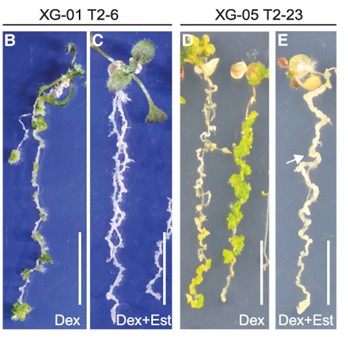 Plants possess the remarkable ability to regenerate lost or damaged tissues, a trait that underpins both their survival in nature and their utility in modern biotechnology. This intrinsic regenerative capacity forms the basis of tissue culture systems used for species preservation, breeding, and crop improvement. Conventional regeneration protocols that rely on exogenous hormonal treatments sometimes fail, as many economically important species and specific genotypes remain stubbornly recalcitrant to these hormone-based approaches. To overcome this long-standing barrier, Wittmer and colleagues explored a hormone-free, gene-driven strategy for plant regeneration. Their central idea is to bypass hormonal cues by directly overexpressing pluripotency-inducing transcription factors capable of kick starting the regenerative process. They assembled a suite of candidate regulators, including dedifferentiation factors (WIND1, RBR) and a core set of root stem cell niche genes (PLT1, PLT4/BBM, PLT5, SHR, SCR, WOX5). By systematically testing different transcription factor combinations, the authors discovered that stem cell niche genes alone were sufficient to achieve full regeneration. Moreover, they identified a minimal system, PLT together with WOX5, that consistently triggered organogenesis. Although regeneration process induced by PLT1/WOX5 resembled hormone-mediated callus formation, the underlying cellular dynamics differed: hormonal treatments restricted proliferation to pericycle cells, whereas PLT1/WOX5 overexpression expanded cell division into additional cell layers. RNA-seq profiling, supported by public ChIP-seq data, revealed that these transcription factors directly regulate many somatic embryogenesis–related genes. Impressively, introducing PLT1 and WOX5 into recalcitrant Arabidopsis accessions, mutants, and crop species such as lettuce, tomato, and pepper resulted in robust regeneration. This work highlights a promising path toward genotype-independent, broadly applicable regeneration systems, an advance to accelerate plant transformation and genome engineering in the years ahead. (Summary by Ching Chan @ntnuchanlab) Plant Cell 10.1093/plcell/koaf252