


To Catch Crop Genes in Batch
Research, The Plant Cell, The Plant Cell: In a NutshellLiu et al. demonstrate an integration of massive genetic mapping and high-throughput targeted mutagenesis to accelerate functional gene identification in maize. The Plant Cell (2020) https://doi.org/10.1105/tpc.19.00934
By Hai-Jun Liu & Jianbing Yan, National Key Laboratory of Crop Genetic Improvement,…

Say “Ah!” The Right Amounts of Brassinosteroids and Hydrogen Peroxide Open the “Mouths” of Plant Leaves
Research, The Plant Cell, The Plant Cell: In BriefStomata, from the Greek “mouths,” are tiny pores in the epidermis of many plant aerial tissues that are “fed” carbon dioxide for making sugar. But plants also lose water through these same pores via transpiration. Stomatal aperture regulation in response to environmental cues is therefore of…

HY5 Activates Rather Than Represses its Direct Targets, Including its Negative Regulator SPA1
Research, The Plant Cell, The Plant Cell: In a NutshellBurko et al. carry out detailed phenotypic and molecular analyses of constitutive activator and repressor HY5 fusion proteins to identify its direct targets. Plant Cell https://doi.org/10.1105/tpc.19.00772
Background: Plants are highly responsive to environmental factors, and differences in light,…

Round Effects: Tasg-D1 is Responsible for Grain Shape in Indian Dwarf Wheat
Research, The Plant Cell, The Plant Cell: In BriefWheat (Triticum spp.), one of the oldest cultivated cereals, is a major food crop grown in many regions with temperate climates. At present, wheat is grown over a wider area than any other commercial crop. Given its importance, extensive marker-assisted breeding of wheat varieties has been undertaken…

Protein Delivery Address Codes Are Part of the Circuitry Adjusting Tissue-Specific Plastid Proteomes
Research, The Plant Cell, The Plant Cell: In a NutshellChu et al. demonstrate that a special address code is required for efficient protein import into root plastids. Plant Cell https://doi.org/10.1105/tpc.19.00702
By Hsou-min Li, Institute of Molecular Biology, Academia Sinica, Nankang, Taipei 11529, Taiwan
Background: Chloroplasts are the most famous…
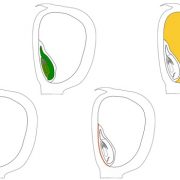
Family dynamics within the seed: Identification of new cell types in maize endosperm
Research, The Plant Cell, The Plant Cell: In a NutshellDoll et al. examine the structure of maize seeds and identify a distinct cell type in the endosperm next to the embryo. https://doi.org/10.1105/tpc.19.00756
Nicolas M. Doll, Peter M. Rogowsky and Thomas Widiez
Laboratoire Reproduction et Développement des Plantes, Univ Lyon, ENS de Lyon, UCB…

Regulation of Protein Synthesis under Abiotic Stress
Research, The Plant Cell, The Plant Cell: In a NutshellLokdarshi et al. demonstrate that cytosolic protein synthesis under abiotic stress is regulated by the GCN2 kinase-eIF2a module under the command of reactive oxygen species originating from chloroplasts. Plant Cell https://doi.org/10.1105/tpc.19.00751
By Ansul Lokdarshi and Albrecht von Arnim (University…

The Cold Never Bothered Me Anyway: DELLA-Interacting GROWTH REGULATING FACTORS Mediate Plant Growth in Cold Stress
Research, The Plant Cell, The Plant Cell: In BriefThe gibberellin (GA) hormone signaling pathway is a key regulator of major plant developmental processes such as seed germination, cell elongation, and flowering time. The influence of GA is mediated by DELLA repressor proteins which, in the absence of GA, inhibit the activity of transcription factors.…

A Closer Look at the Fatty Acid Assembly Line
Research, The Plant Cell, The Plant Cell: In a NutshellNam et al. describe a general method to analyze and quantify the fatty acid biosynthetic profile of any sample with the use of an aspartate protease and LC-MS/MS. Plant Cell https://doi.org/10.1105/tpc.19.00954
By Lauren M. Jenkinsa,b, Jeong-Won Nama, and Doug K. Allena,b (aDonald Danforth Plant…