


RNA polymerase II transcription: cleave to elongate
Research, The Plant Cell, The Plant Cell: In a NutshellAntosz et al. show that the ability of RNA polymerase II to cleave transcripts is required for proper transcription and plant growth.
Wojciech Antosz and Klaus Grasser, University of Regensburg
https://doi.org/10.1105/tpc.19.00891
Background: In plants as in other eukaryotes, nuclear…

Recognizing Plant Cell authors: Lucas McKinnon
The Plant Cell, The Plant Cell: Author ProfilesLucas McKinnon, first author of Membrane Chaperoning of a Thylakoid Protease whose structural stability is modified by the Protonmotive force
Current Position: PhD candidate at University of California, Davis
Education: PhD in Plant Biology (expected March 2020), B.S. in Biological Sciences (UC Davis,…
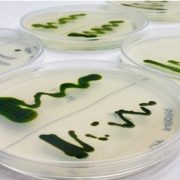
Phosphorus sensing in Chlamydomonas by TORC1 subunit LST8
Research, The Plant Cell, The Plant Cell: In a NutshellCouso et al. developed a TOR kinase assay for Chlamydomonas and show how subunit LST8 senses phosphorus availability and modulates cell growth. Plant Cell https://doi.org/10.1105/tpc.19.00179
By I. Couso, M.E. Pérez-Pérez, M.M. Ford, E. Martínez-Force, L.M. Hicks, J.G. Umen, and J.L. Crespo.
Background:…

The Arabidopsis GPT1 transporter is Essential in Both Plastids and Peroxisomes
Research, The Plant Cell, The Plant Cell: In a NutshellBaune et al. explore the roles of a metabolite transporter in two different locations in a single cell. Plant Cell https://doi.org/10.1105/tpc.19.00959
By Marie-Christin Baune, Hannes Lansing, Antje von Schaewen
University of Münster, Germany
Background: The oxidative pentose-phosphate…
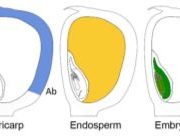
The Way Out: A Transcriptionally Unique Group of Endosperm Cells Implicated in Nutrient Export to the Embryo
Research, The Plant Cell, The Plant Cell: In BriefSuccessful development of the maize (Zea mays) kernel requires proper nutrient transport and signaling among its genetically distinct components: the embryo that gives rise to the next generation, the endosperm that nourishes the embryo, and the maternal tissues that surround the embryo and the endosperm…

Regulation of Carotenoid Pigmentation in Flowers
Research, The Plant Cell, The Plant Cell: In a NutshellStanley et al. Identify a protein in the model plant monkeyflower (Mimulus) required for chromoplast development and carotenoid biosynthesis. Plant Cell https://doi.org/10.1105/tpc.19.00755
By Lauren Stanley and Yao-Wu Yuan, University of Connecticut
Background: Carotenoids are yellow, orange,…
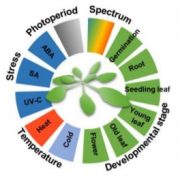
The R-loop: An Additional Chromatin Feature for Gene Regulation in Arabidopsis
Research, The Plant Cell, The Plant Cell: In BriefR-loops are three-stranded nucleic acid structures composed of a DNA-RNA hybrid and a displaced single-stranded DNA. R-loops are stable structures as they form an intermediate A/B conformation of the RNA-DNA hybrid that is more stable than the B form of dsDNA or A form of the dsRNA. Recent evidence reveals…

SHORTROOT coordinates phloem development via two pathways
Research, The Plant Cell, The Plant Cell: In a NutshellKim et al. examine how plants coordinate sieve element and companion cell development.
Plant Cell https://doi.org/10.1105/tpc.19.00455
By Hyoujin Kim1 and Ji-Young Lee1,2, School of Biological Sciences, College of Natural Science, Seoul National University, 1 Gwanak-ro, Gwanak-gu, Seoul 08826,…
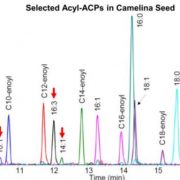
A Closer Look at Acyl-ACPs in Lipid Metabolism
Research, The Plant Cell, The Plant Cell: In BriefAcyl lipids are a wide range of compounds that have diverse functions in membrane synthesis, energy storage, and signal transduction. Fatty acids are key building blocks of acyl lipids that are synthesized by the fatty acid synthase complex via sequential condensation of two-carbon units to reach lengths…