

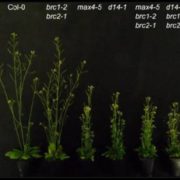
BRC1 expression regulates bud activation potential, but is not necessary or sufficient for bud growth inhibition in Arabidopsis
Plant Science Research Weekly, Research0 Comments
/
Shoot branching patterns are determined by whether lateral buds are activated or inhibited. Classic studies showed that auxin transport both in the stem and from the bud affects bud outgrowth, and more recent studies have demonstrated a role for strigolactones in regulating bud outgrowth, probably through…
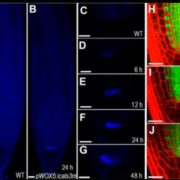
Symplastic communication spatially directs local auxin biosynthesis to maintain root stem cell niche in Arabidopsis ($)
Plant Science Research Weekly, ResearchAlthough plant cells are surrounded by walls, cytoplasmic strands connect adjacent cells through junctions called plasmodesmata. Liu et al. investigated the contributions of plasmodesmata to signaling between root quiescent center (QC) cells and the cells that surround the QC by expression of an inducible…
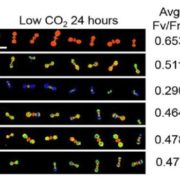
A chloroplast envelope glycolate transporter and its involvement in photorespiratory metabolism
Plant Science Research Weekly, ResearchIn C3 plants at ambient CO2 levels, Rubisco’s oxygenation reaction occurs about once for every three carboxylation reactions. One of the oxygenation products, 2-phosphoglycolate, is rapidly dephosphorylated to glycolate which is toxic and inhibitory to photosynthesis. Glycolate has to be removed from…
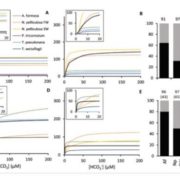
Diversity of CO2 concentrating mechanisms and responses to CO2 concentration in marine and freshwater diatoms ($)
Plant Science Research Weekly, ResearchThe CO2-fixing enzyme ribulose bisphosphate carboxylase (Rubisco) works most efficiently at high concentrations of CO2. Many organisms have evolved CO2-concentrating mechanisms (CCMs), such as the PEP-carboxylation that occurs upstream of Rubisco in C4 plants. Diatoms and other eukaryotic algae use a…

Mutations in Argonaute5 illuminate epistatic interactions of the K1 and I loci ($)
Plant Science Research Weekly, ResearchClassic studies revealed an interesting genetic relationship between two loci that control pigmentation in soybeans seeds. Dominant alleles of the I locus suppress pigmentation through the production of small interfering RNAs that target chalcone synthase RNA (an enzyme involved in pigment production).…
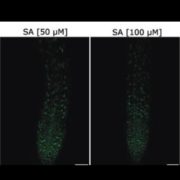
Salicylic acid interferes with GFP fluorescence in vivo
Plant Science Research Weekly, ResearchGreen Fluorescent Protein (GFP) is a widely-used reporter with which to analyze protein localization and expression levels. De Jonge et al. report that GFP fluorescence is greatly diminished in the presence of the hormone salicylic acid (SA), as is the fluorescence of the reporters RFP and VENUS. The…
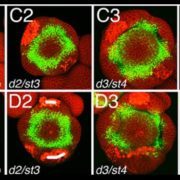
Live Confocal Imaging of Developing Arabidopsis Flowers
Plant Science Research Weekly, ResearchMonitoring cells and their activities in real time provides exceptional insights into their mechanisms and strategies of growth. Prunet has used live confocal imaging of Arabidopsis flowers to study the placement of floral organs and the dynamics of floral stem cells. Here, he presents a detailed protocol…
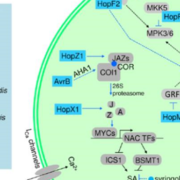
Update: Stomatal defense a decade later
Plant Physiology, Plant Physiology: Updates, Plant Science Research Weekly, ResearchStomatal defense, recognition of pathogens at the stomatal pore accompanied by stomatal closure to prevent their entry, was discovered ten years ago. Melotto et al. review what we’ve learned in the past decade about this key defense strategy. They discuss pathogen recognition, in which microbe-associated…

Perspective: Research priorities for harnessing plant microbiomes in sustainable agriculture
Plant Science Research Weekly, ResearchBeneficial microbes help plants take up nutrients, confer protection against pathogens, and can even affect flowering time. Busby et al. argue for a coordinated effort between researchers and farmers to study plant microbiomes with the goal of using them to enhance productivity. The authors define and…