

Blue Light Photoreception by Chlamydomonas
Plant Physiology: On The Inside, Research0 Comments
/
Cryptochromes are flavin-binding proteins that act as blue light receptors in bacteria, fungi, plants and insects and are components of the circadian oscillator in mammals. Animal and plant cryptochromes are evolutionarily divergent, although the unicellular alga Chlamydomonas reinhardtii has both an…

A Controller of Leaf Angle in Soybean
Plant Physiology: On The Inside, ResearchSoybean (Glycine max) is one of the most important oilseed crops that provides edible oil for humans and is a major renewable feedstock for biodiesel production around the world. As such, increasing soybean yield potential has become a long-term breeding objective. Soybean leaf petiole angle is an important…
Chasing Scattered Genes: Identifying Specialized Metabolite Pathway Genes through Global Co-expression Analysis
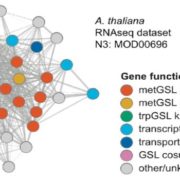
Research, The Plant Cell: In BriefPlants produce scores of specialized metabolites (SMs) to attract or repel the organisms around them and to cope with life in a variable environment. For thousands of years, we have been exploiting these compounds to feed, heal, and adorn us. Many more SMs remain to be discovered: the chemical constituents…
The Plant Cell Reviews Plant Immunity: Receptor-Like Kinases, ROS-RLK Crosstalk, Quantitative Resistance, and the Growth/Defense Tradeoff
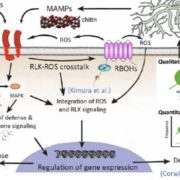
Research, The Plant Cell: In BriefTender green leaves and tasty tubers, roots, and stems are vulnerable to a wide range of pathogens, pests, and herbivores. Perhaps it should not be surprising that they have evolved an equally wide range of defense mechanisms. This issue of The Plant Cell includes reviews of just a few of the many facets…
Saddle Up, Soybean Seed Pigments: Argonaute5 in Spatially Regulated Silencing of Chalcone Synthase Genes
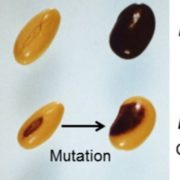
Research, The Plant Cell: In BriefMost soybean seeds you see, whether in bins at the store, or in train cars as a commodity crop, have a yellow seed coat that may have only a tiny fleck of dark pigment at the hilum, where the seed attaches to the pod. The predominant yellow color results from silencing of chalcone synthase (CHS) genes…
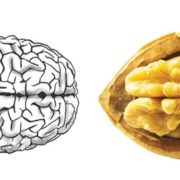
Could plants be sentient?
Plant Science Research Weekly, ResearchSentience, the capacity to feel subjectively, is considered limited to organisms that have a nervous system and a centralized brain. Plants, therefore, have been excluded from this group based on: lack of a transmission mechanism like the animal nervous system; lack of a brain; simplicity; and inability…

Groundwater depletion embedded in international food trade ($)
Plant Science Research Weekly, ResearchMany food-producing regions rely on the withdrawal of water from non-renewable underground sources, a condition called groundwater depletion for irrigation (GWD). Globally, GWD increased by 22% between 2000 and 2010. When food produced with GWD is exported, the exporting country is essentially exporting…
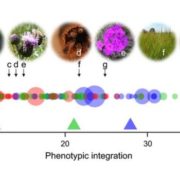
Covariation and phenotypic integration in chemical communication displays ($)
Plant Science Research Weekly, ResearchHumans aren’t very sophisticated at reading chemical communication cues. Towards deciphering the information content of complex chemical mixtures produced by plants and animals, Junker et al. ask to what extent chemical communication displays (CCDs) are replicated between samples and individuals. The…
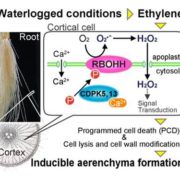
Better understanding how plant roots breathe under water ($)
Plant Science Research Weekly, ResearchWaterlogging, a process by which water saturates soil, results in oxygen-deficient soil conditions and can result in massive crop loss. In order for plants to survive in waterlogged soil, shoots transport oxygen to roots through lysigenous aerenchyma, a specialized tissue type formed by ethylene-induced…