

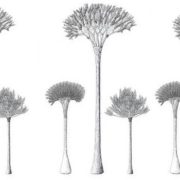
Earth’s very first trees ($)
Blog, Plant Science Research Weekly, Research, Research BlogLong ago, the dinosaurs roamed amongst majestic forests of ancient tree ferns, cycads and conifers. But longer ago still, prior to the birth of both the kings of the animal and plant kingdoms, majestic forests of gigantic trees were unimaginable, with the landscape covered in small plants lacking leaves,…
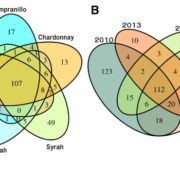
Microbial landscape of the grapevine endosphere in the context of Pierce’s disease
Blog, Plant Science Research Weekly, Research, Research BlogIn vascular plants, structure and composition of microbial endosphere associations has not been studied much in the specific context of vascular diseases. This is the case of Pierce's disease which is caused by Xylella fastidiosa and affects multiple crops and ornamental plants. This bacterium is currently…
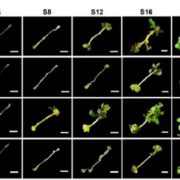
Cytokinin-induced cell cycle regulates MET1 activity during shoot regeneration ($)
Blog, Plant Science Research Weekly, Research, Research BlogThe capacity of plants to regenerate new shoots from differentiated tissue – a process called de novo shoot regeneration – confers plasticity to plant development and has also important agricultural applications. Previous studies revealed that DNA METHYLTRANSFERASE1 (MET1) inhibits shoot regeneration…

The AraGWAS Catalog: a curated and standardized Arabidopsis thaliana GWAS catalog
Blog, Plant Science Research Weekly, Research, Research BlogAraGWAS (aragwas.1001genomes.org) is a new useful tool developed within the 1001 Genome project that fully integrates and complements GWAP, EasyGWAS, AraPheno and AraGeno. With the availability of the 1001 genomes of Arabidopsis, the number of association studies is dramatically increasing but a way…
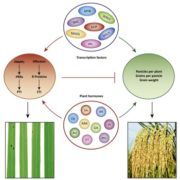
Review: Balancing immunity and yield in crop plants
Blog, Plant Science Research Weekly, Research, Research BlogDuring pathogen invasion, plant resources are diverted from further growth to activation of plant immune response. This review focuses on the recent advances in understanding the complex relationship between immunity regulation and yield production in the model monocot crop rice (Oryza sativa). Many…
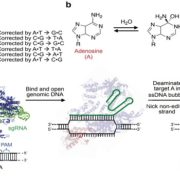
Base-editing in RNA and DNA
Blog, Plant Science Research Weekly, Research, Research BlogThe ability to engineer precise changes in nucleic acid sequences has advanced rapidly over the last few years. Since the development of genome editing technologies such as CRISPR-Cas9, a modified version known as base editing has sought to reliably convert individual nucleotides. All known base…
What We're Reading: November 3rd
Blog, WWR Full PostReview: Plant hormone transporters: what we know and what we would like to know
Hormones are signaling molecules, and in most (but not all) cases part of their function is to convey information from one cell or tissue to another, sometimes from cell-to-cell and sometimes through vascular tissues.…
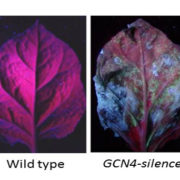
How Plants Keep Troublemakers Out and Water In
Research, The Plant Cell, The Plant Cell: In a NutshellKaundal et al. examine how a protein keeps plants safe from invading pathogens and dehydration http://www.plantcell.org/content/29/9/2233
By Amita Kaundal, Vemanna S. Ramu, Kirankumar S. Mysore
Background: To cause disease in plants, bacteria must enter plant tissue and multiply. Bacteria and…
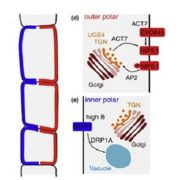
Review: Outer, inner and planar polarity in the Arabidopsis root
Blog, Plant Science Research Weekly, Research, Research BlogDespite vast differences across all living organisms, most eukaryotes display some form of cellular polarity which enables them to carry out specialized functions. The coordination of cell polarity within a single tissue layer is known as planar polarity. Nakamura and Grebe highlight the unique execution…